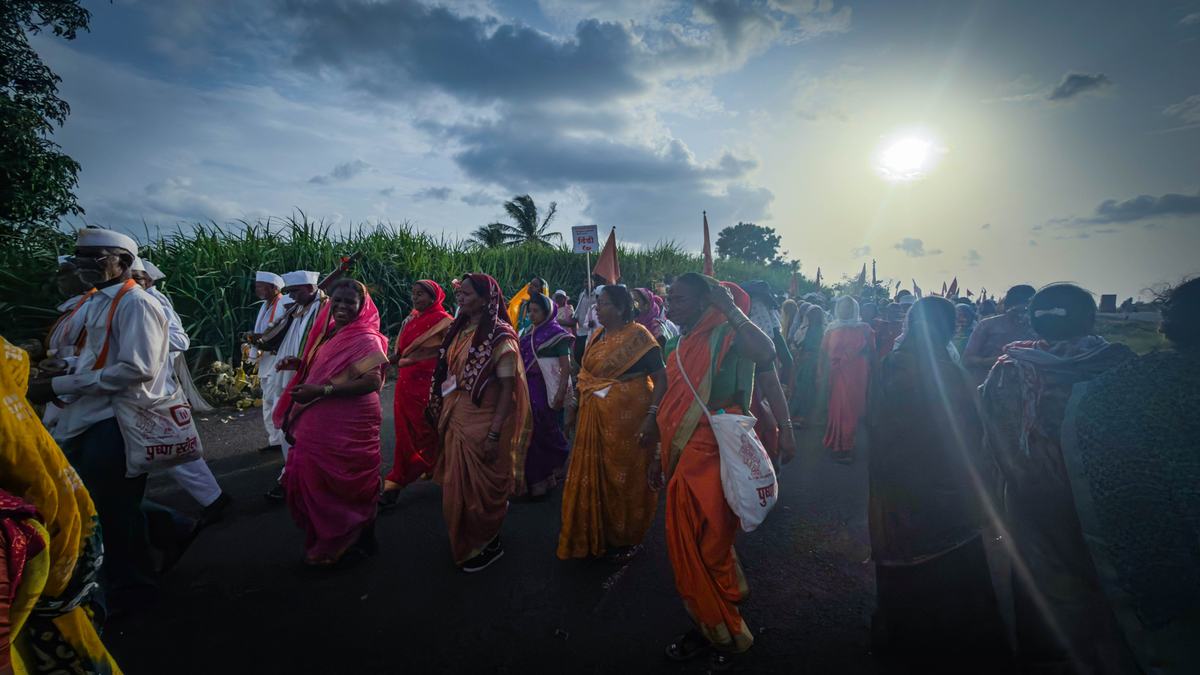
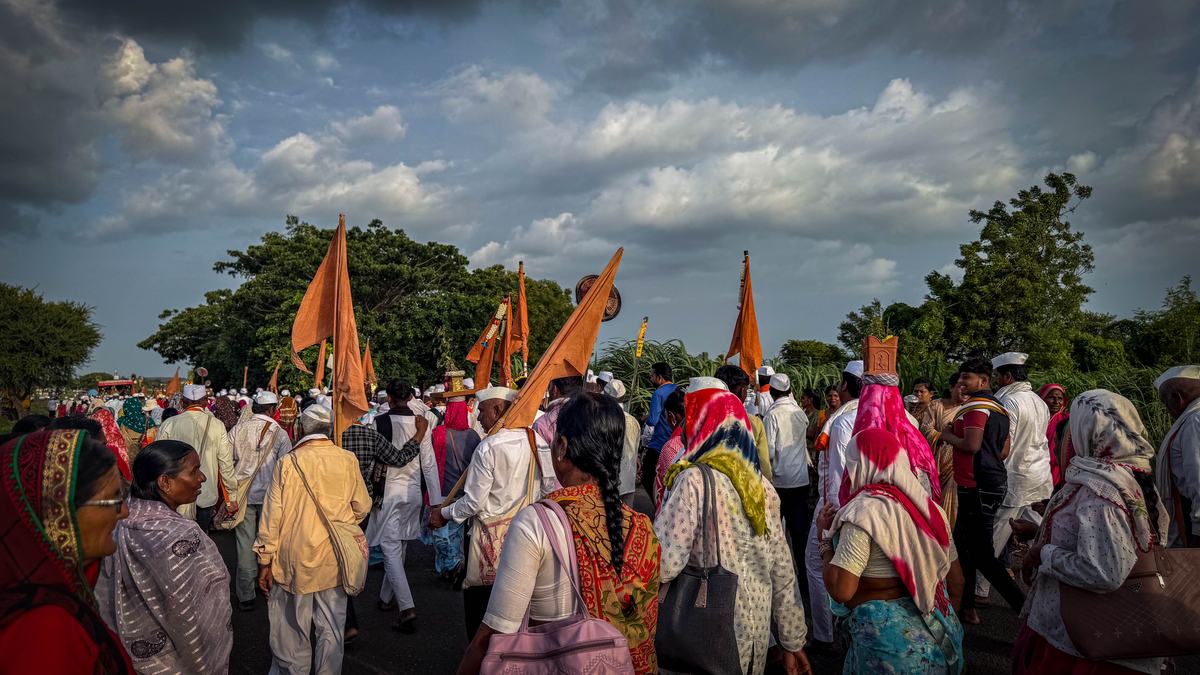
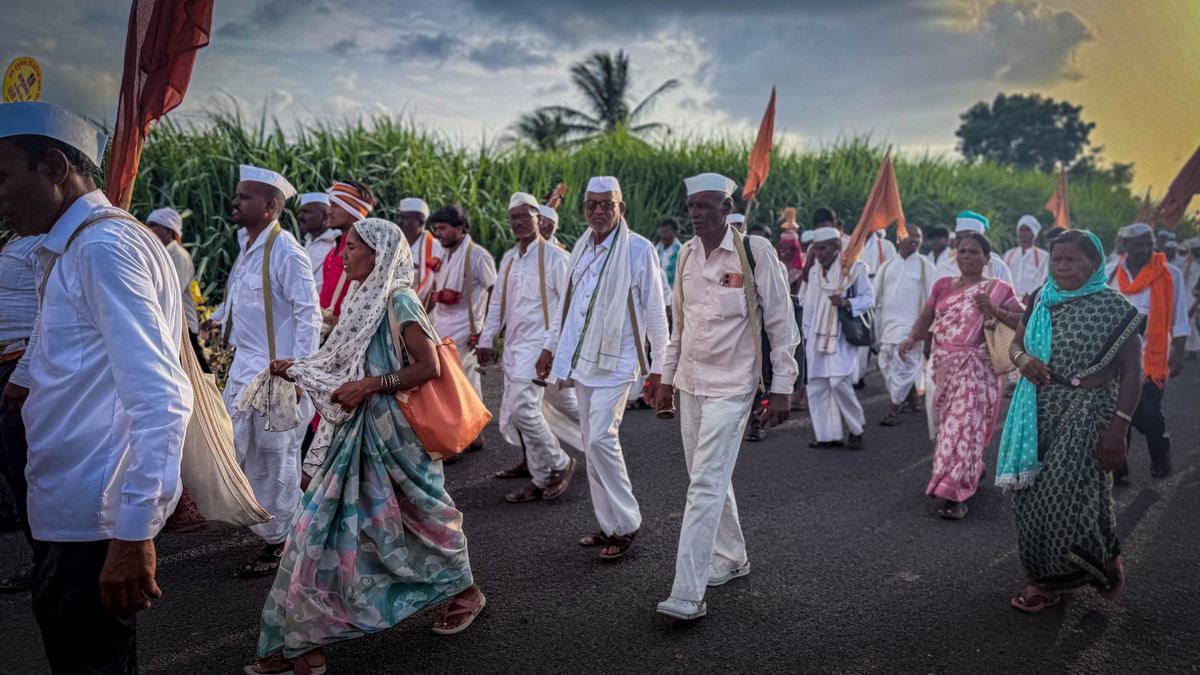
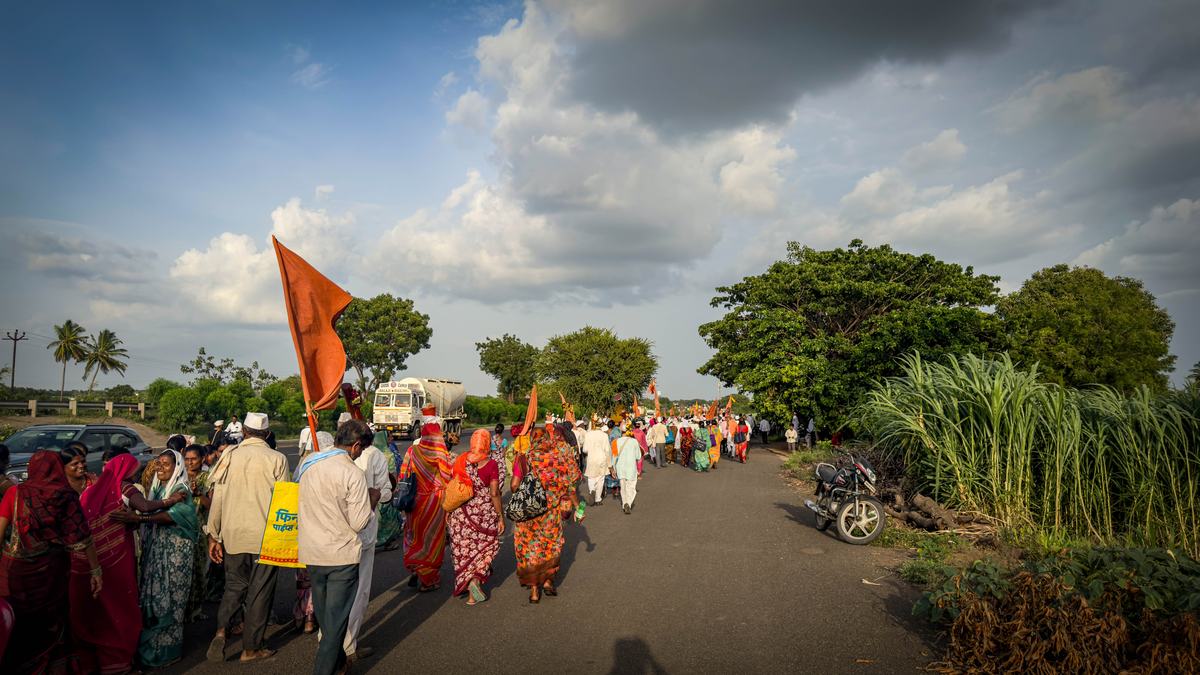
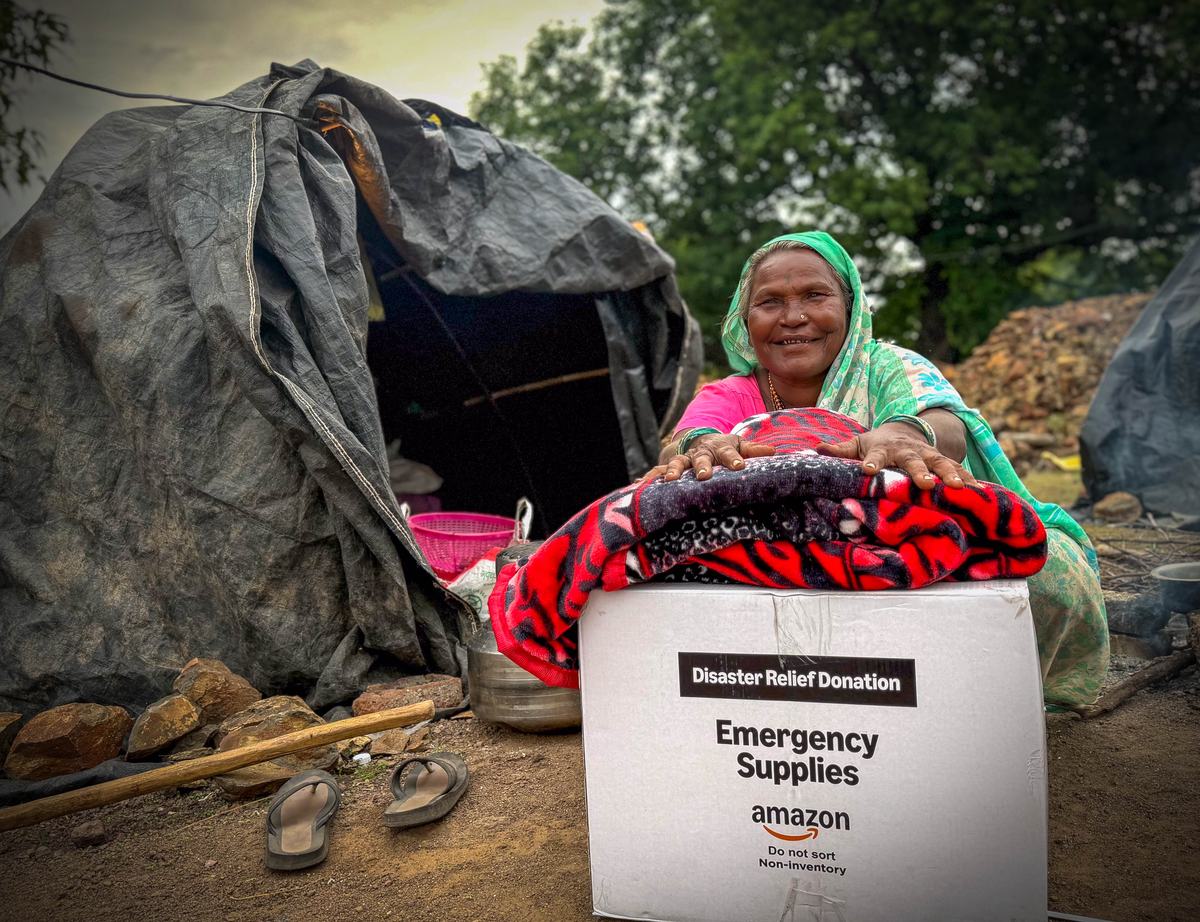
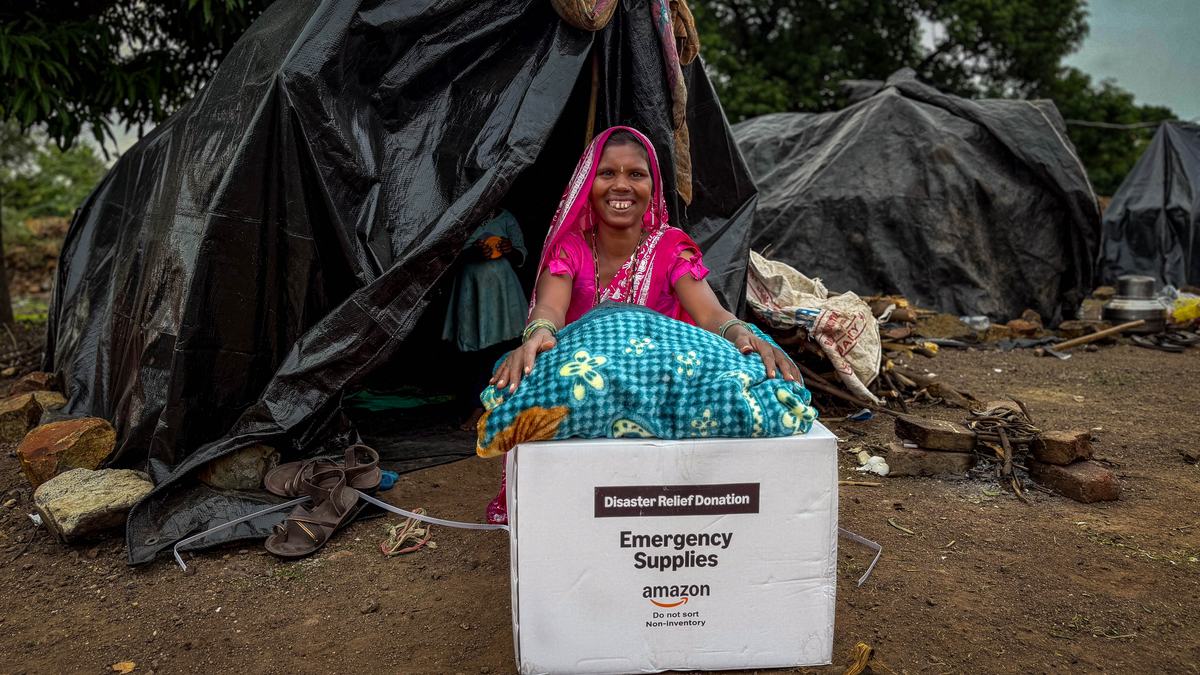
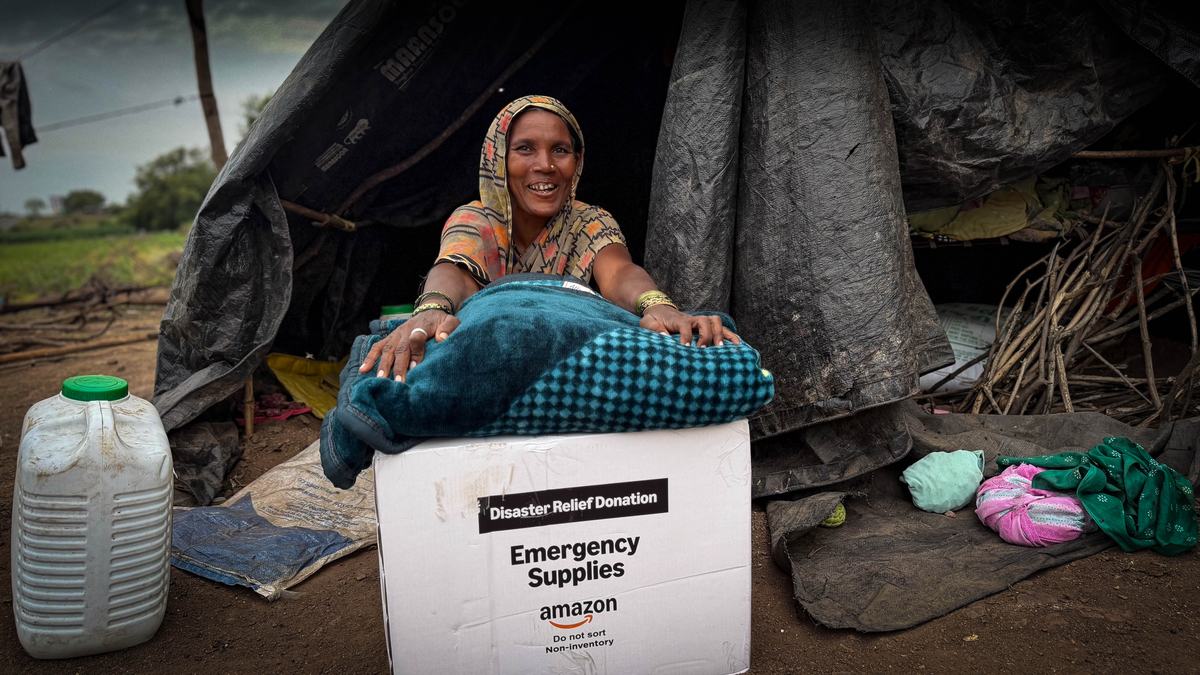
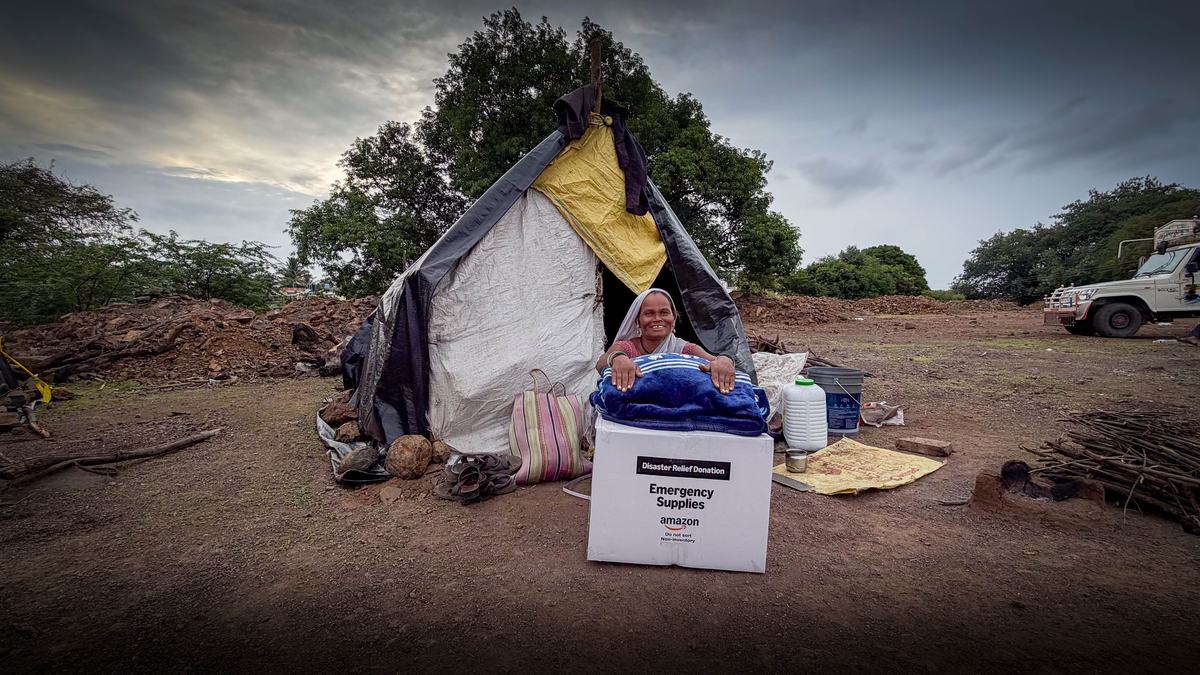
Samarthya's emergency response to the July 2026 floods along the Ashadhi Wari — GPS-tagged, photo-verified Shelter-cum-Hygiene Kits and Thermal Blankets, delivered by intercepting pilgrims at their own daily halts rather than waiting for them to reach a fixed camp.
Samarthya distributed 300 relief kits comprising Shelter Kits, Hygiene Kits, and Blankets to flood-affected Warkari beneficiaries across multiple locations in Maharashtra. The relief assistance helped vulnerable flood-affected households meet immediate shelter, hygiene, and basic protection needs during the emergency response.
When the rains came
In under six days, 264.8mm of rain fell over Pune district and the Indrayani river flooded. Alandi — where the Sant Dnyaneshwar Maharaj Palkhi begins its 21-day walk to Pandharpur — was cut off, every approach road blocked or submerged, just as lakhs of Warkaris gathered for the 8 July Prasthan.
Most Warkaris are farmers and daily-wage workers carrying only what they need for three weeks on foot. Local administration moved people into 100+ municipal schools, but mats and bedding ran short fast. It was into this that Samarthya's kits, funded by Amazon through DonateKart Foundation, were sent.
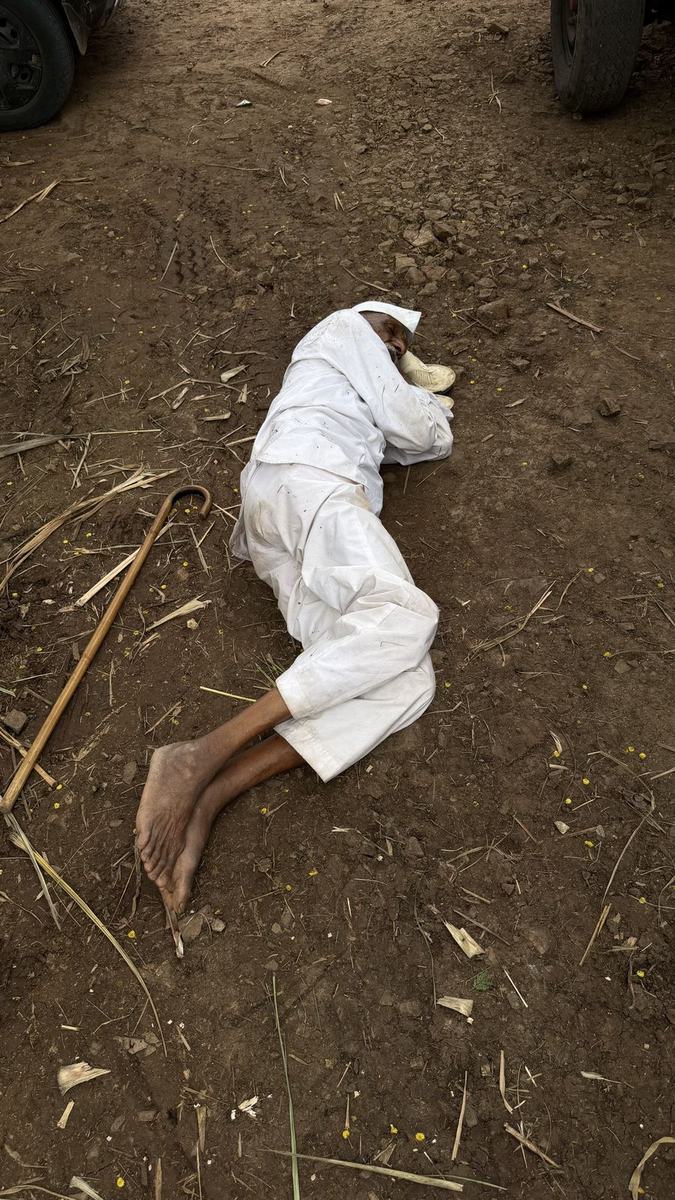
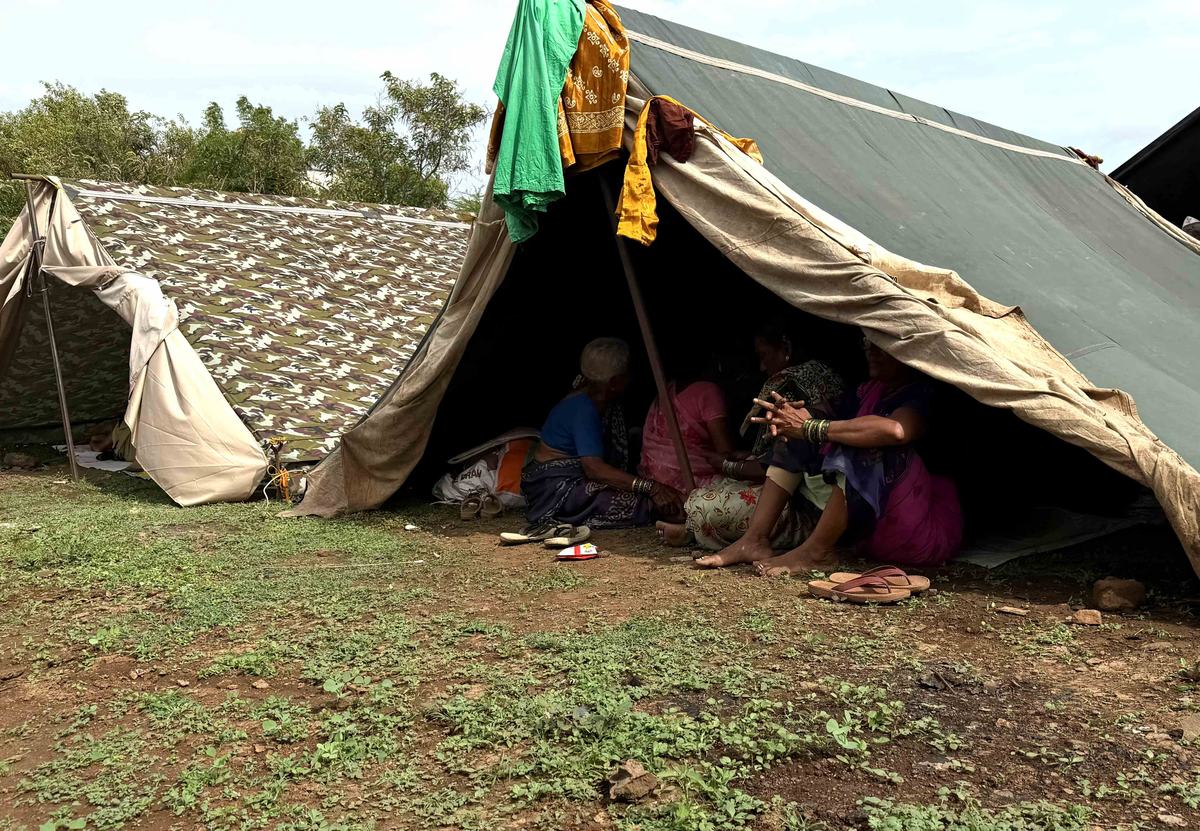
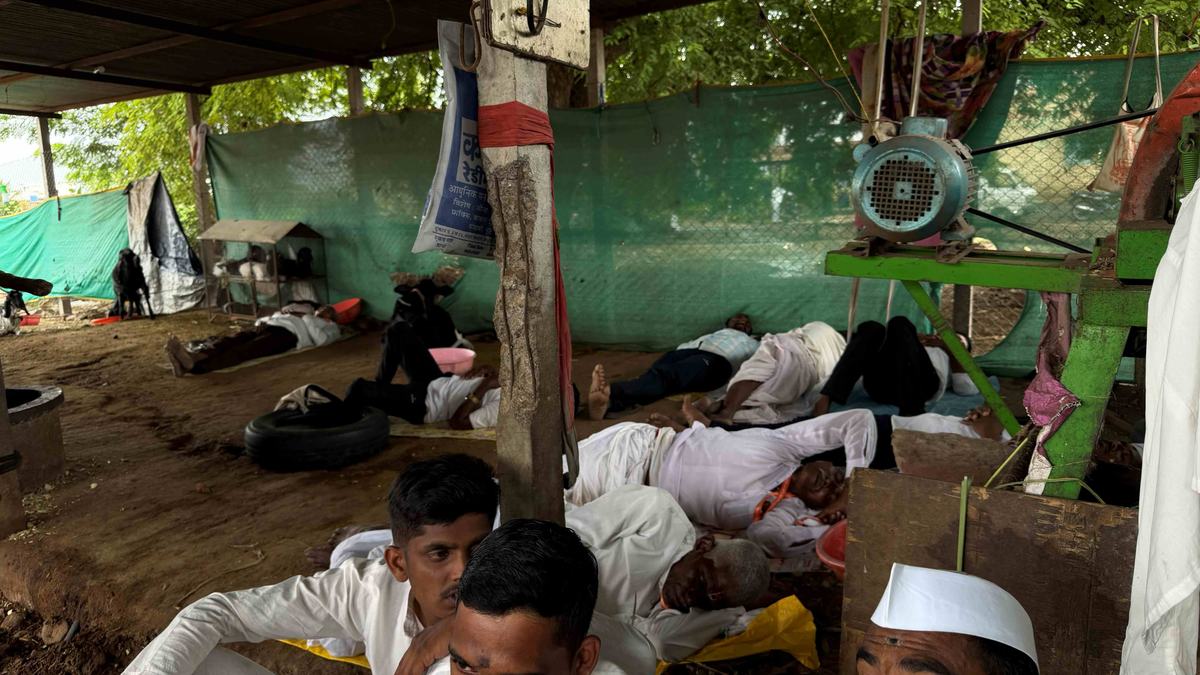
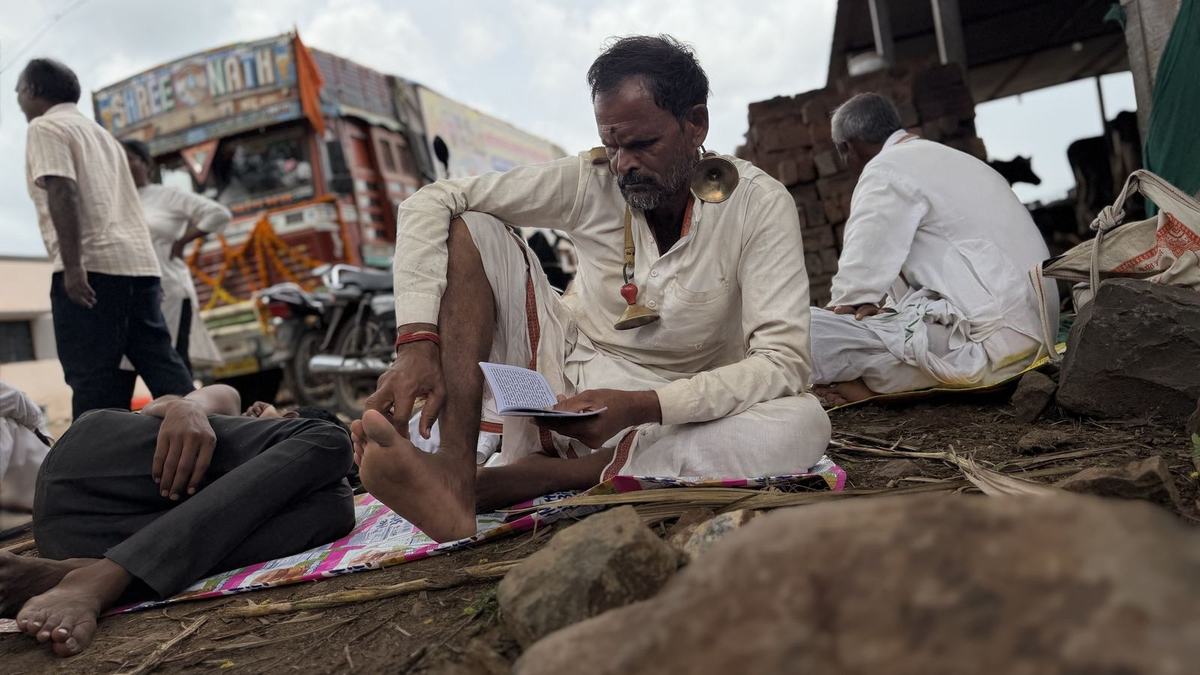
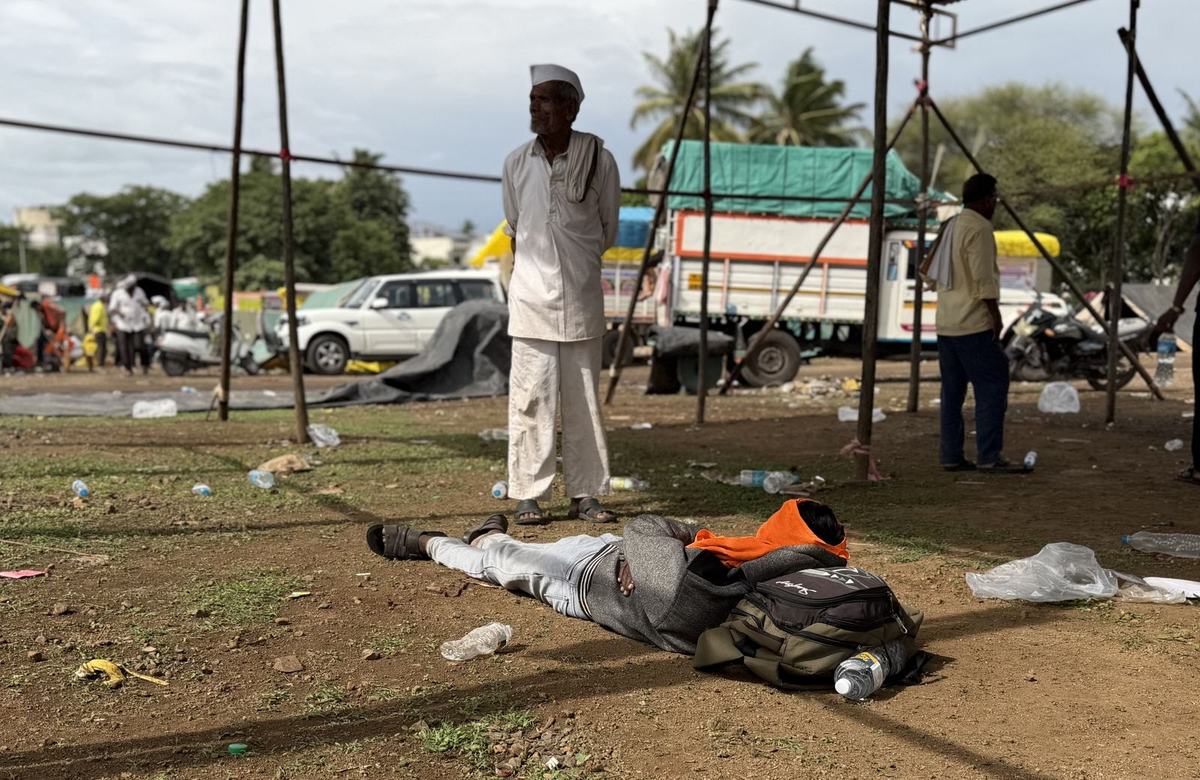
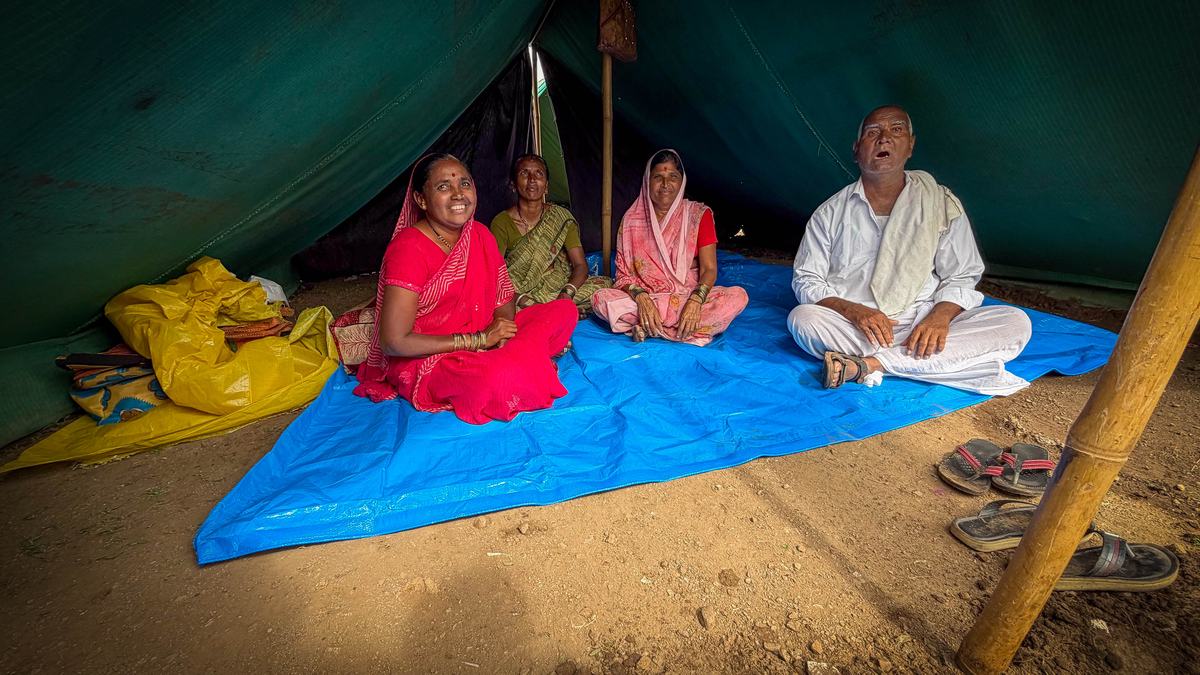
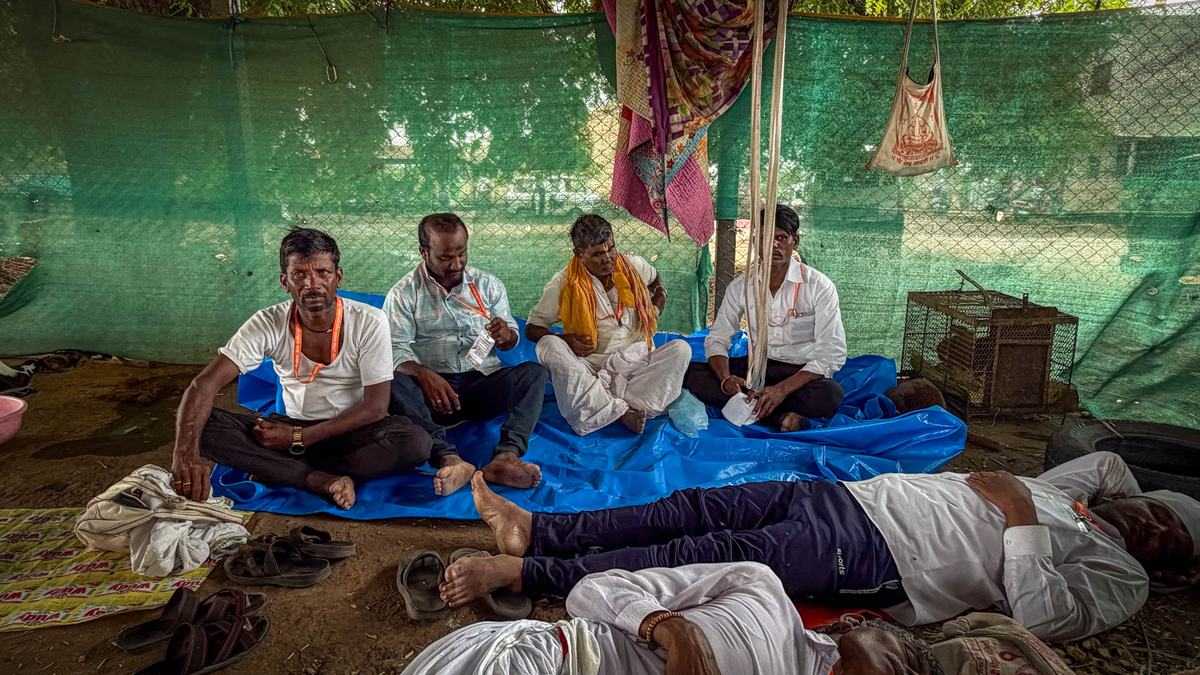
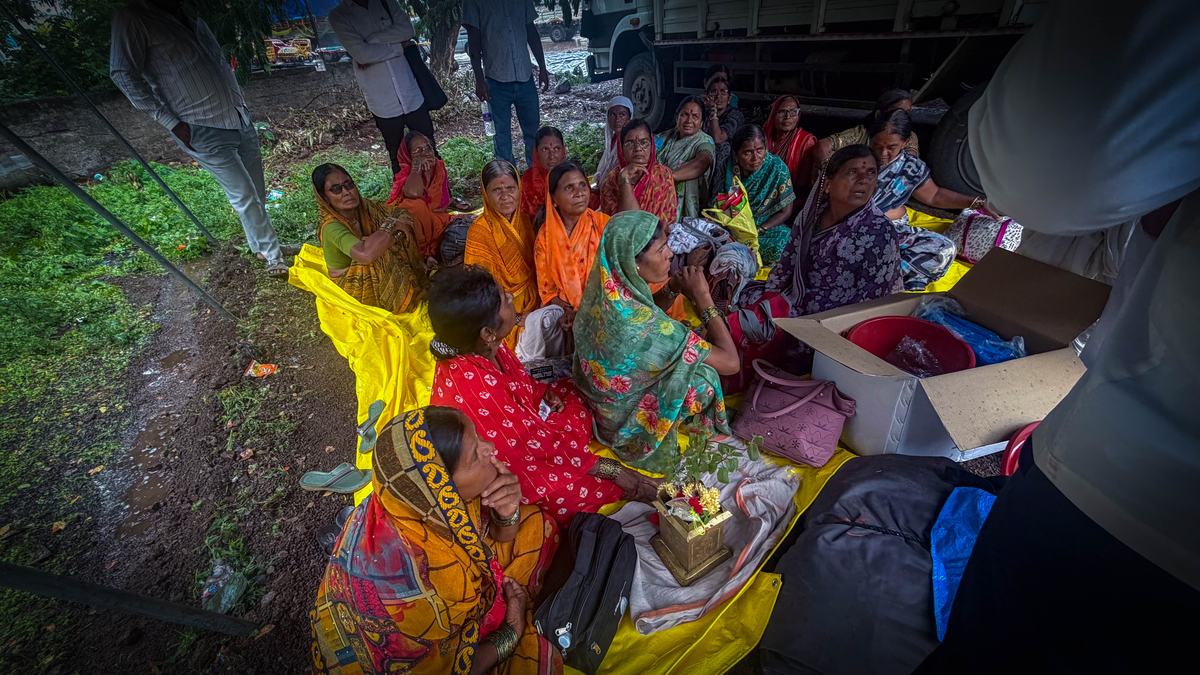
An elderly Warkari asleep on bare, rain-soaked ground — the conditions the kits were built forFamilies crowded under a borrowed canvas tent, sitting directly on wet earth, clothes hung out to dryWarkaris resting on the bare dirt floor of a farm shed — no mats, no bedding, shelter borrowed wherever it could be foundWaterlogged halt conditions along the Palkhi corridor, July 2026Muddy ground along the walking route after the Indrayani flooding
What a kit became
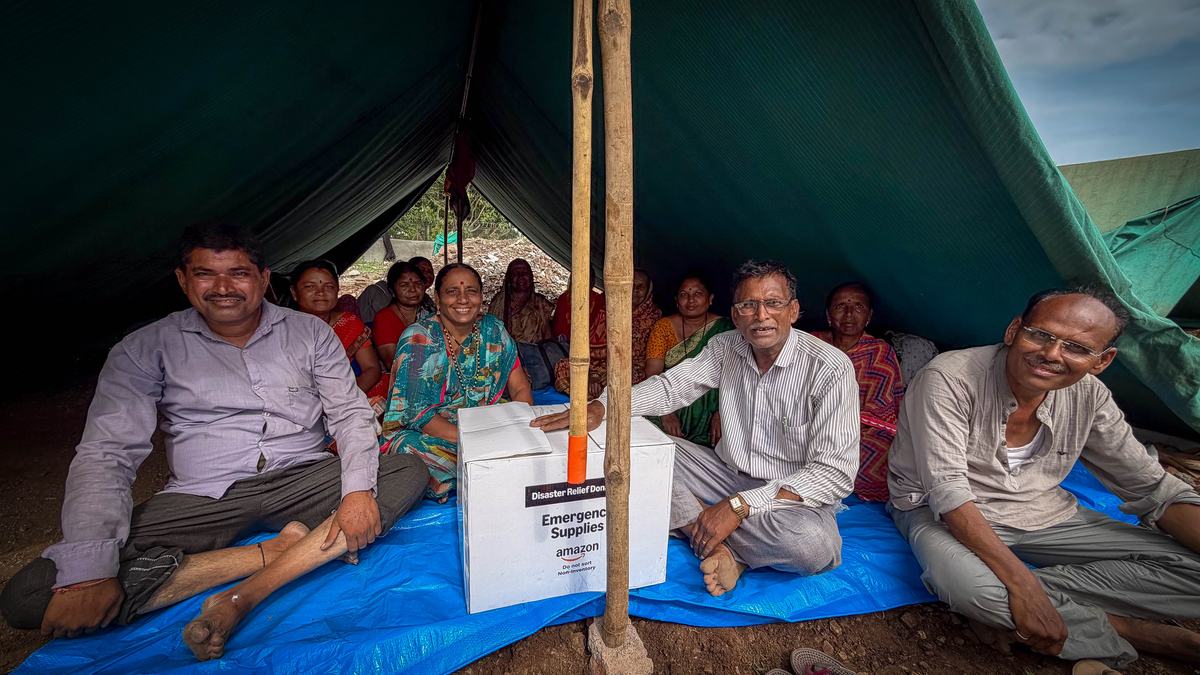
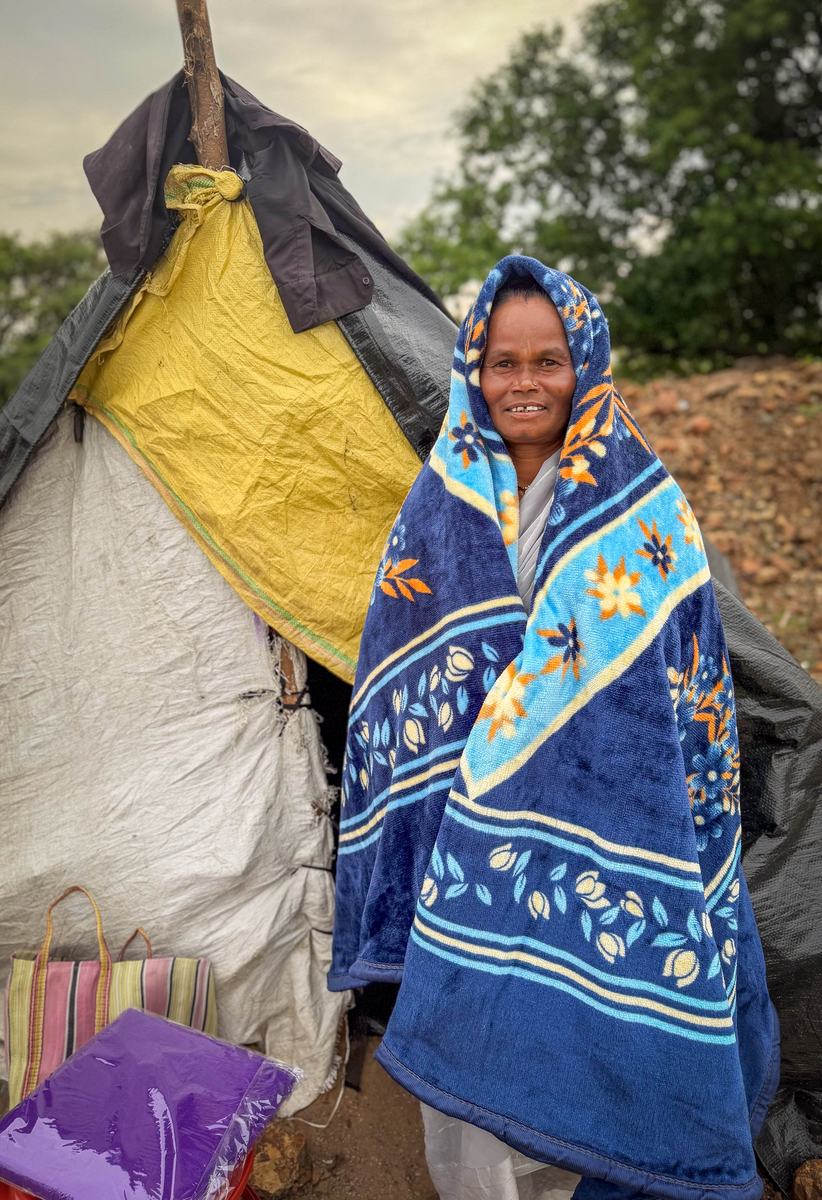
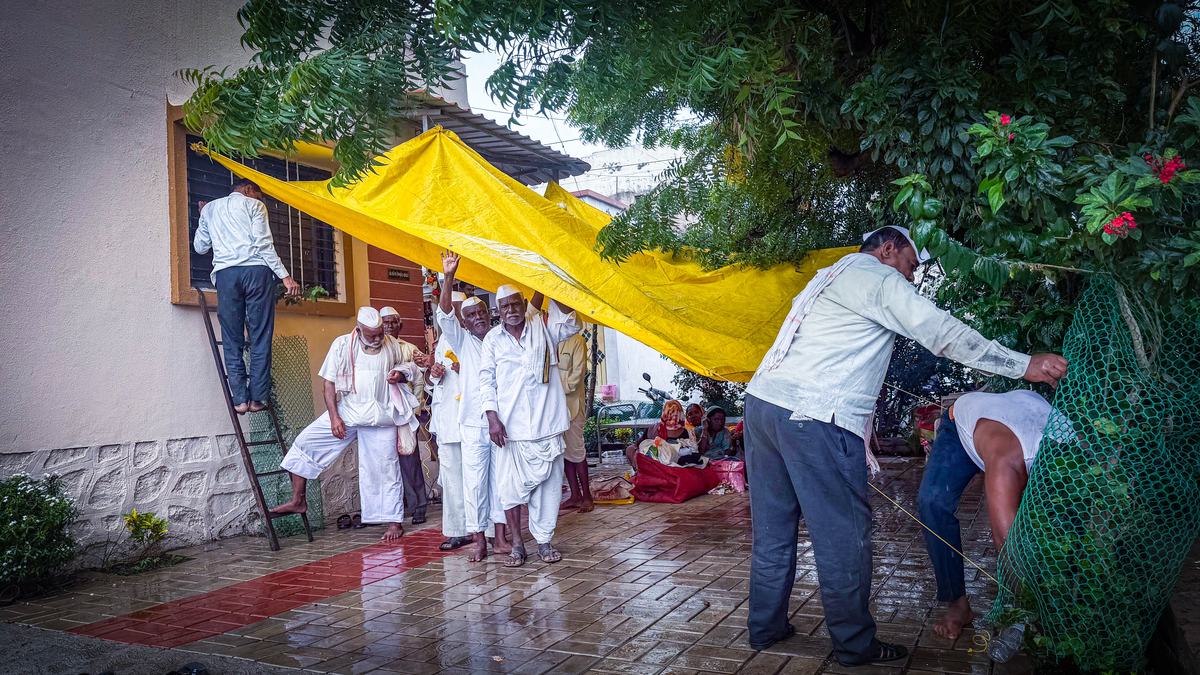
A Shelter-cum-Hygiene Kit was never just a box to be opened once. Within hours of handover the same tarpaulin was doing several jobs at once — a dry floor over wet ground, a second roof lashed to a tree or a window ledge, a rain screen for a parked truck, an instant seating mat for a whole Dindi, and, after dark, the blanket that made sleep on the ground possible.
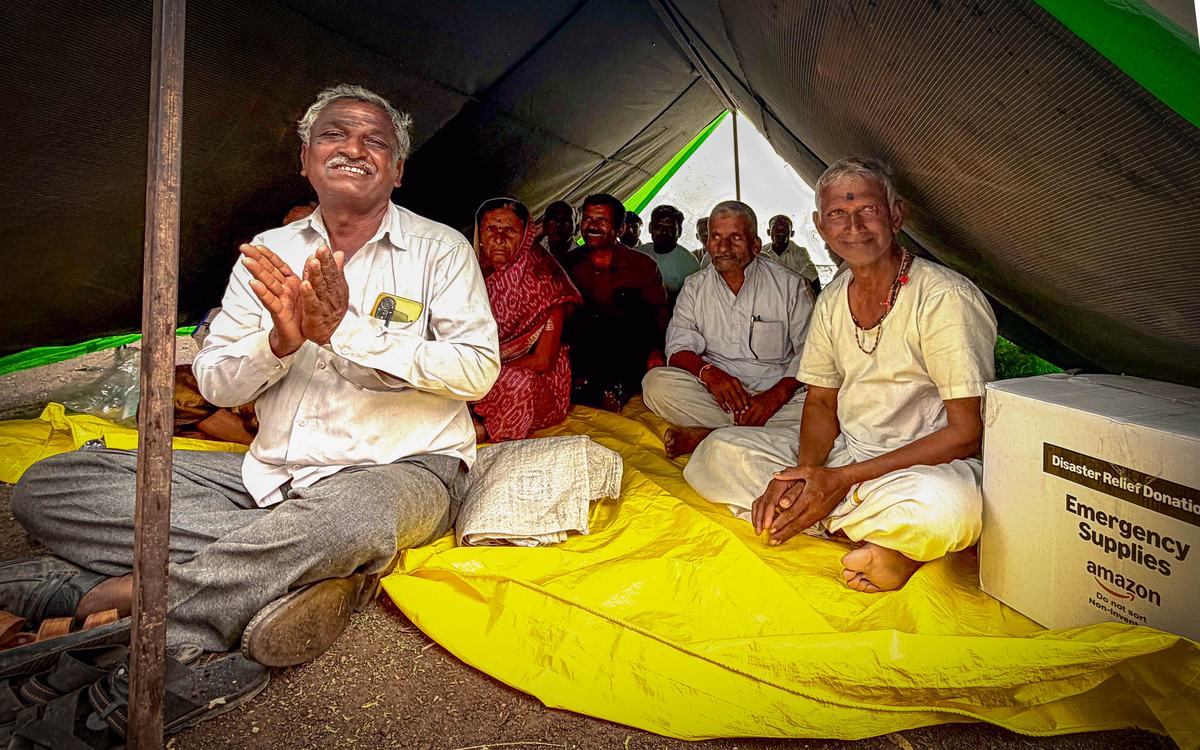
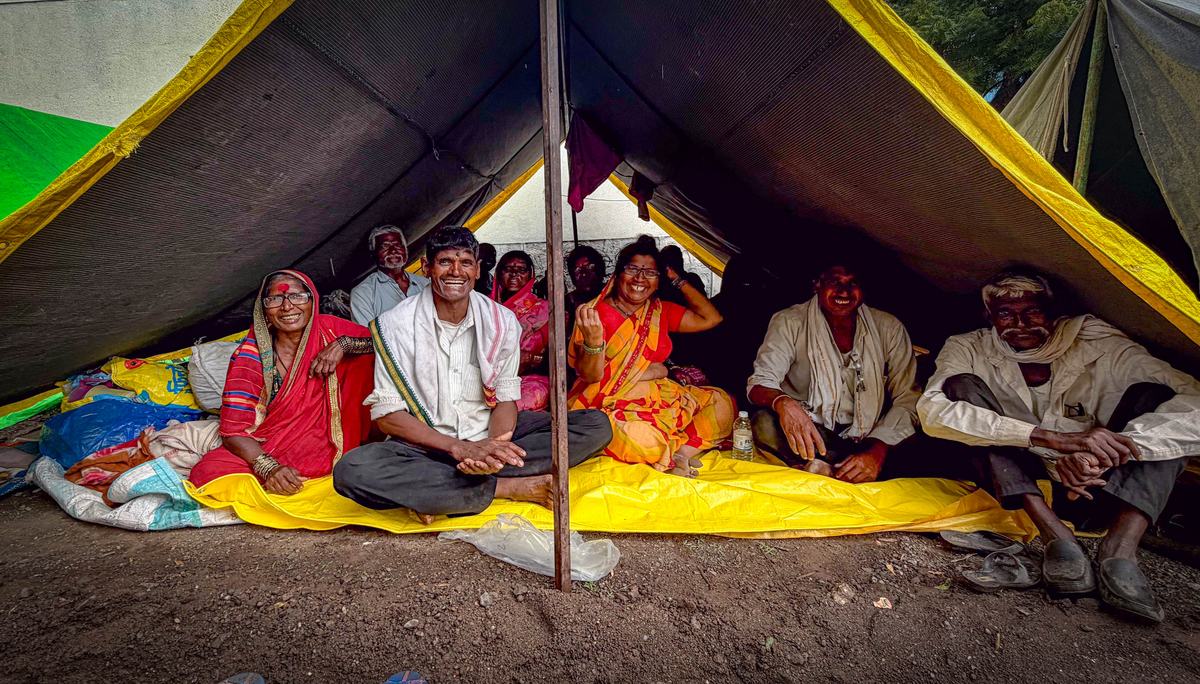
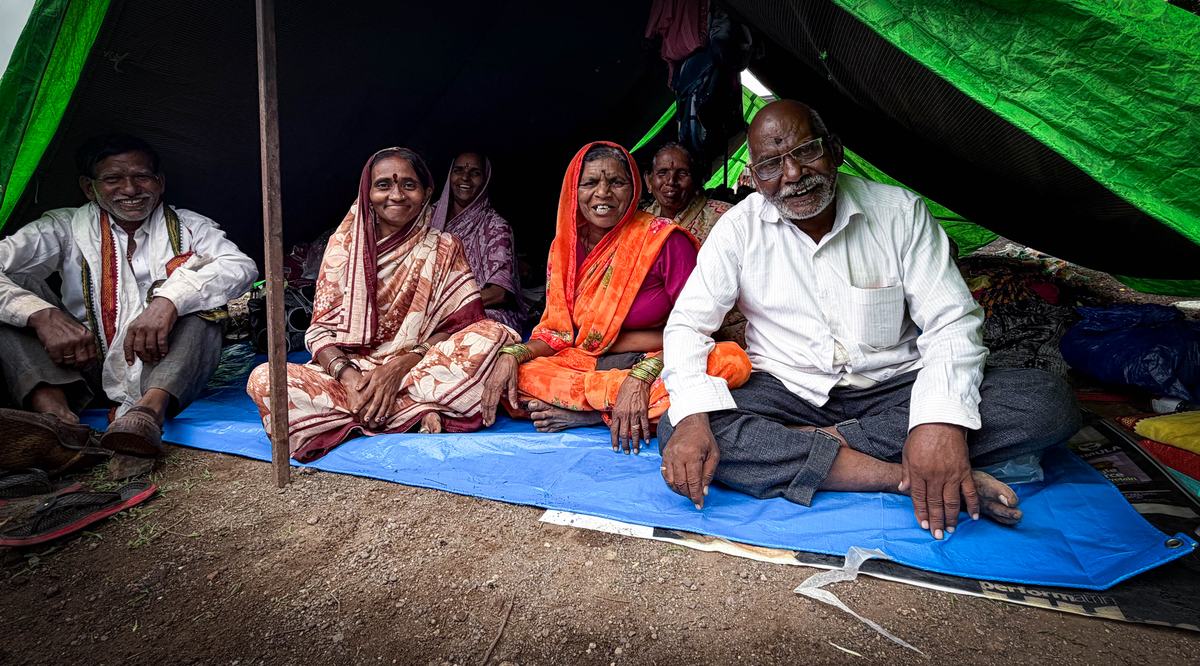
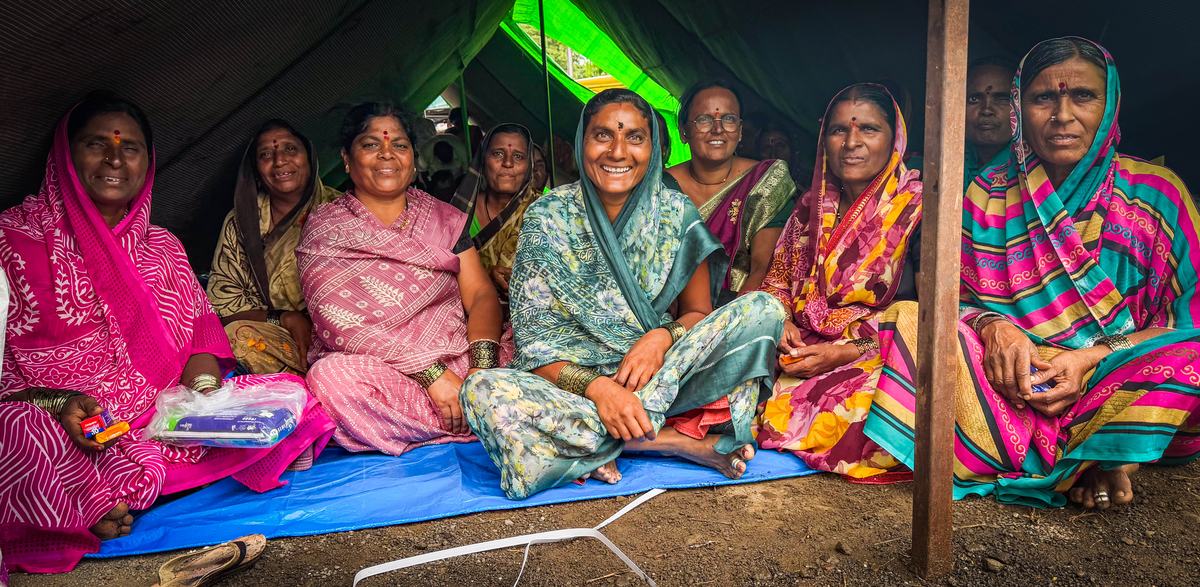
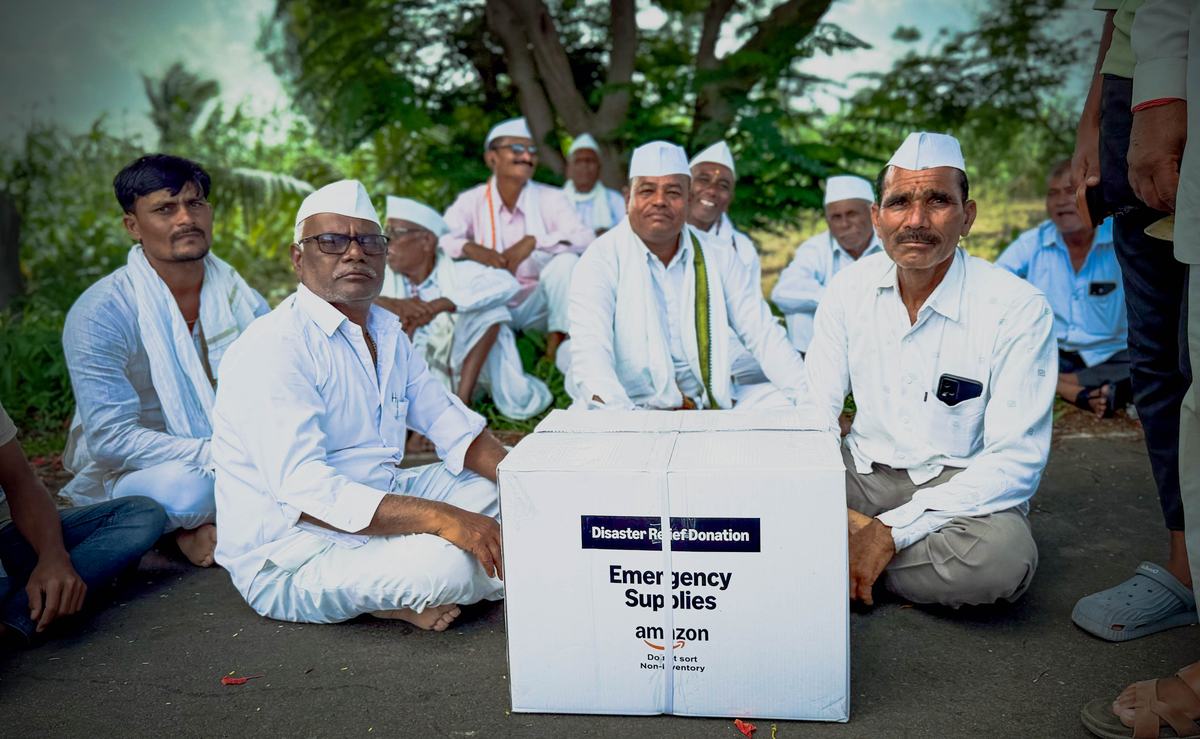
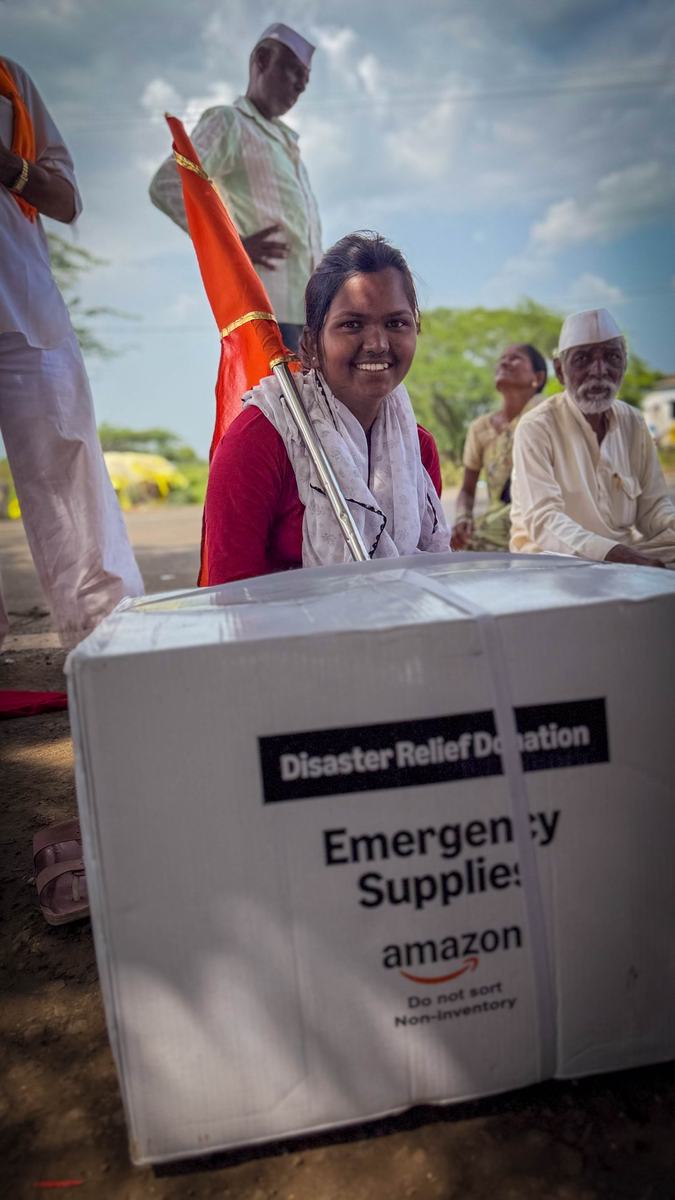
The yellow tarpaulin spread as flooring inside the tent, an Amazon Emergency Supplies carton doubling as a seat at the edgeA Dindi settled in for the night on the same tarpaulin, dry ground under them where there had only been mudA blue ground sheet laid corner to corner inside a green-tarp tent, five families sharing one dry floorThe same sheet doing service as a sitting mat while the group waits out the rain togetherAn Emergency Supplies carton kept dry at the centre of the tarpaulin, the group gathered around it rather than around bare groundA blanket worn as a shawl against the evening damp, the tent's own tarpaulin roof patched together behind herA tarpaulin stretched as instant seating under shade netting, one Warkari already asleep at its edgeA parked container truck pressed into service as rain cover, women and their kits sheltered on a yellow tarpaulin at its wheelsA tarpaulin rigged as a second roof over a courtyard, tied off to a window ledge and a tree to keep an entire group dryHygiene kit items still in hand as the group sits together on the tarpaulin floor of their tent
A route-intercept distribution model
Meeting a moving pilgrimage
Warkaris travel in Dindis — self-contained groups of 50–500 led by a Dindi Pramukh. Samarthya reached each one at its own daily halt rather than waiting at a fixed camp.
153 families · 9 Dindis · 280km · ₹5,500 · Taradgaon detour around a highway closure
Day 3 · 20 July
Samatanagar
27 families · 1 Dindi · Samarthya's own vehicle, no hire cost
Legend
Day 1 route — amberDay 2 route — crimsonMarker size ∝ photos geotagged at that haltClick any marker for the field photograph taken there
Route notes
The Day 2 return leg (Phaltan → Supe) bows through Baramati — a real waypoint named directly in that halt's own GPS record, not an invented shortcut. Day 3 (Samatanagar) has no GPS-tagged photos yet, so it isn't plotted here.
The Wari runs on paper
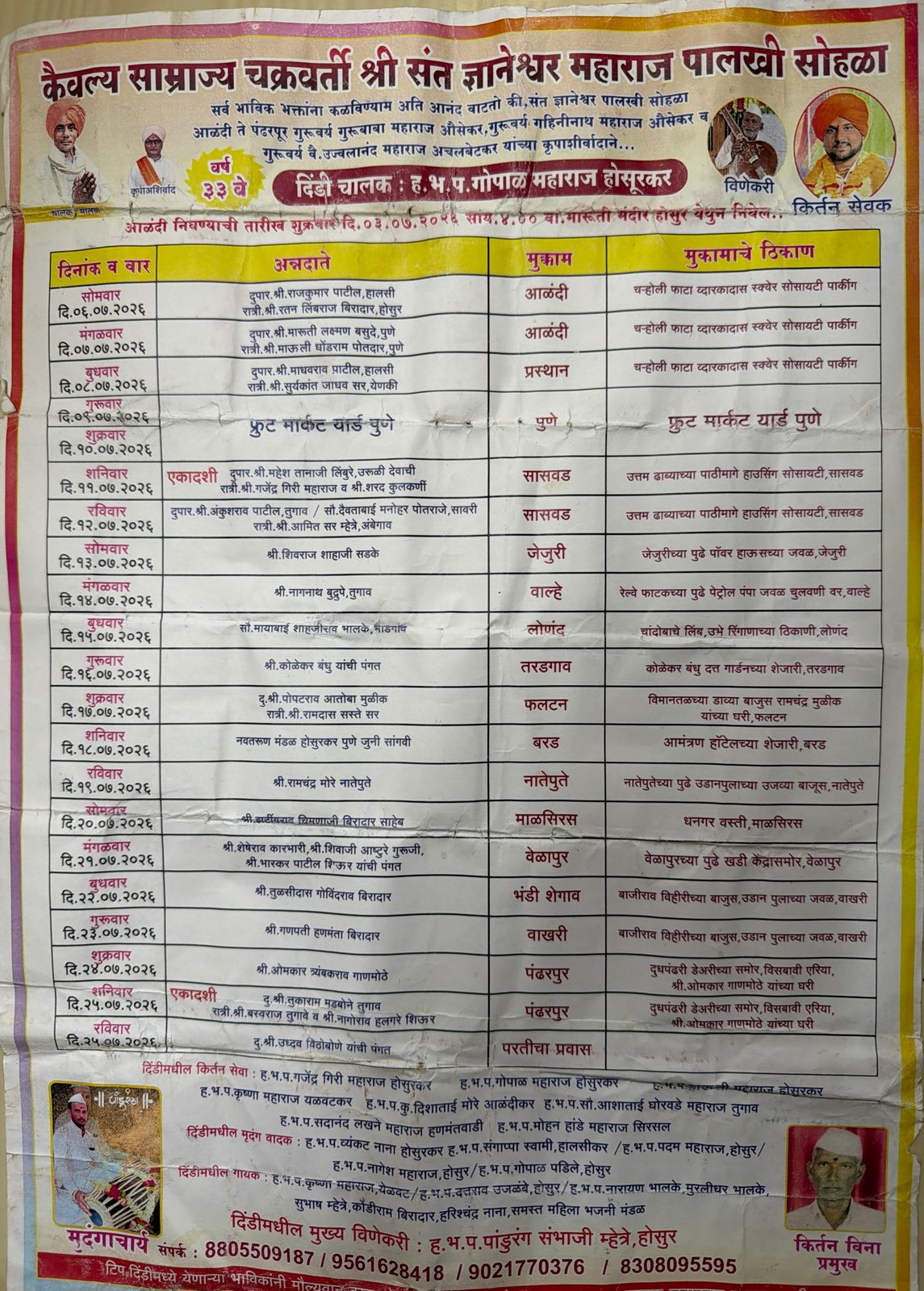
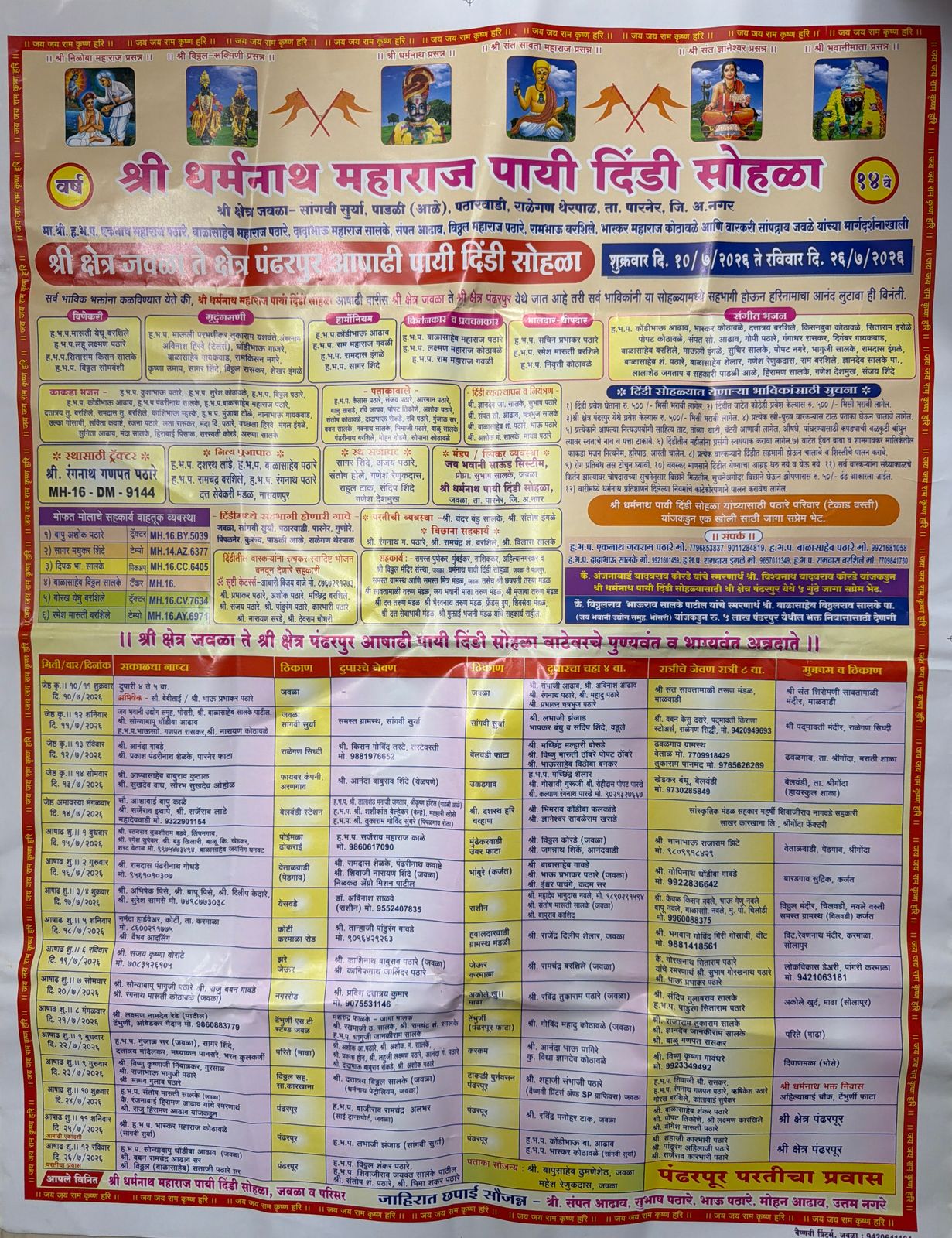
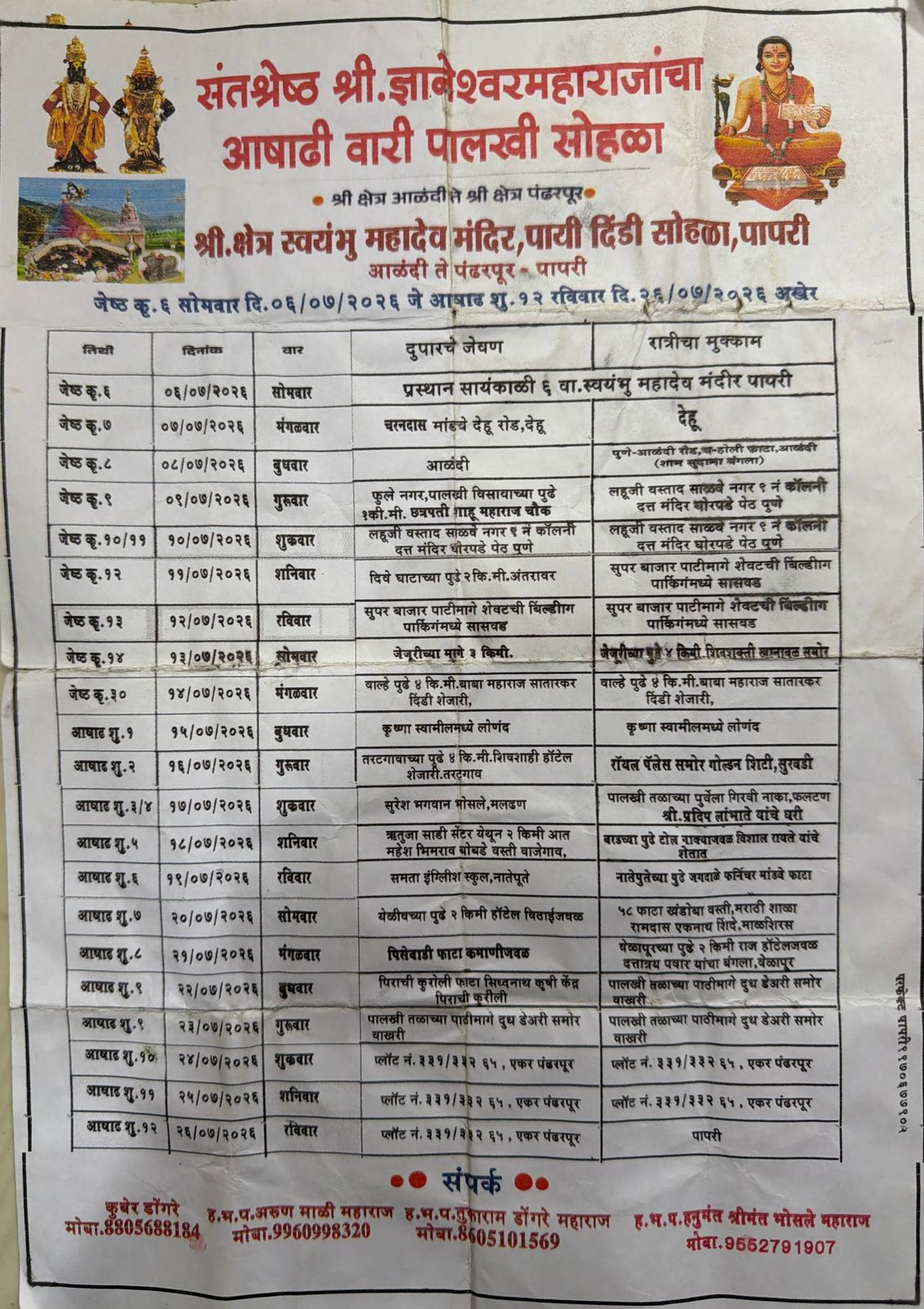
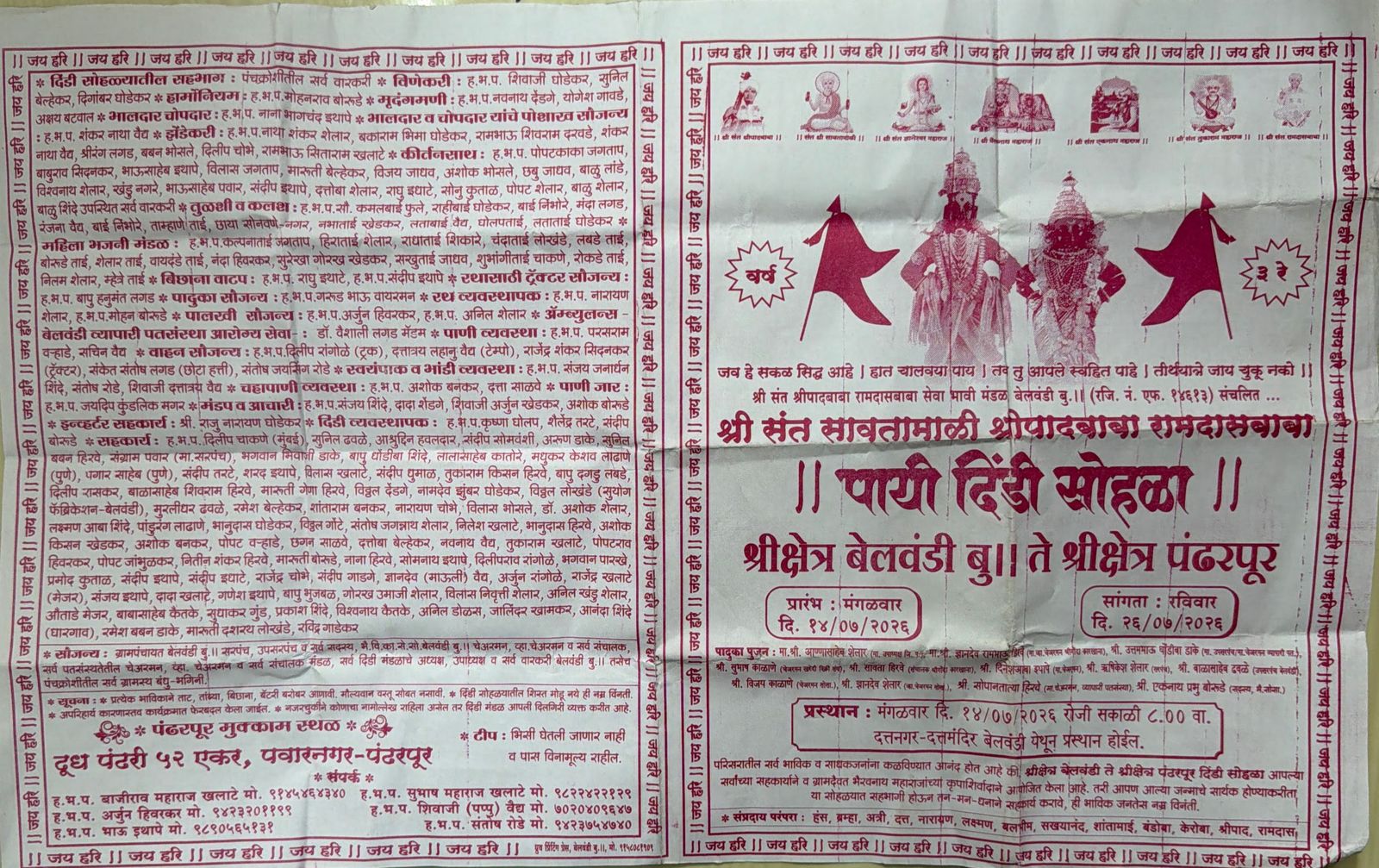
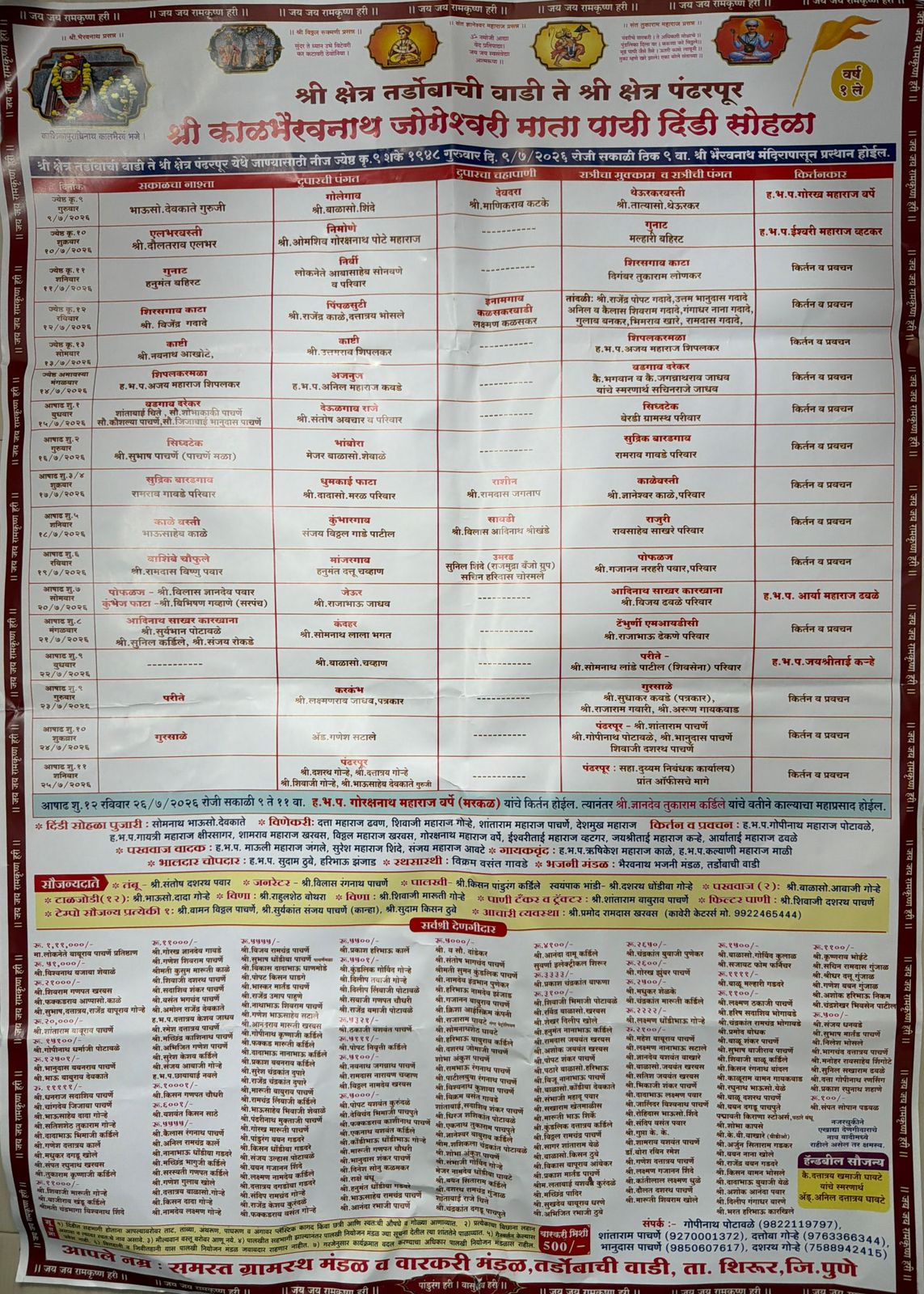
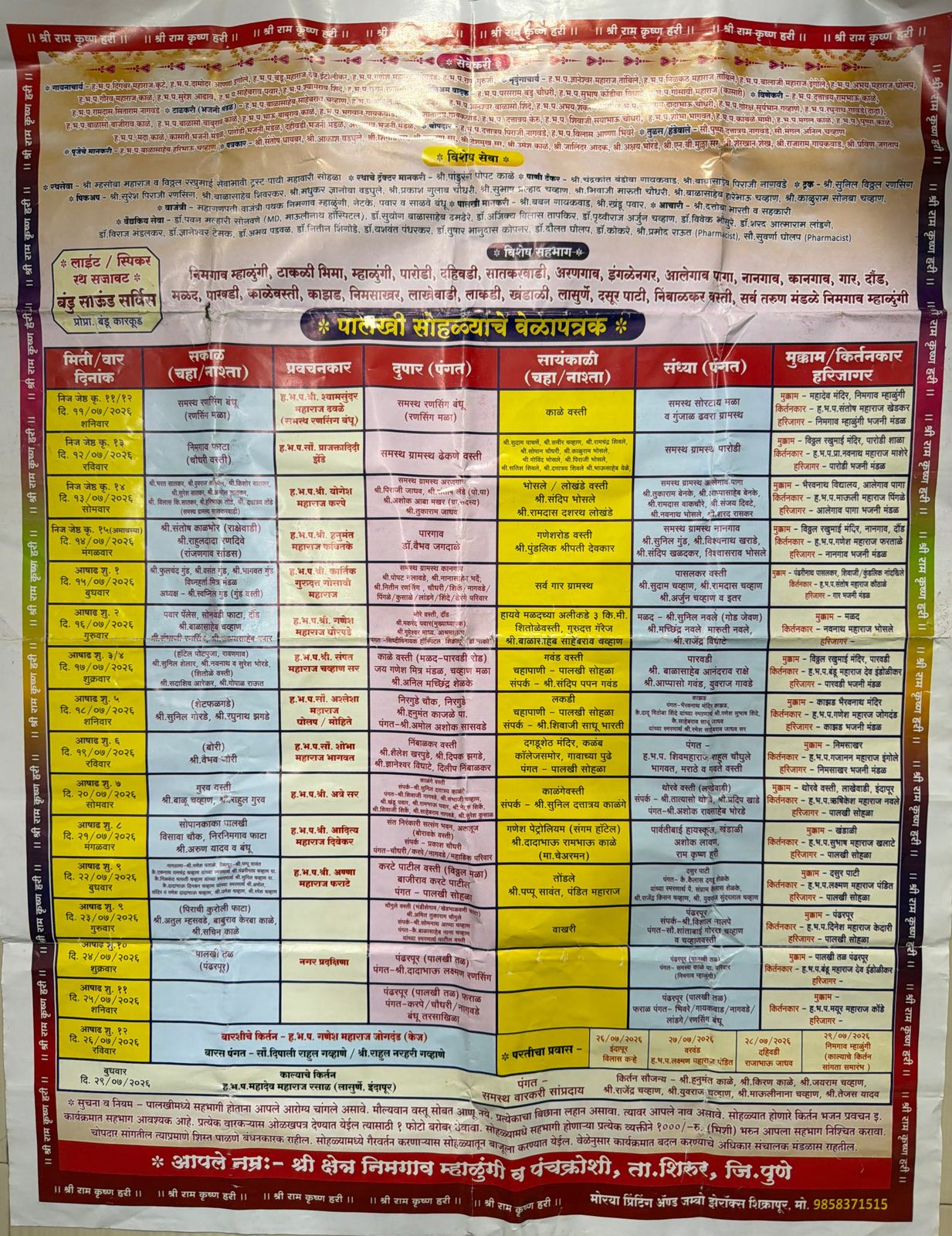
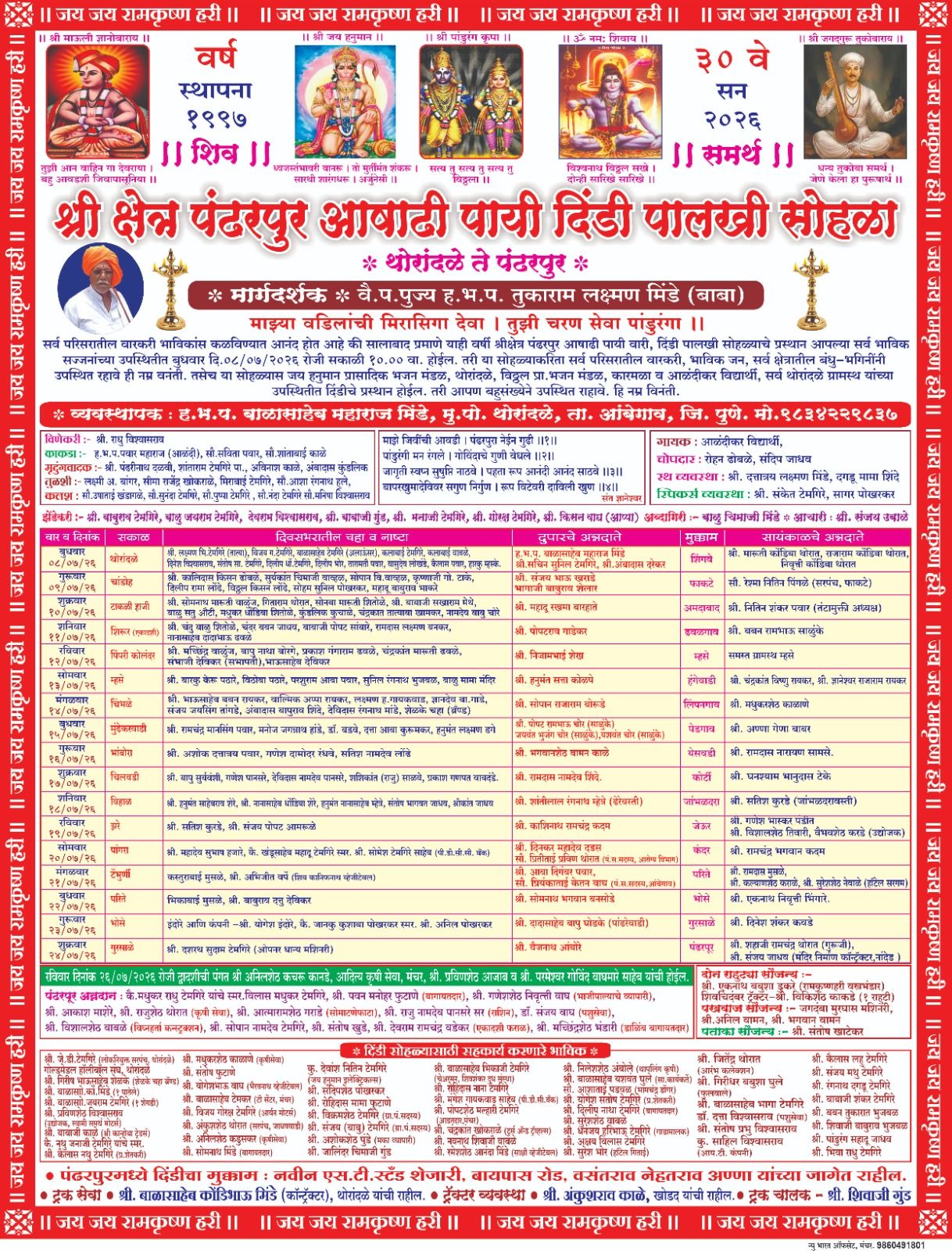
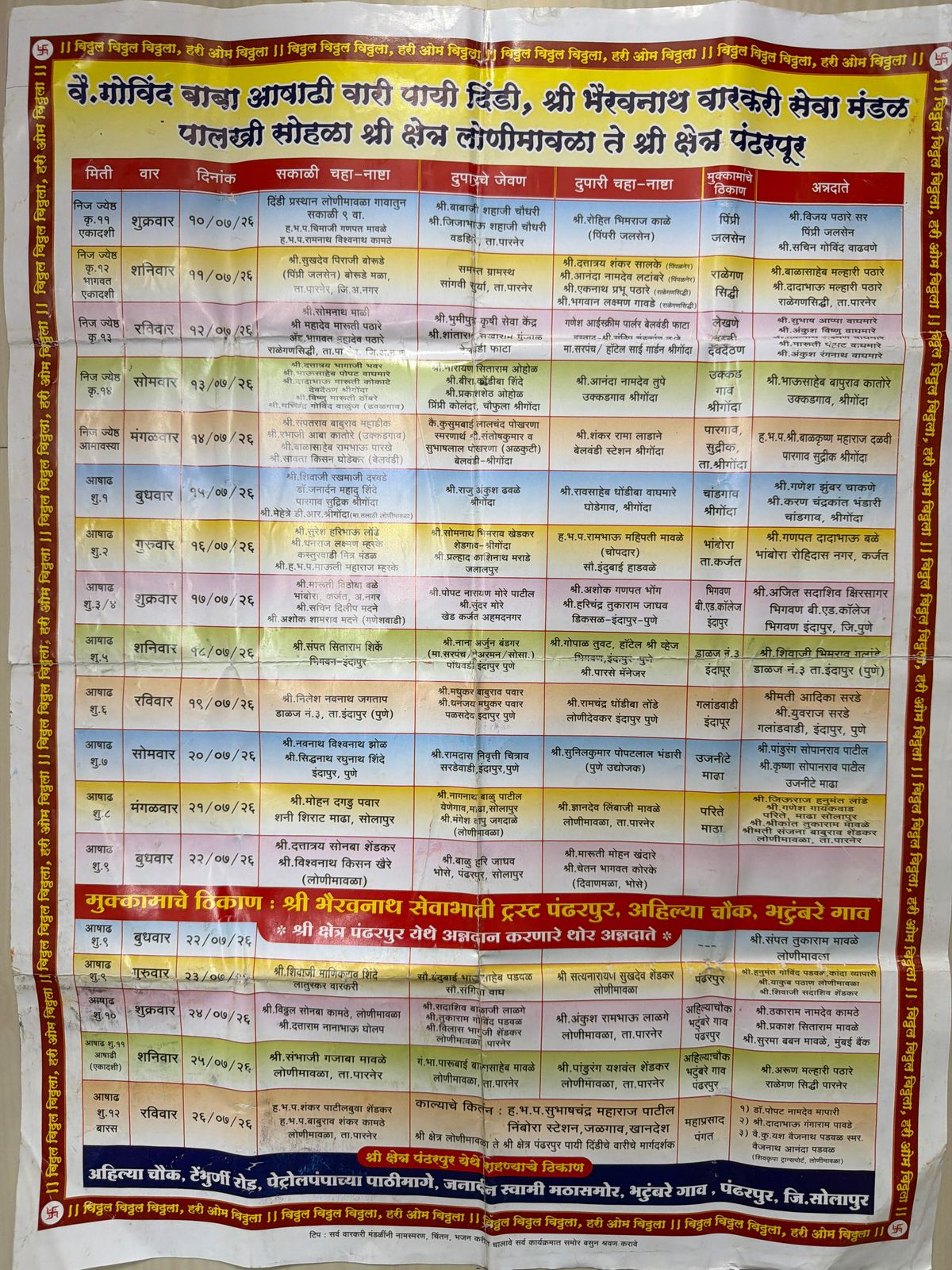
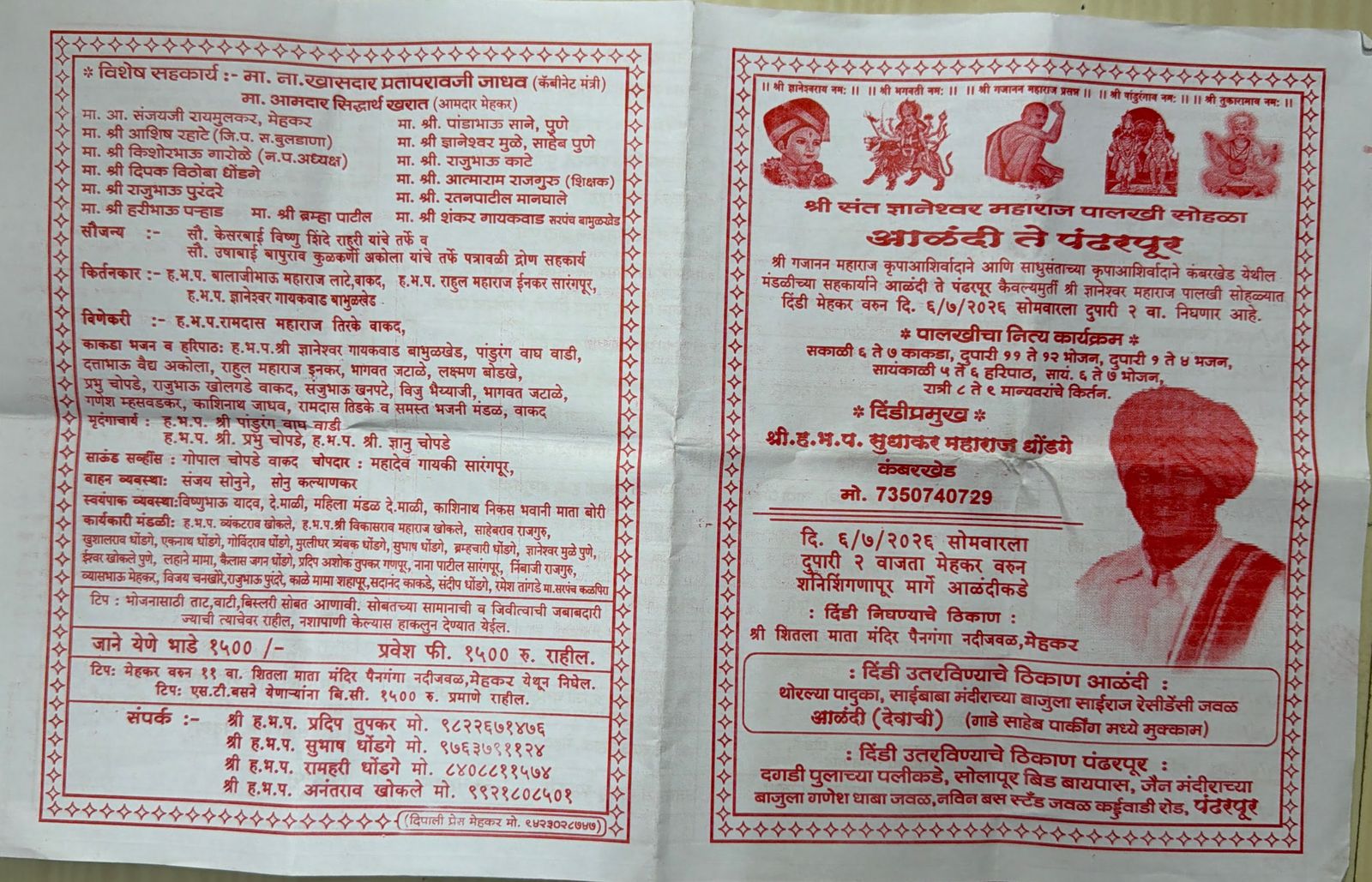
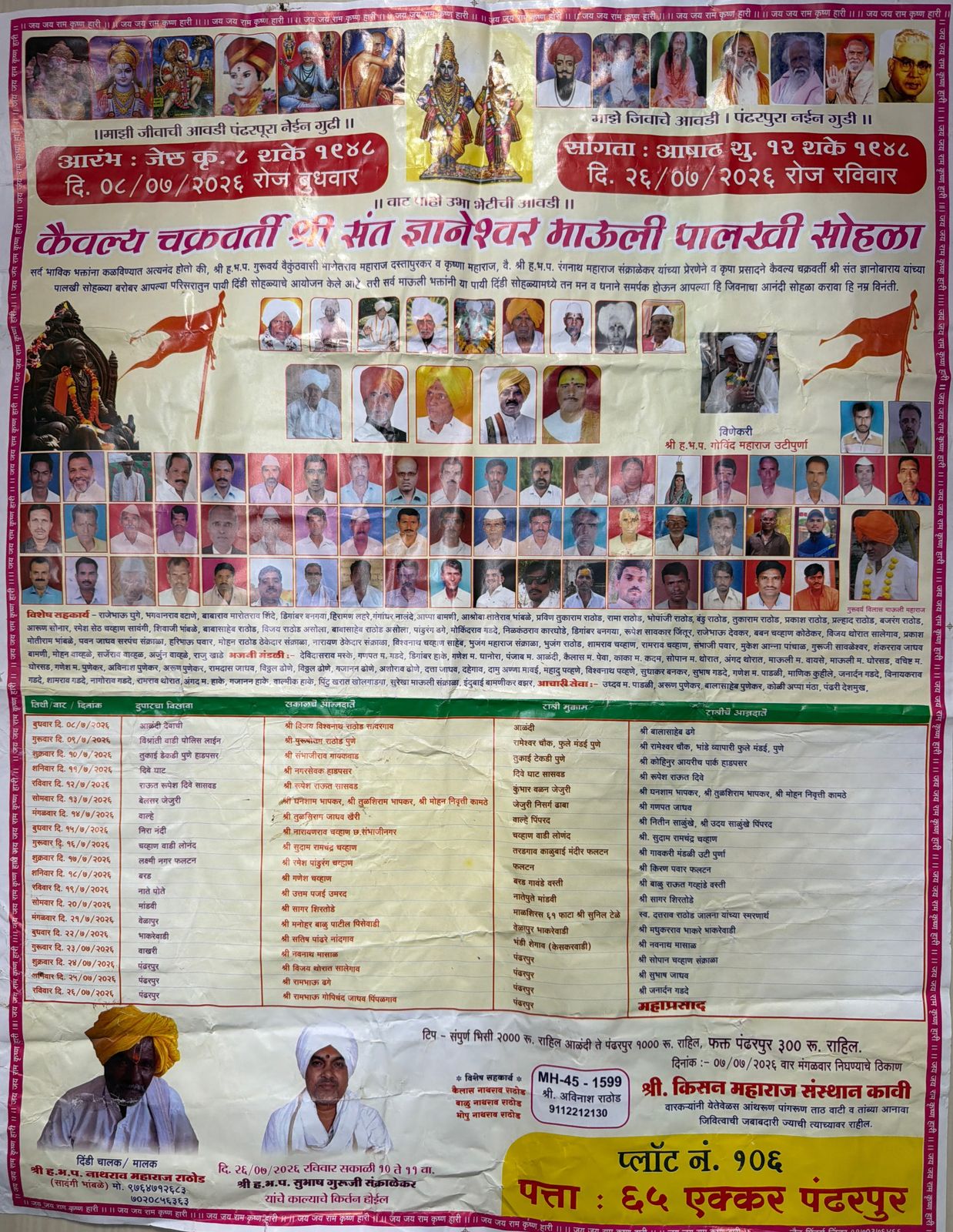
Long before Samarthya's truck set out each morning, every Dindi already knew exactly where it would be that day — worked out, printed and carried as a schedule listing each halt, each night's stop and each day's annadata. Reaching a Dindi at the right place depended entirely on reading and trusting this existing system rather than replacing it. These are ten of those schedules, collected in the field.
Eight of the ten name a Dindi or Pramukh that also appears in Samarthya's own distribution records — independent, third-party corroboration of both the Pramukh roster and the route. Scan 1 in particular lists 16 July at Taradgaon and 17 July at Phaltan, matching the Day 2 route exactly.
Gopal Maharaj Hosurkar's Dindi — Sant Dnyaneshwar Palkhi, 33rd year. Its own table puts the Dindi at Taradgaon on 16 July and Phaltan on 17 July, matching Day 2 of the operation. Pramukh Gopal Hosurkar is quoted in Voices of the Wari.Shri Dharmanath Maharaj Payi Dindi — Jawala–Sangvi Surya, Tal. Parner, 14th year. Names Eknath Maharaj Pathare, also quoted in Voices of the Wari.Swayambhu Mahadev Mandir Dindi, Papari — Alandi to Pandharpur, 6–26 July. Carries Kuber Dongare's own contact number; he too is quoted in Voices of the Wari.Sant Sawatamali Shripadbaba Ramdasbaba Dindi — Belwandi Bu. to Pandharpur, 32nd year. Belwandi is the venue written on the registration sheets in the Accountability tab.Kalbhairavnath Jogeshwari Mata Dindi — Tardobachi Wadi to Pandharpur, and only its first year. Its halt list includes Siddhatek, on the Day 1 corridor.Nimgaon Mhalungi & Panchkroshi, Tal. Shirur — a full Palkhi timetable giving every meal, preacher and kirtankar for each day of the walk.Thorandale to Pandharpur — 30th year, established 1997, organised by Balasaheb Maharaj Minde of Thorandale, Tal. Ambegaon.Govind Baba Dindi, Shri Bhairavnath Warkari Seva Mandal — Loni Mavala to Pandharpur, listing every halt from Pimpri Jalsen to Pandharpur.Sudhakar Maharaj Dhondge's Dindi, Kambarkhed — travelling from Mehkar via Shani Shingnapur to join the Palkhi at Alandi, a reminder of how far some Dindis come before the Wari even begins.Nathrao Maharaj Rathod's Dindi — the sheet carries a photograph of roughly eighty individual members, each one named: the Wari's own register of who walks.
The Wari on the move
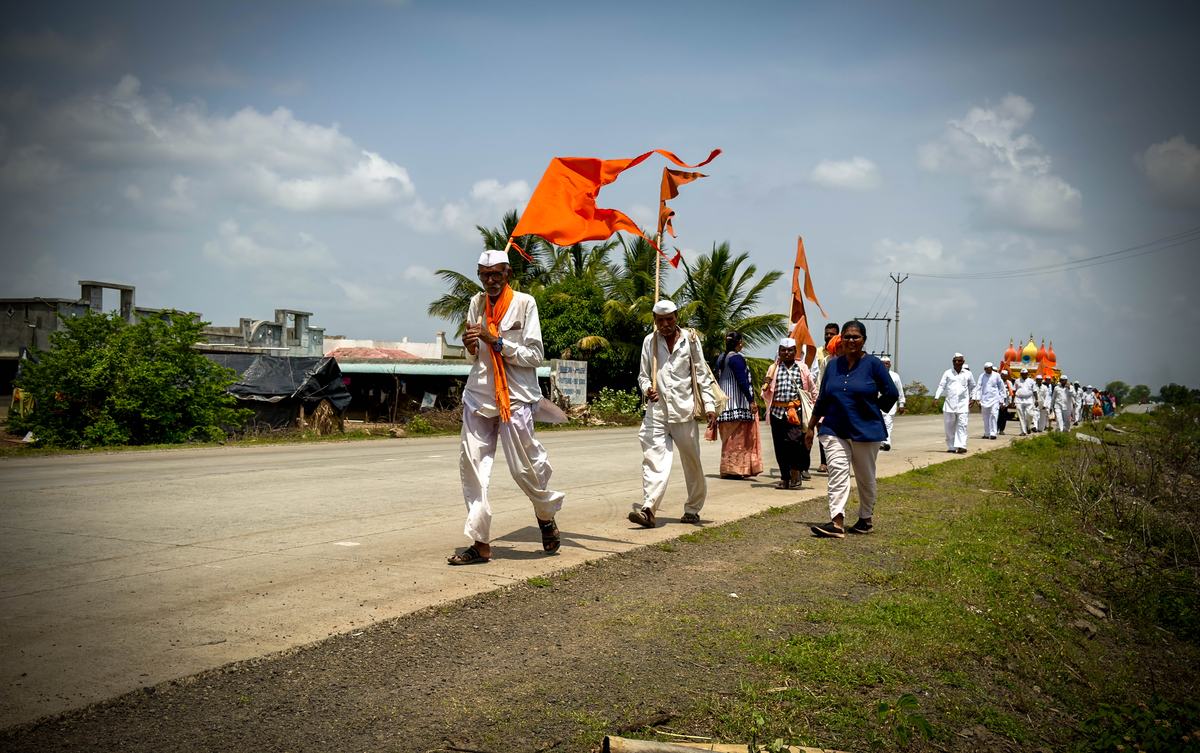
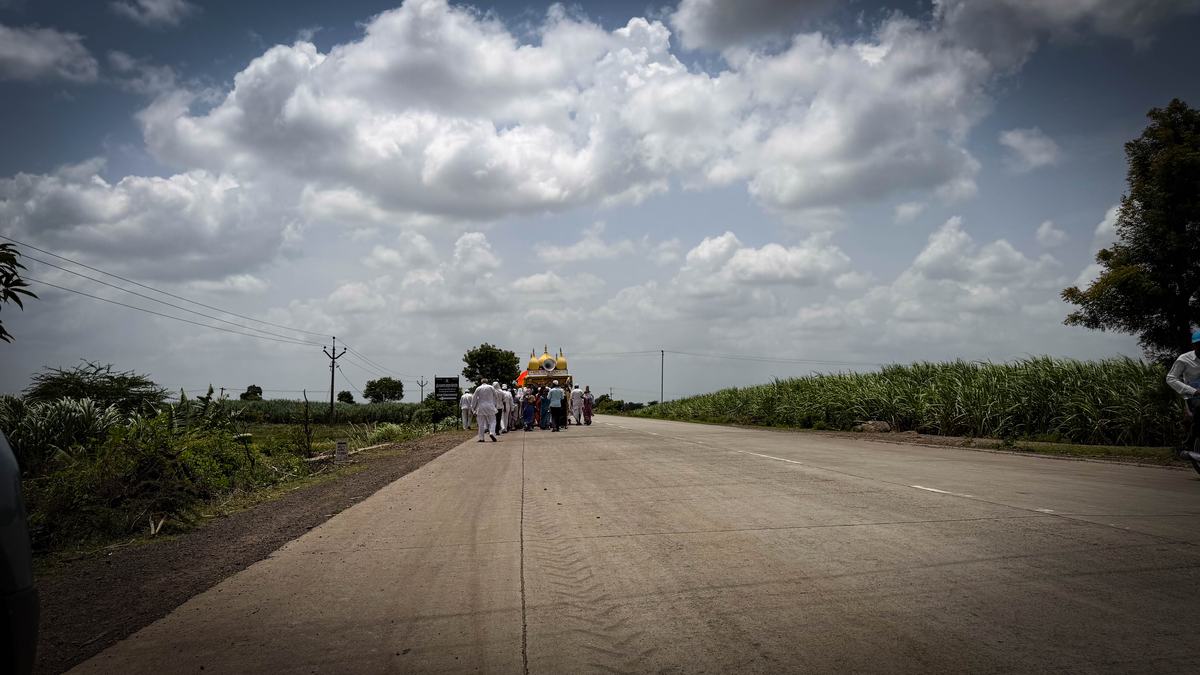
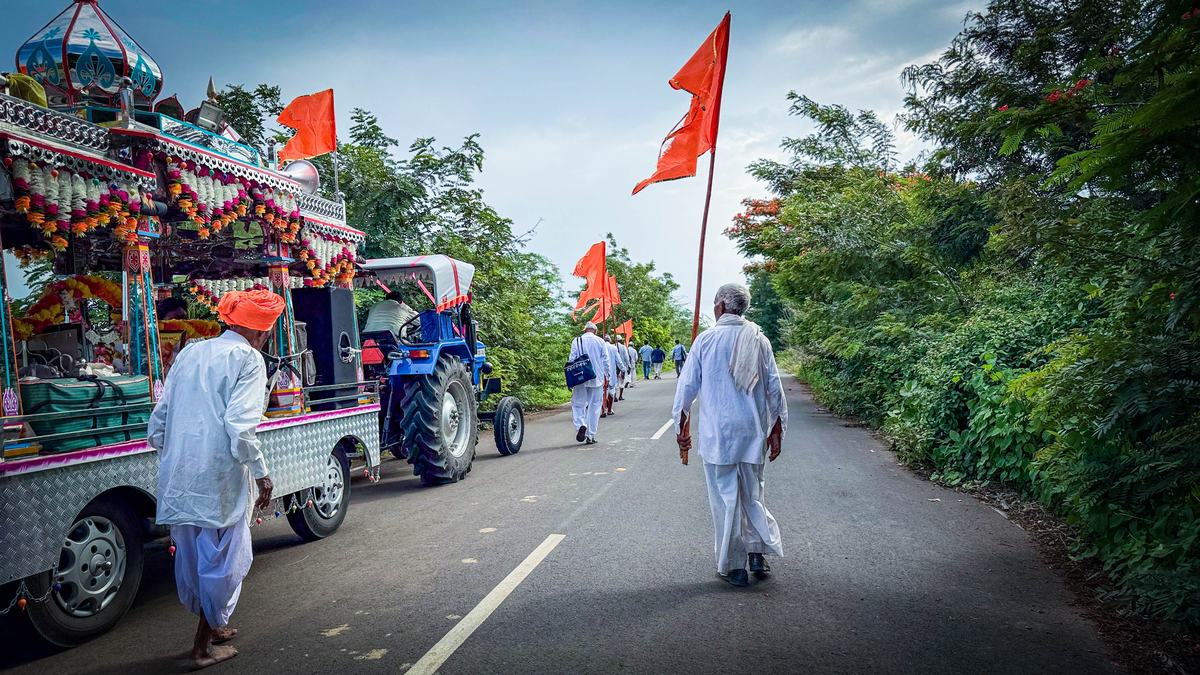
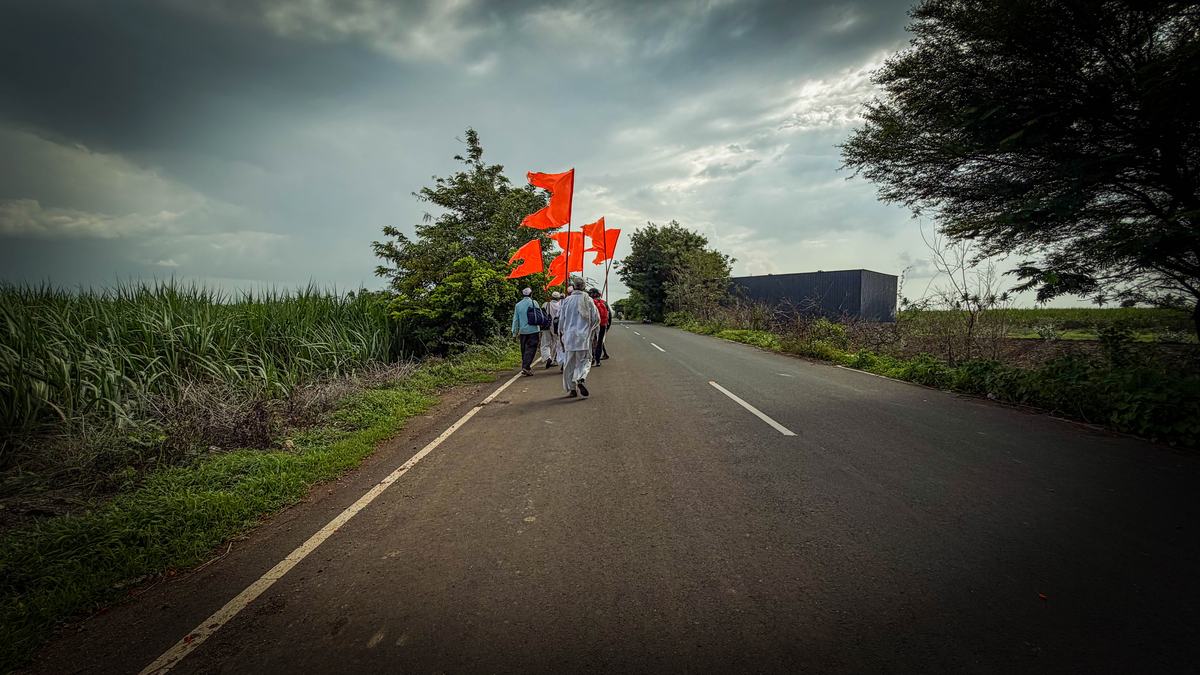
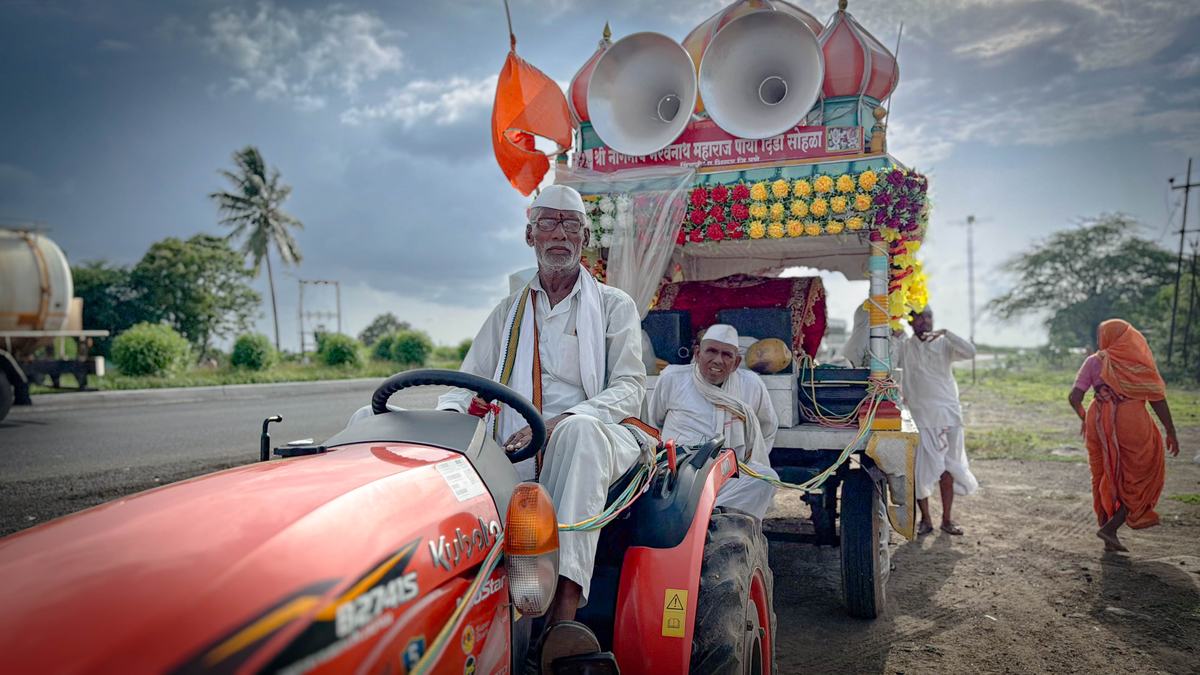
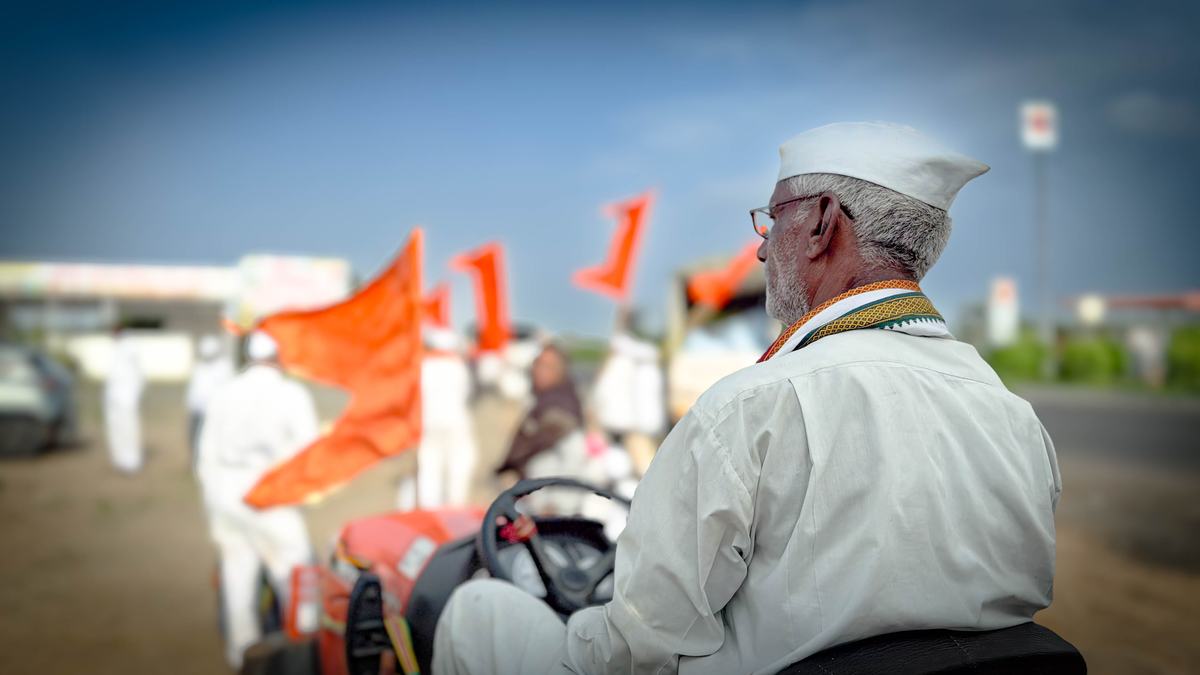
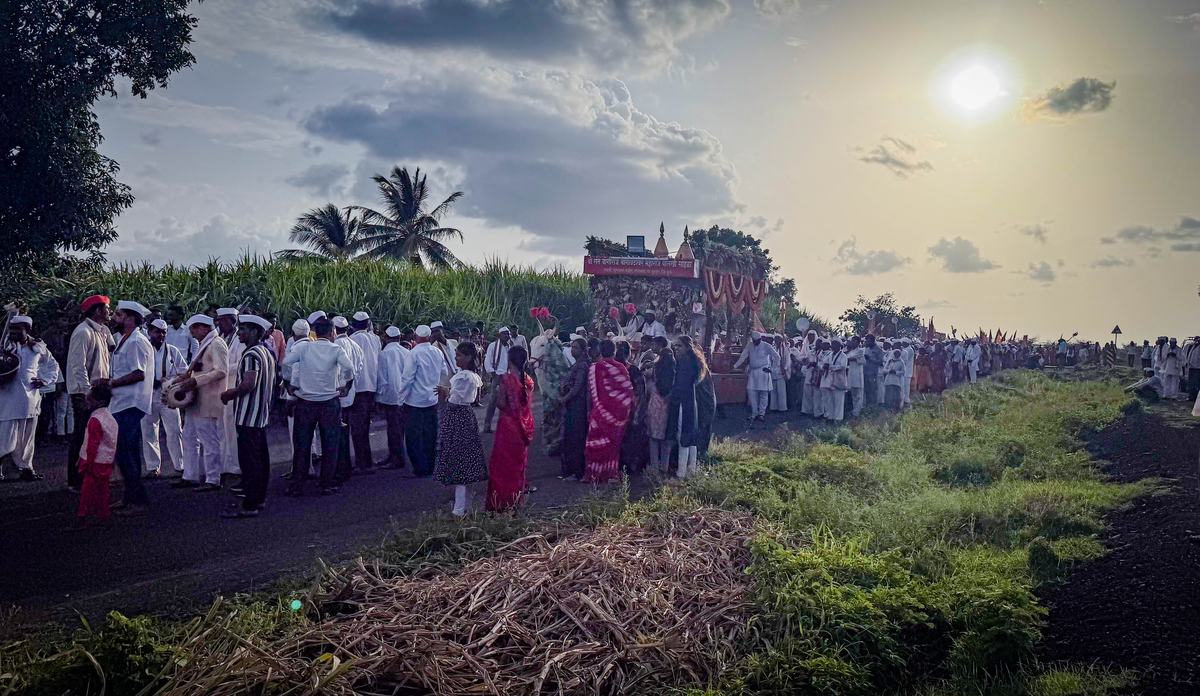
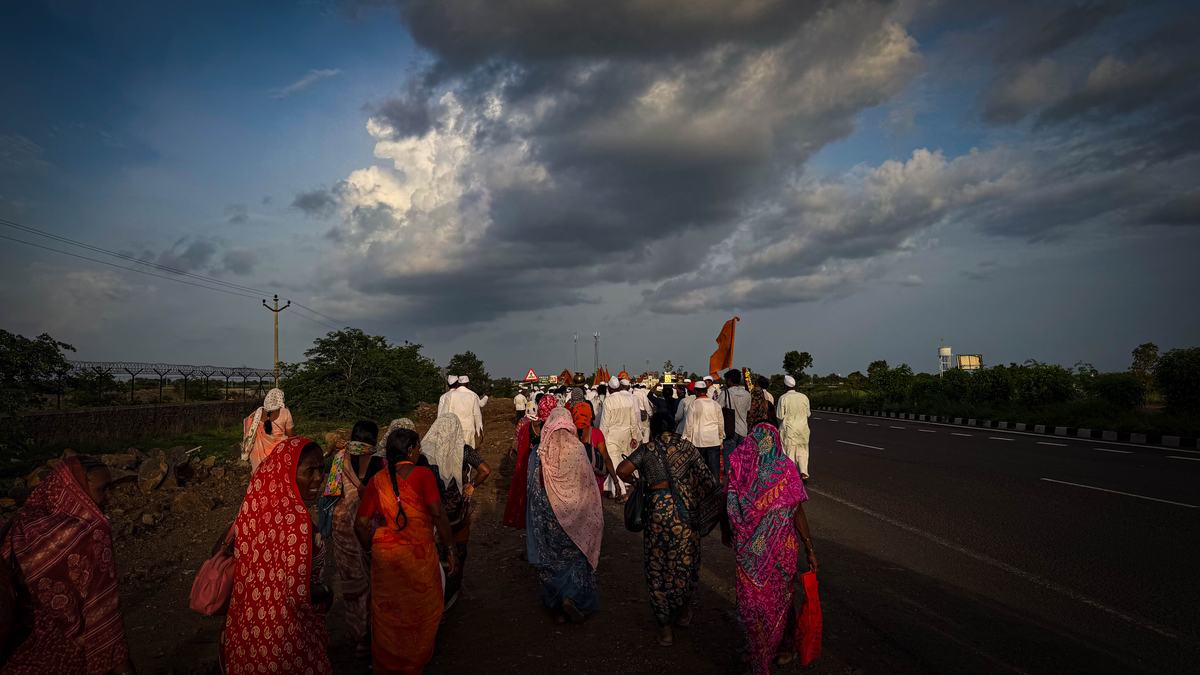
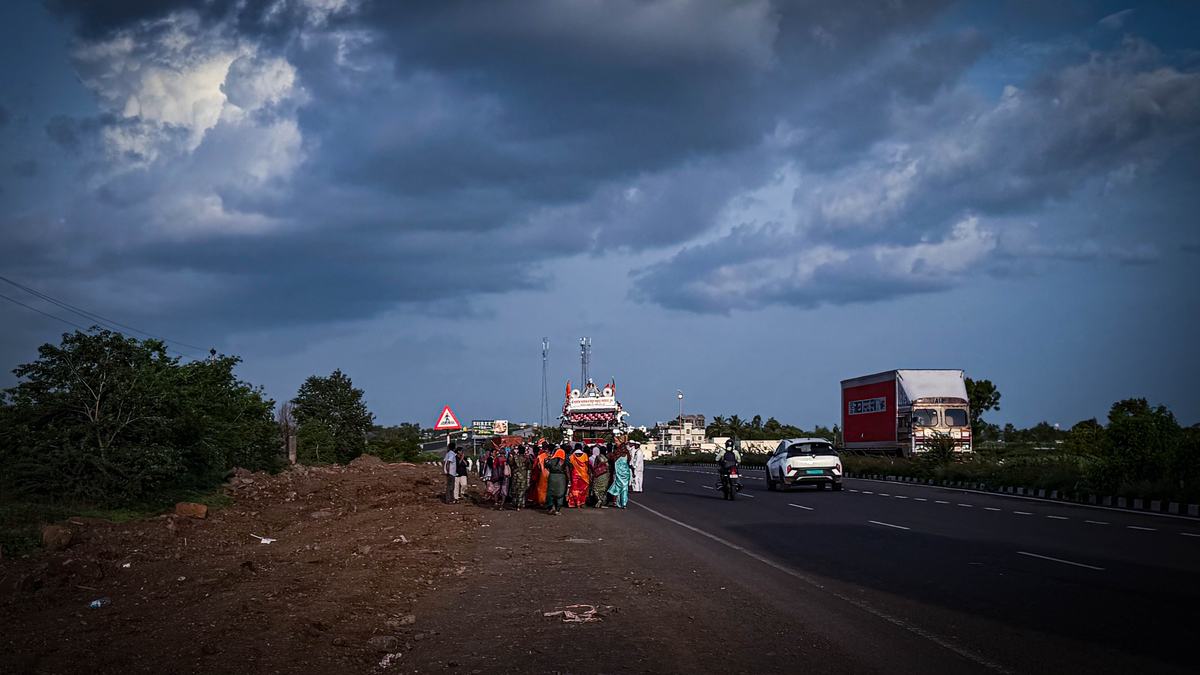
Between the halts there is only the road. These fifteen frames were made along the same corridors the map above plots — Shirur at midday, the Daund–Patas stretch through the afternoon, the Supe crossing at dusk, and the Satara side of the route the following morning. They are what the printed schedules look like when they are actually being walked: a tractor towing a shrine, a numbered placard, a file of white caps thinning out to a knot on an empty carriageway.
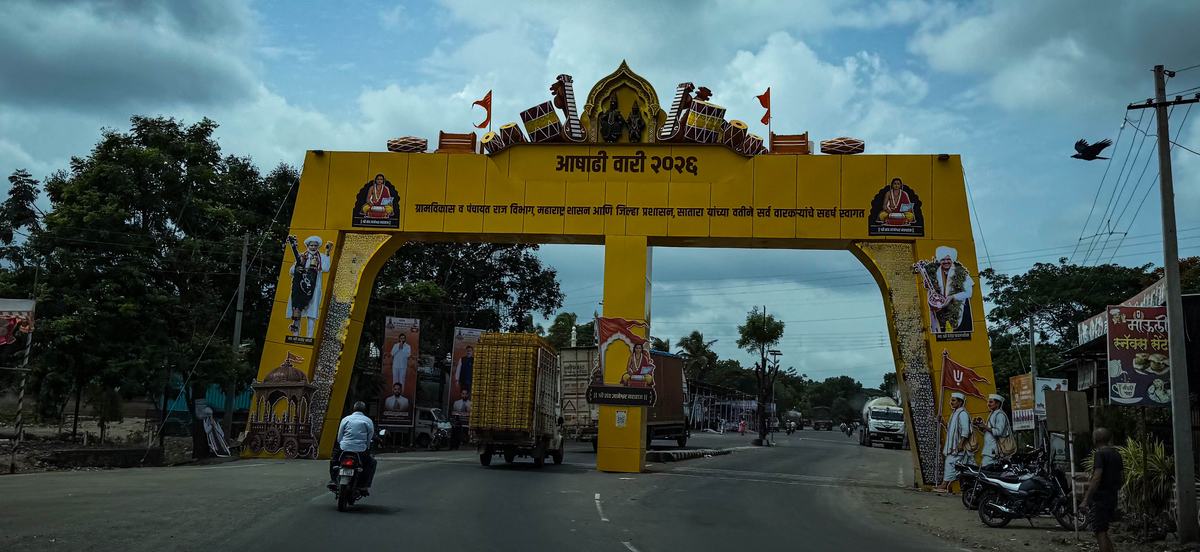
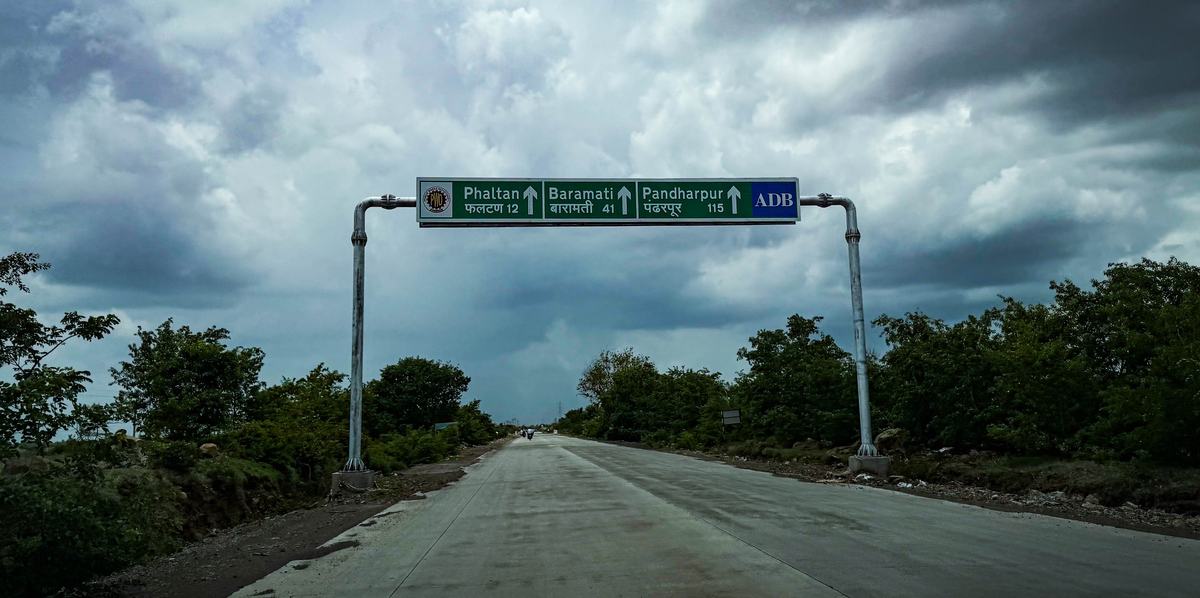
Fourteen of these fifteen frames carry GPS coordinates and sit in the same cluster table that draws the map above, which is why each caption can name a time and a place. Two of them also carry their own fixed proof: the arch on the Shirwal–Lonand stretch is an official Government of Maharashtra structure inscribed आषाढी वारी २०२६ and credited to the District Administration, Satara; and the PWD gantry on the Phaltan approach reads Phaltan 12, matching to within a kilometre the GPS distance from that stretch to the Phaltan halt where the Day 2 kits were handed over.
16 July, 11:31 · Shirur — the head of a Dindi on the concrete road, flag-bearer first, the Palkhi vehicle and the rest of the file strung out behind him16 July, 11:53 · Shirur — the same stretch twenty minutes on: a Dindi reduced to a knot of white between cane fields, its loudspeaker vehicle the only thing readable at distance16 July, 16:07 · Daund–Patas corridor — a Dindi's own Palkhi trailer, mirror-work domes and marigold strings, towed by tractor while its flag-bearers walk on ahead16 July, 16:07 · Daund–Patas corridor — five flags and a handful of walkers under a sky already going dark: the smaller Dindis travel like this the whole way16 July, 16:48 · Daund–Patas corridor — the shrine trailer of Shri Nagnath & Garudnath Maharaj Payi Dindi, its board naming Shirur taluka in Pune district, with an elder at the wheel of the tractor towing it16 July, 16:48 · Daund–Patas corridor — the same driver from behind, watching his Dindi's flags move off up the road before he follows16 July, 17:56 · Shirsuphal–Supe — Shri Sant Yogiraj Changavateshwar Maharaj Palkhi Sohala, its banner naming Saswad in Purandar taluka: drums, a garlanded horse, and a column running back to the horizon16 July, 17:57 · Shirsuphal–Supe — walking into the low sun behind the numbered placard of दिंडी ७, cloth bags over the shoulder, the flags of the Dindis behind already visible16 July, 17:58 · Shirsuphal–Supe — a tulsi vrindavan carried on the head through the middle of the crowd, flags above it, the storm cloud sitting directly overhead16 July, 17:58 · Shirsuphal–Supe — the file coming past in the last of the light: white caps, saffron sashes, brass tal in hand, a bag on every shoulder16 July, 17:59 · Shirsuphal–Supe — villagers waiting on the shoulder as the Dindi files past an oncoming cement tanker: the Wari and ordinary highway traffic on the same carriageway16 July, 18:19 · Supe — walking the dirt shoulder of a newly built highway, the Palkhi vehicle up ahead where the made surface runs out16 July, 18:21 · Supe — two minutes later, seen wide: the entire Dindi is the small bright knot at the centre, traffic passing it at speed on both sides17 July, 11:08 · Shirwal–Lonand — the official Ashadhi Wari 2026 arch, welcoming all Warkaris on behalf of the Rural Development & Panchayat Raj Department, Government of Maharashtra, and the District Administration, Satara17 July · the Phaltan approach — the PWD gantry that fixes the operation on the public map: Phaltan 12, Baramati 41, Pandharpur 115 — the destination still a hundred kilometres off
What the Pramukhs said
Voices of the Wari
"आम्हाला हे ठाऊक नव्हते की अॅमेझॉनसारखी कंपनी वारकऱ्यांसाठी असे मानवतेचे कार्य करत आहे."
"We did not know a company like Amazon stood behind this kind of humanitarian work for the Warkari."
Gopal Hosurkar · Dindi Pramukh · Hosur, Phaltan
"सामर्थ्य आणि अॅमेझॉनची माणसे आपल्या कामातच पांडुरंग पाहतात."
"You from Samarthya and Amazon see Pandurang in the work you do."
Kuber Dongare · Dindi Pramukh · Papari
Full set of 5 Pramukh quotes (Marathi + English) slots in here once WhatsApp-confirmed with each Pramukh.
Beneficiary voices
Feedback collected directly from Warkari families at the point of distribution. Two of the six below have verified original Marathi transcripts; the other four were recorded in English in the field and are shown with a rendered Marathi translation, clearly marked as such.
⛺ Immediate Shelter / तात्पुरता निवारा
"आम्ही वारीचा प्रवास सुरू केला तवा अनेक दानशूर लोक पाणी आणि जेवण वाटत होते. खाण्यापिण्याची अडचण नव्हती, पण पावसापासून बचावासाठी निवाऱ्याच्या साहित्याची लयी गरज व्हती. तुम्ही नेमकी तीच सोय केली."
"When we started the journey, many donors were offering food and water. Food was not an issue, but shelter materials to protect against heavy rain were urgently needed. You provided exactly that."
🩸 Women's Hygiene & Dignity / महिला स्वच्छता व सन्मान
"पाऊस आणि पुराच्या कठीण येळेला मला जुनं फाटकं कापडच वापरावं लागत होतं. तुम्ही मला सॅनिटरी पॅड्स देऊन खुप मोठा दिलासा दिला."
"During the severe rain and flooding, I was forced to use old torn cloth. Providing sanitary pads was a huge relief for me."
गोदावरी चाटे, सातारा · Godavari Chate, Satara
Hygiene & Dignity Kit
🦟 Health & Protection / आरोग्य व सुरक्षा
Recorded in English in the field · Marathi below is a rendered translation, not a verbatim transcript
"पावसाळ्यात उघड्यावर किंवा तंबूत झोपताना डास आणि किड्यांचा खूप त्रास व्हायचा, आणि आम्हाला डेंग्यू किंवा मलेरिया होण्याची भीती वाटायची. पण तुम्ही दिलेल्या मच्छरदाणीमुळे रात्री आम्ही डासांपासून पूर्णपणे सुरक्षित राहिलो."
"Sleeping in the open or in a tent during the monsoon brings a lot of trouble from mosquitoes and insects, and we were afraid of getting dengue or malaria. But the mosquito net you gave us kept us completely safe from mosquitoes at night."
अनिता घुगे, पळसखेड · Anita Ghuge, Palaskhed
Mosquito Net / Health Kit
🎒 Belongings & Carry Kit / सामान वाहून नेण्याची सोय
Recorded in English in the field · Marathi below is a rendered translation, not a verbatim transcript
"वारीदरम्यान आपलं सगळं सामान एकत्र आणि पावसापासून सुरक्षित ठेवणं ही मोठी अडचण होती. या मोठ्या, मजबूत कॅरियर बॅगमुळे आमचं वैयक्तिक सामान एका जागी सुरक्षित राहिलं आणि चालताना ते वाहून नेणंही खूप सोपं झालं."
"Keeping all our belongings together and safe from the rain during the Wari was a big challenge. This large, sturdy carrier bag let us keep all our personal belongings safe in one place, and made it much easier to carry while walking."
Recorded in English in the field · Marathi below is a rendered translation, not a verbatim transcript
"पावसामुळे जमीन सगळीकडे चिखलमय आणि ओलसर झाली होती. रात्री अंथरायला प्लास्टिक शीट आणि पांघरायला ऊबदार ब्लँकेट मिळाल्यामुळे थंड, ओलसर जमिनीचा त्रास झाला नाही. शांत झोपेमुळे दुसऱ्या दिवशी चालण्याचं बळ मिळालं."
"The rain had turned the ground muddy and damp everywhere. Having a plastic ground sheet to spread out at night and a warm blanket to cover ourselves meant we weren't troubled by the cold, damp ground. A peaceful night's sleep gave us the strength to keep walking the next day."
Recorded in English in the field · Marathi below is a rendered translation, not a verbatim transcript
"वारीच्या वाटेवर अचानक जोरदार पाऊस सुरू झाला की निवारा शोधणं कठीण व्हायचं. पण तुम्ही दिलेल्या ताडपत्री आणि मजबूत दोरीमुळे आम्ही झटपट तात्पुरता निवारा उभारू शकलो. त्यामुळे आमचे कपडे, सामान आणि धान्य पावसात भिजण्यापासून वाचलं."
"When sudden heavy rain would start along the Wari route, it was hard to find any shelter. But with the tarpaulin and strong rope you gave us, we could quickly put up a temporary shelter. That saved our clothes, belongings, and grain from getting soaked in the rain."
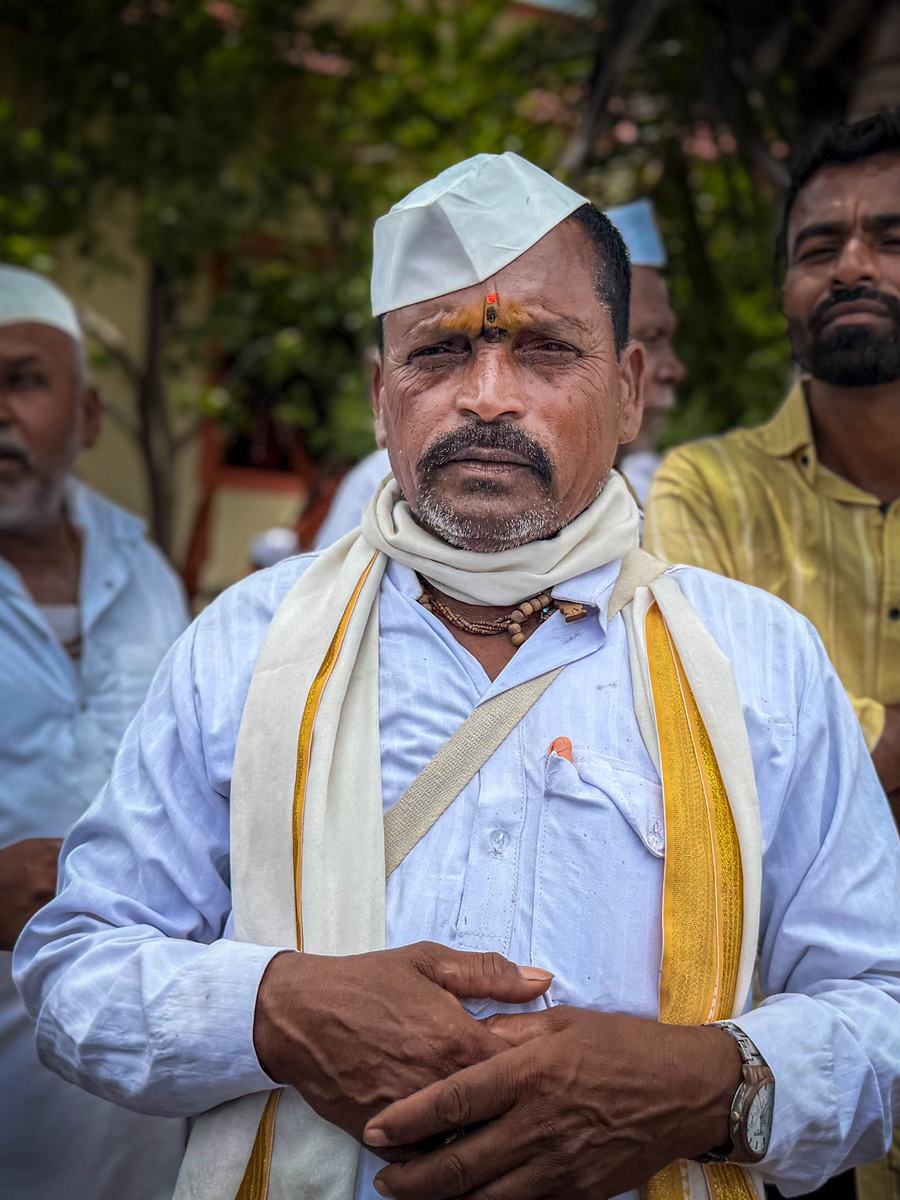
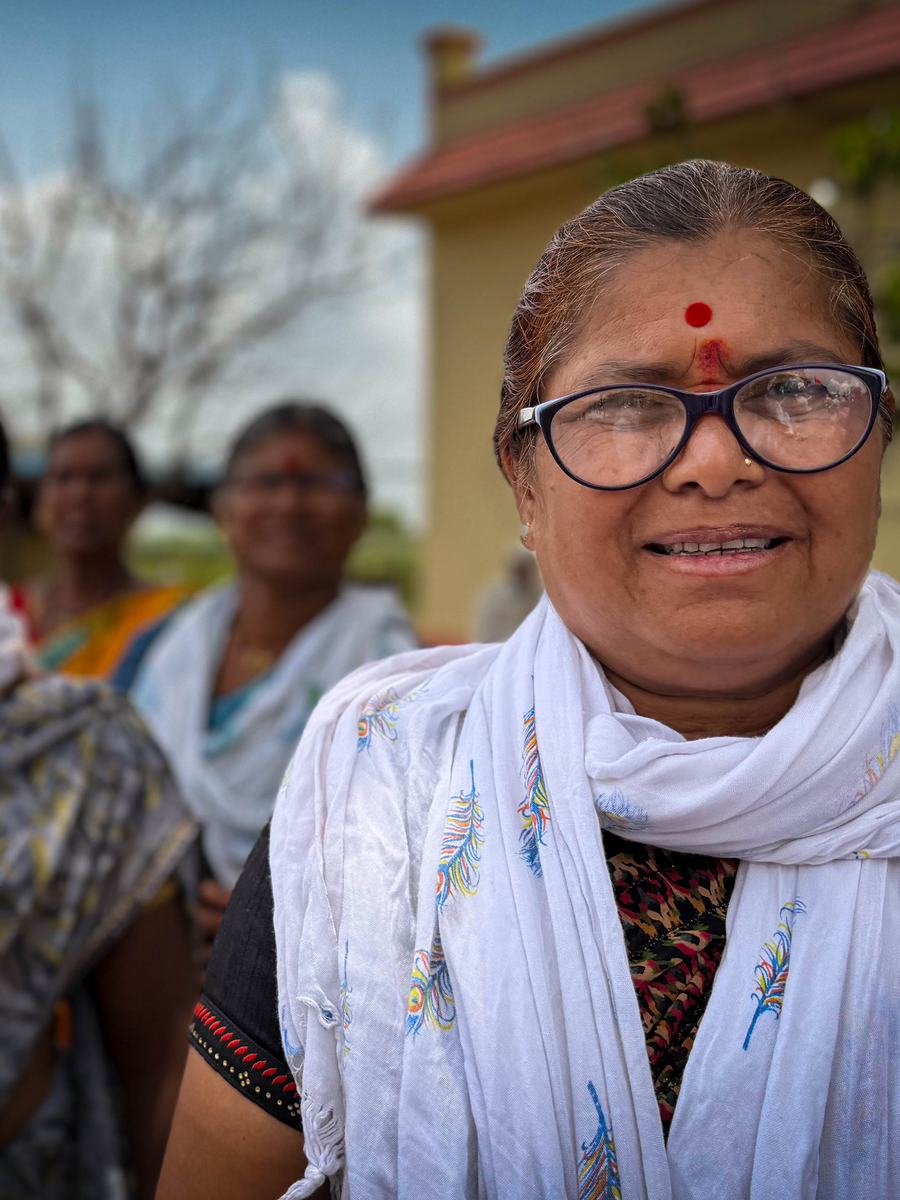
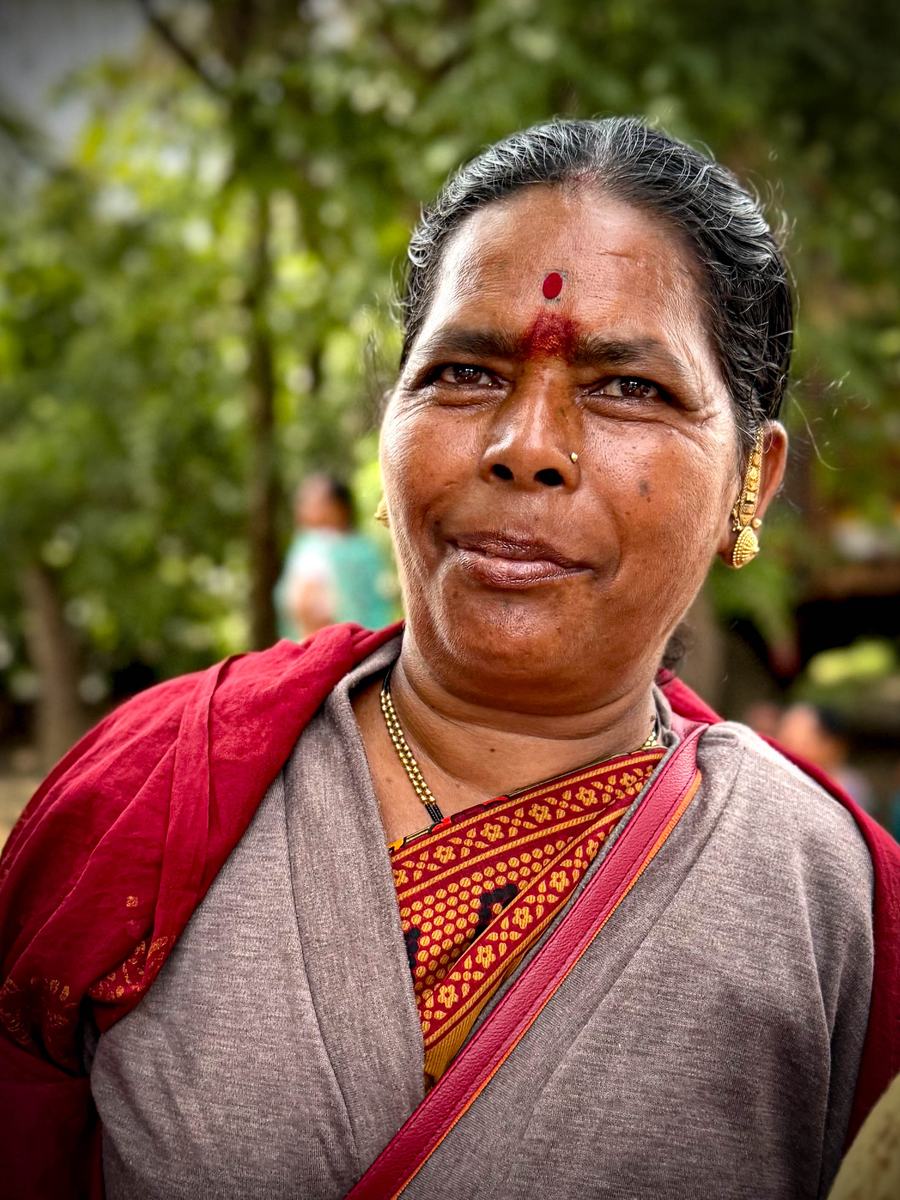
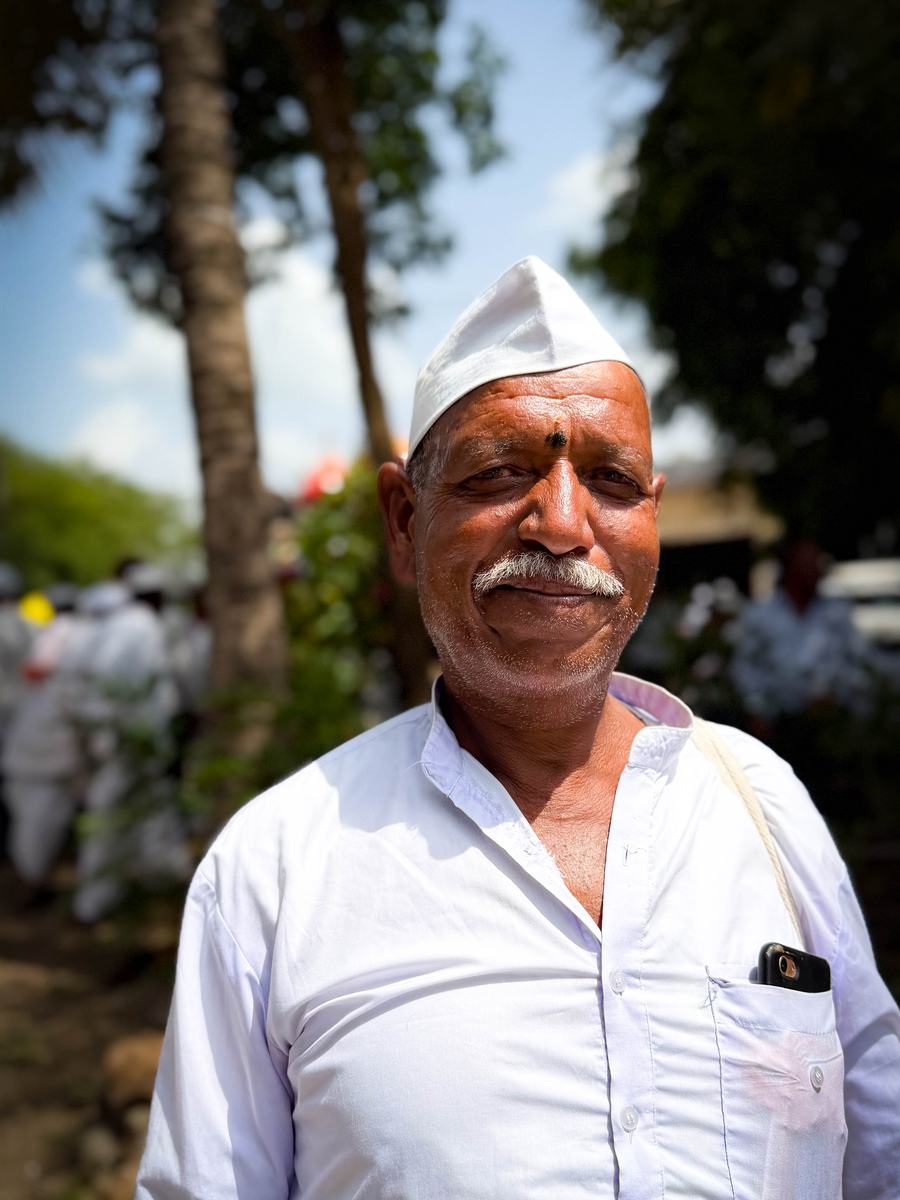
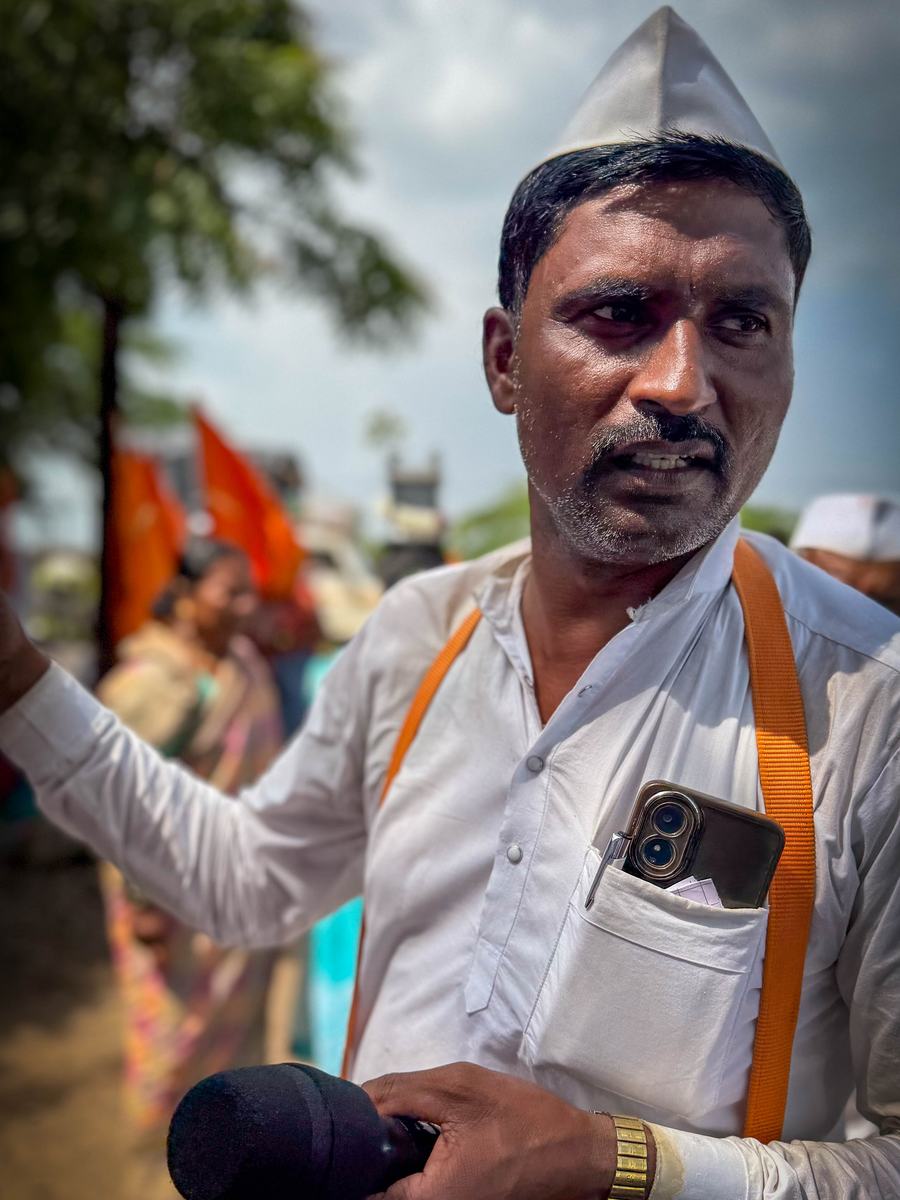
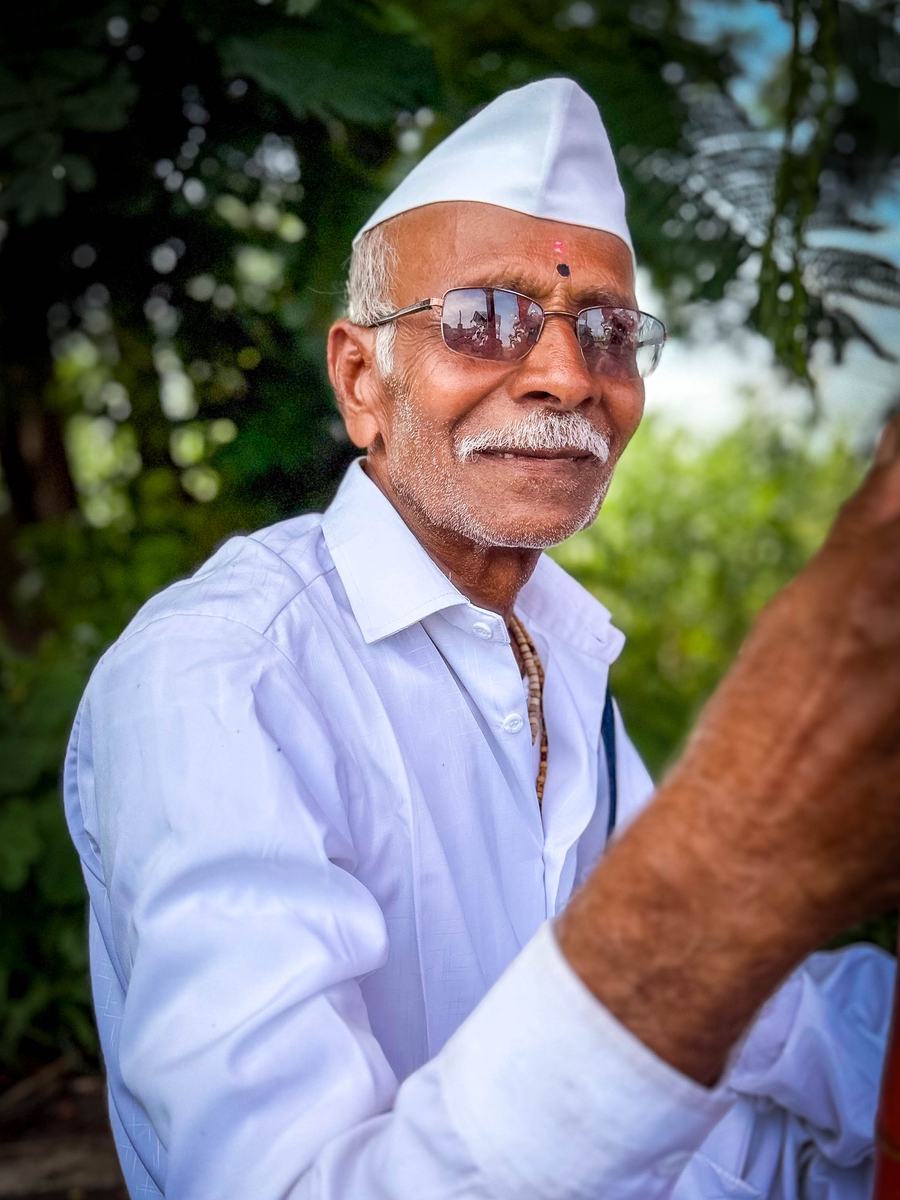
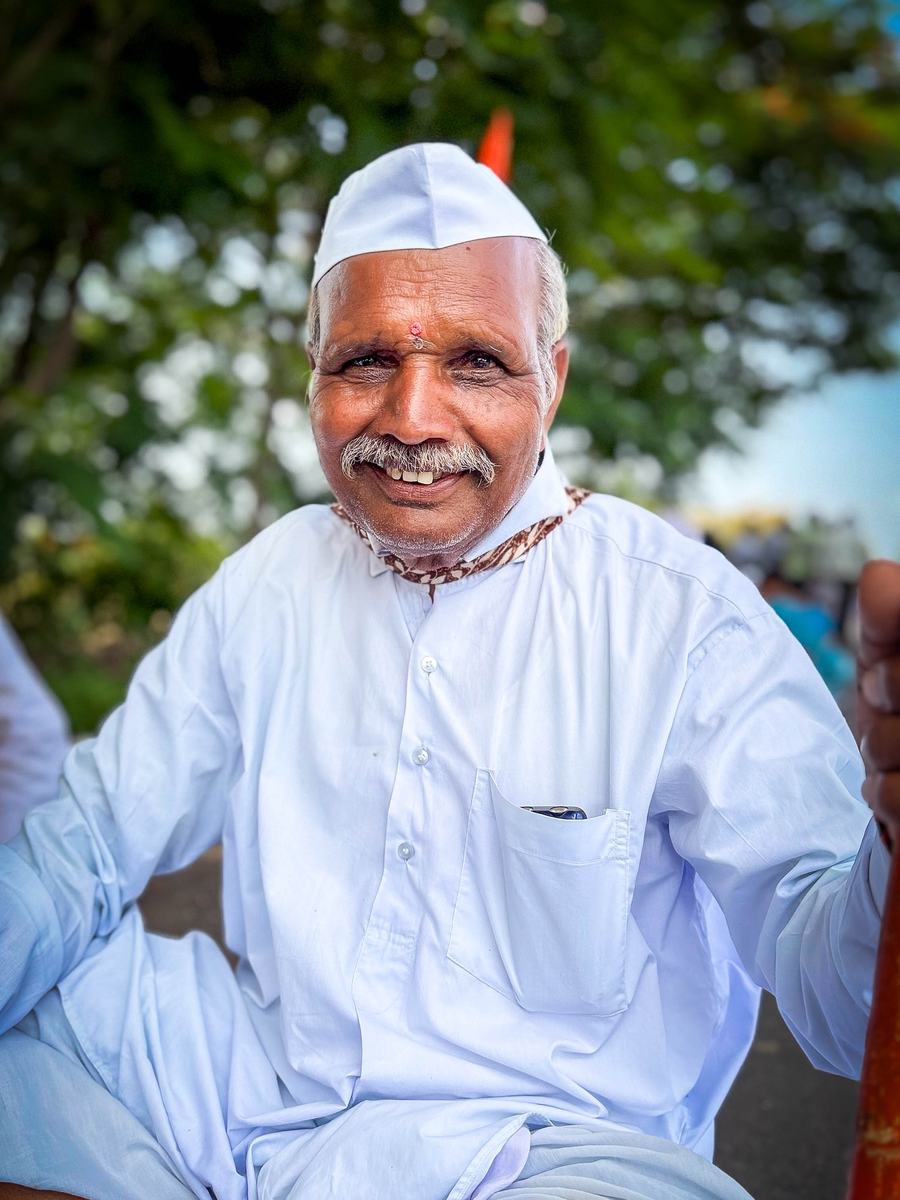
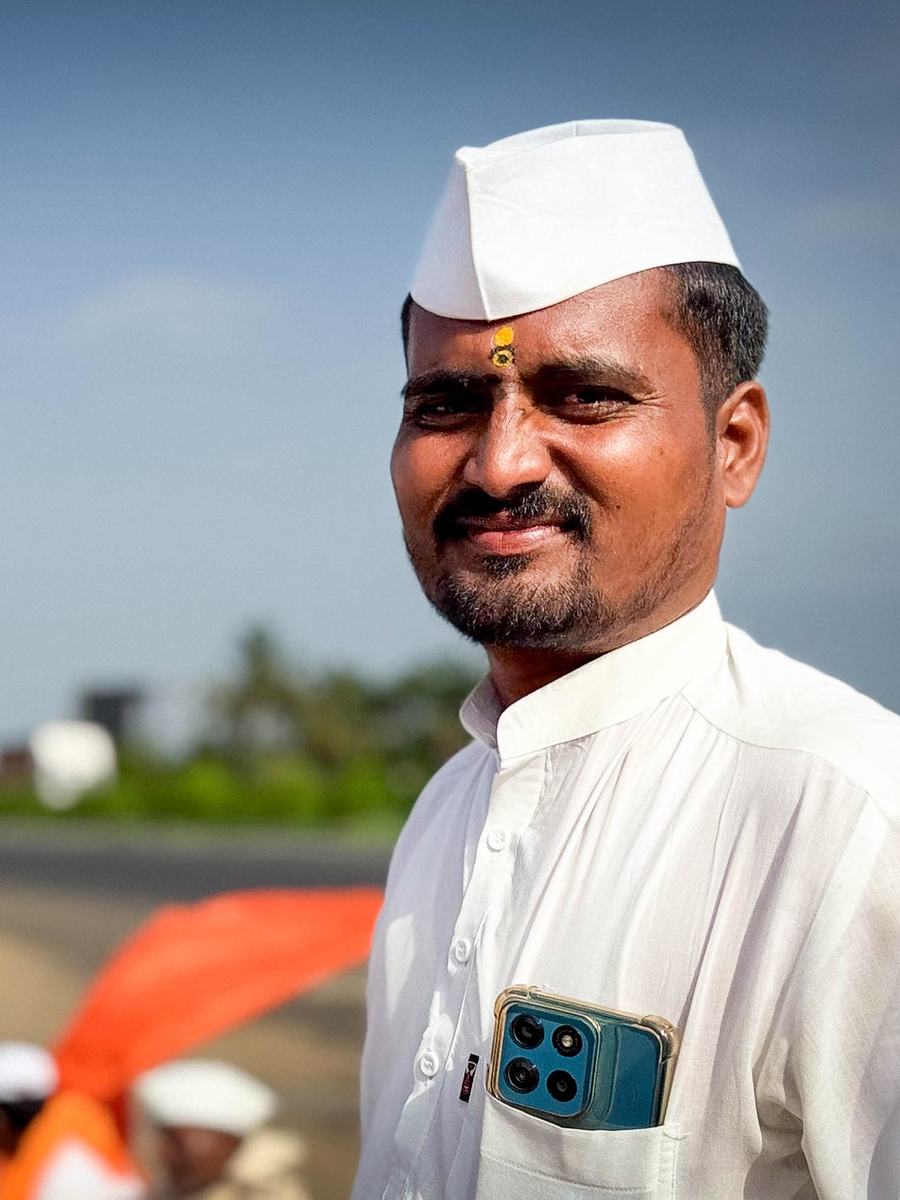
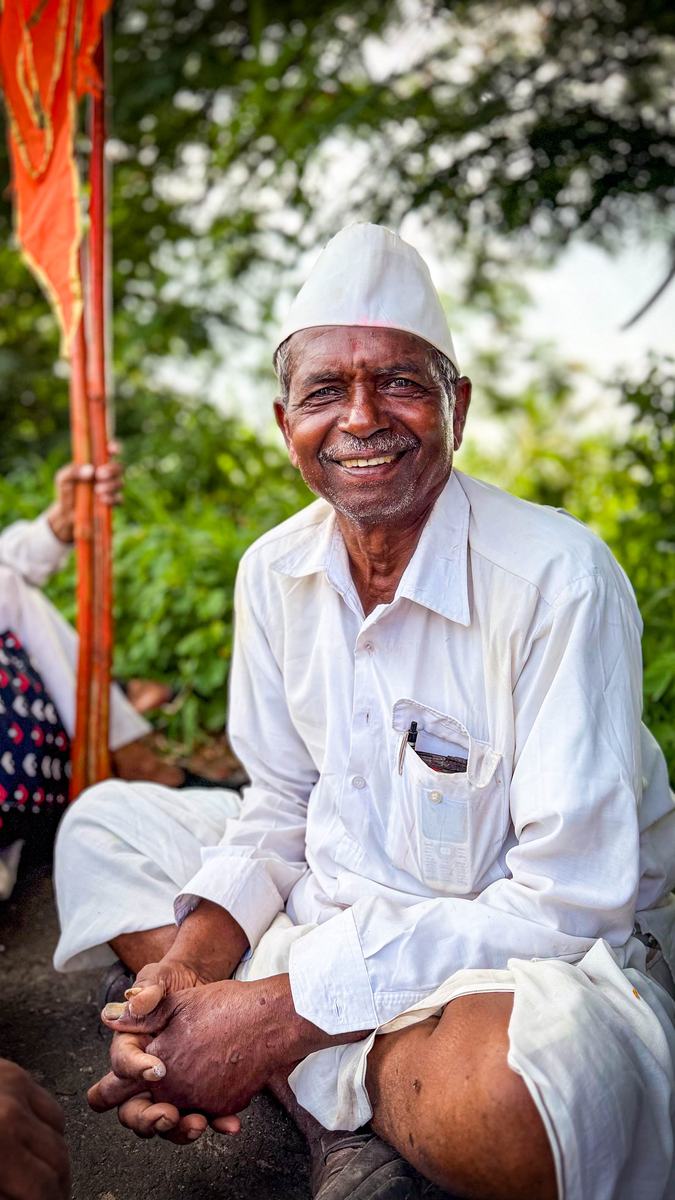
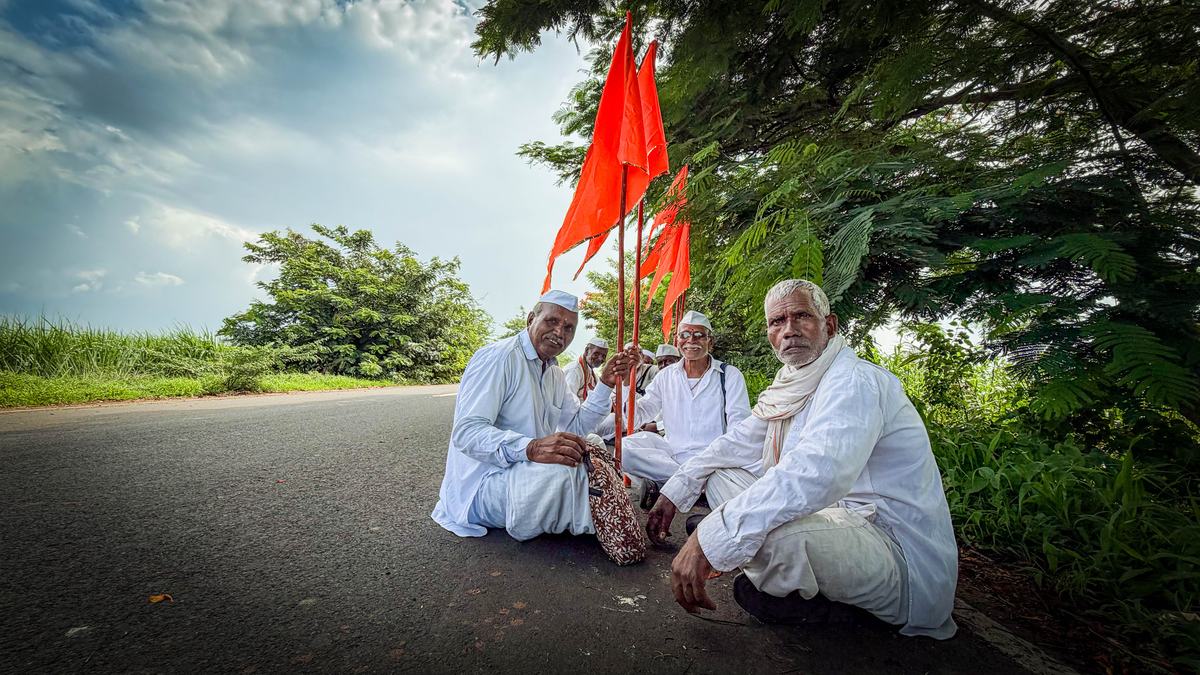
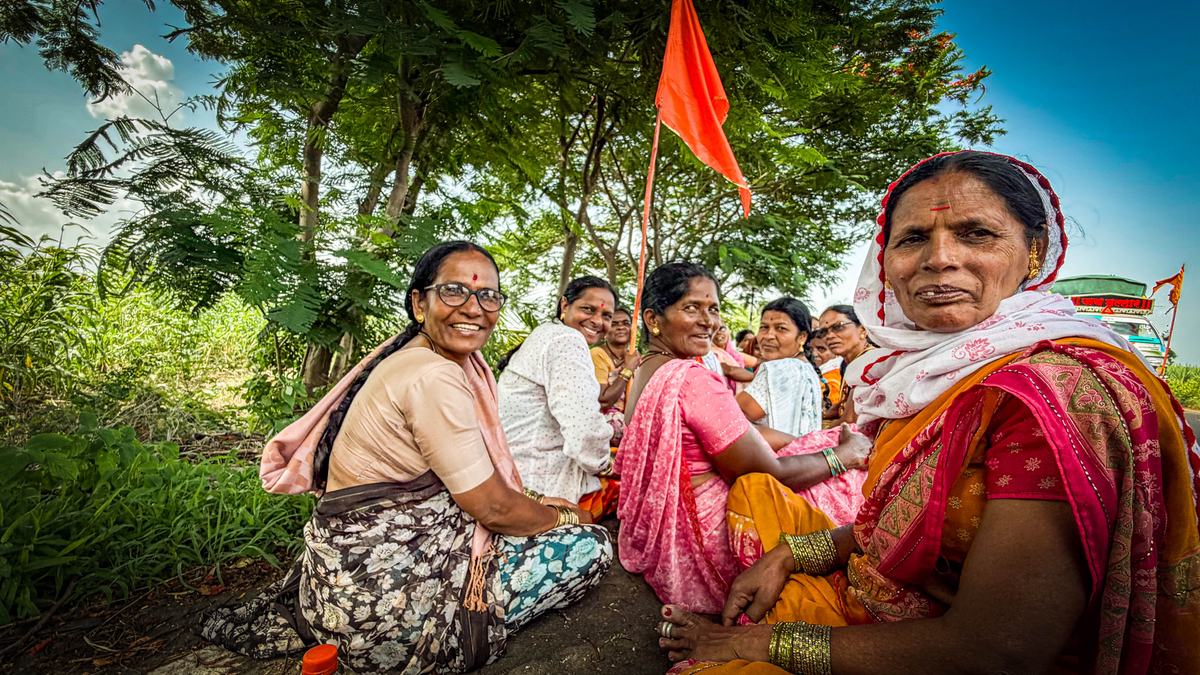
The testimonials above are attributed, sourced and labelled one by one. These ten photographs are the other half of that record — Warkaris the team met, sat with and talked to across the three days on the route. They are published as portraits rather than as quotations: the words on this page belong only to the people named beside them.
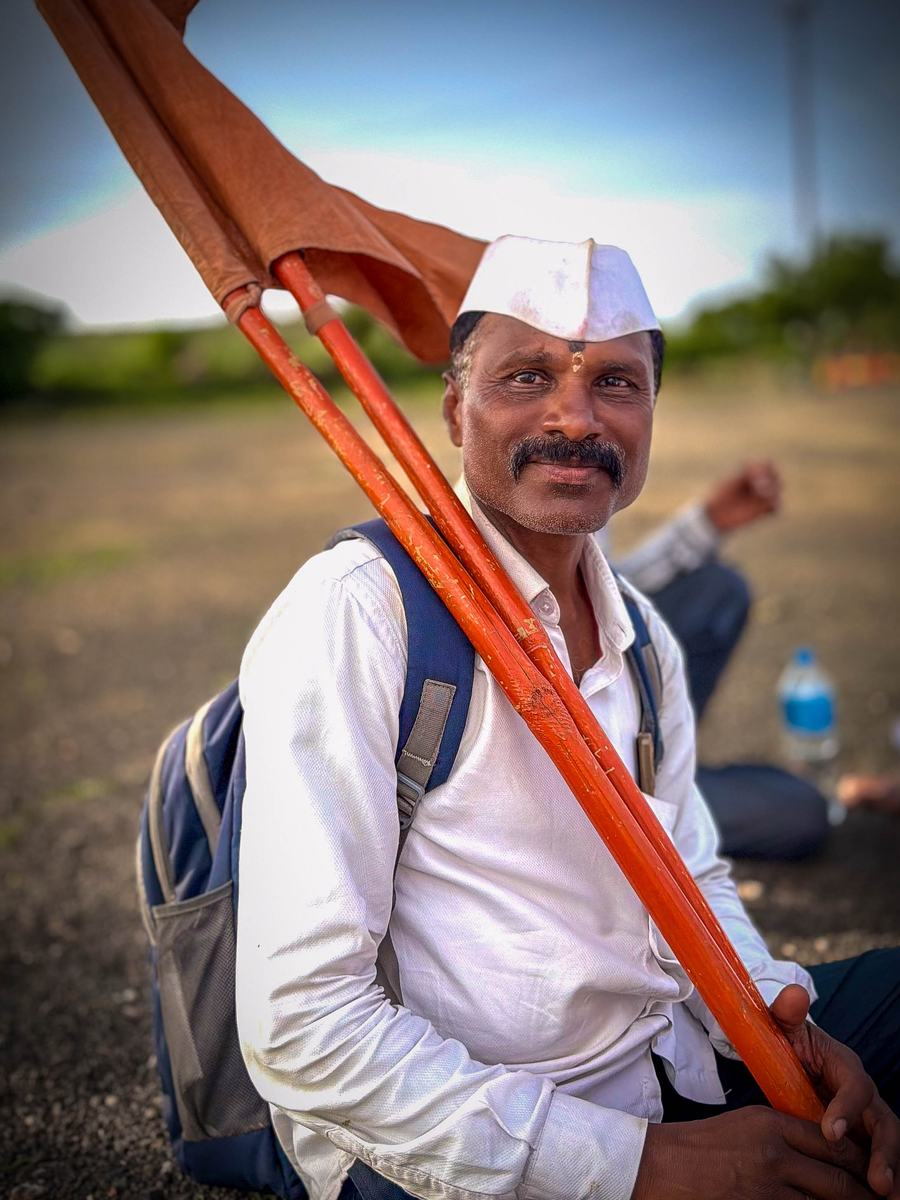
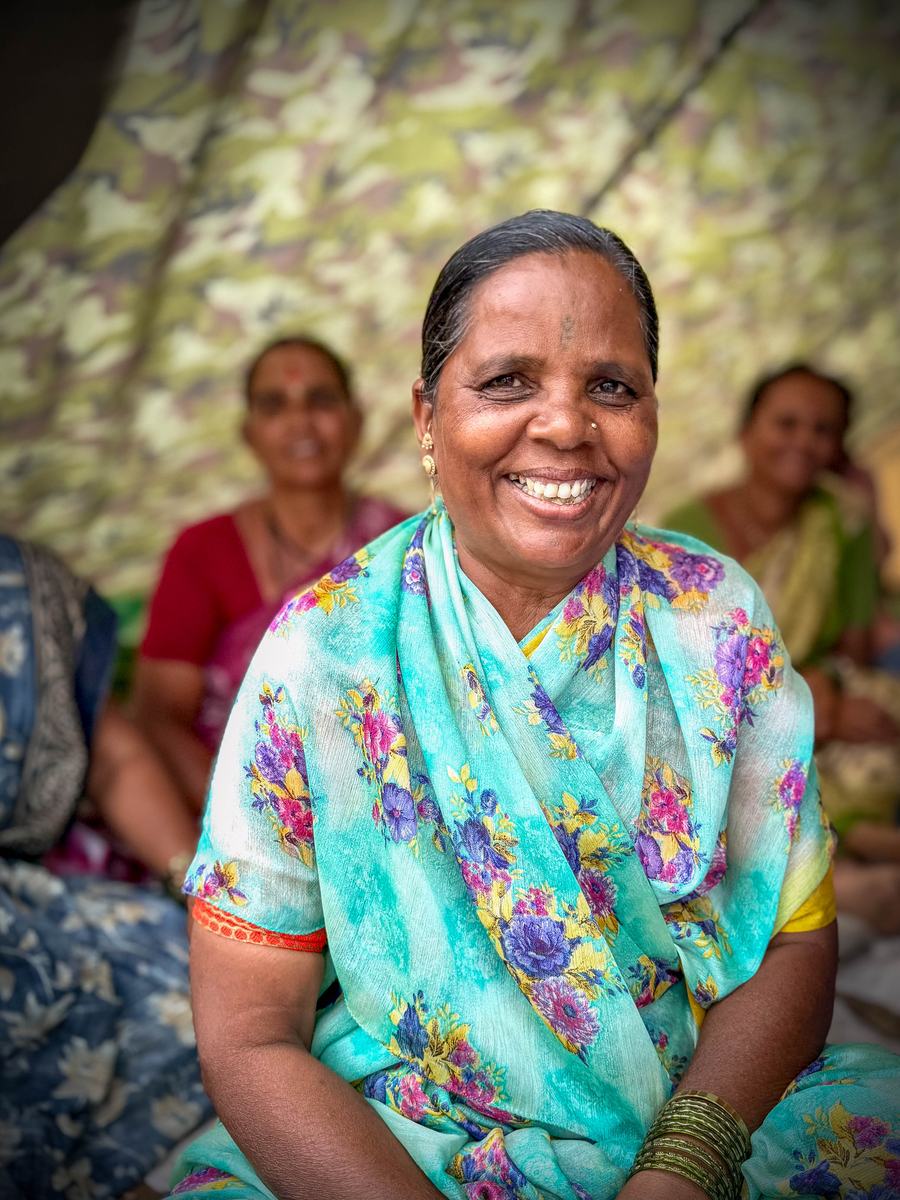
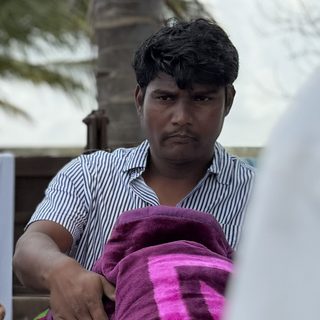
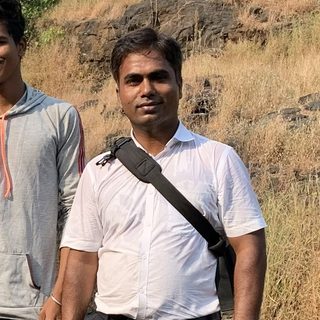
A Warkari in cap and gold-bordered shawl, hands clasped, among the group gathered at a haltA woman in glasses and an embroidered white dupatta, the rest of her group waiting behind herAn older woman in a grey and crimson saree, photographed in the shade at a roadside haltA Warkari in white cap and shirt, phone tucked into his pocket for the roadSpeaking into a microphone during a field recording, orange sash across his shoulderAn elder in tinted glasses and tulsi beads, resting out of the sunAn elder seated beside his Dindi's flagstaff, cap and kurta still crisp after the walkA younger Warkari, the flags of his Dindi standing in the road behind himResting on the ground with two flagstaffs across his shoulder and his pack still onA woman in a turquoise floral saree under the tent tarpaulin, her companions behind her
Evidence & verification
Verified accountability for every kit
234
Tokens issued directly
Serialized paper tokens matched to families
66
Kits via Dindi Pramukh
Rain made 1:1 matching impractical — signed for by the Pramukh
300
Total — reconciled exactly
234 + 66 = 300, no gap
The register, filled in at the halt
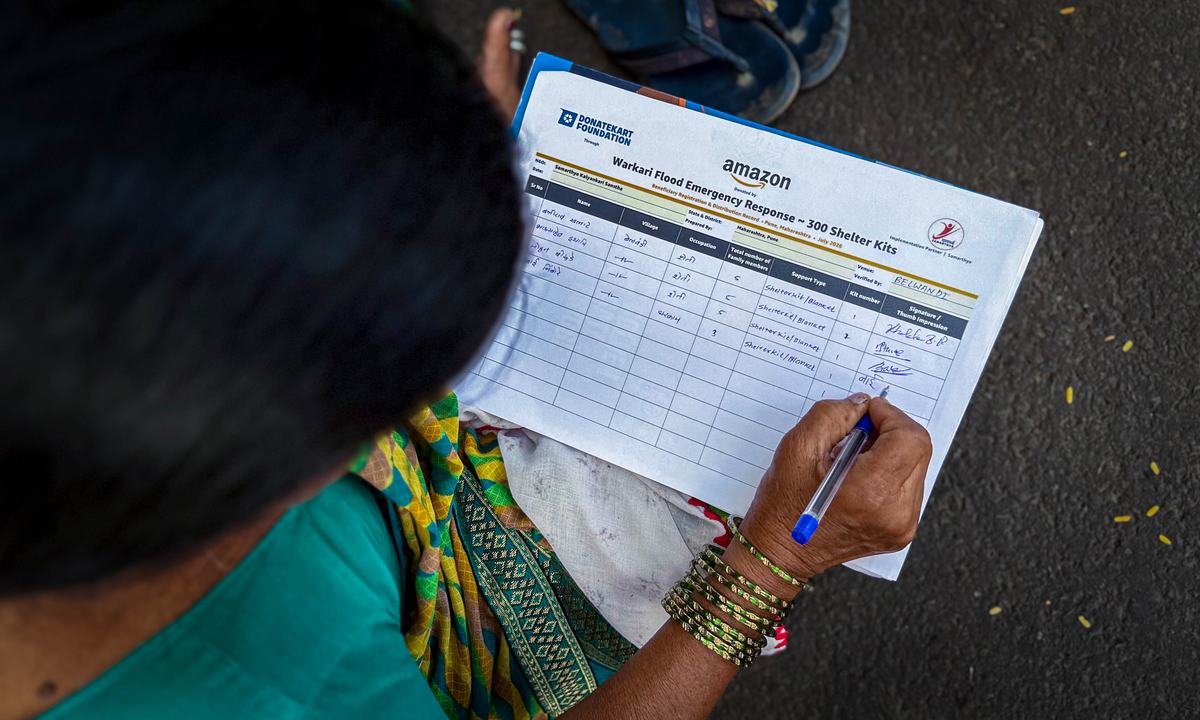
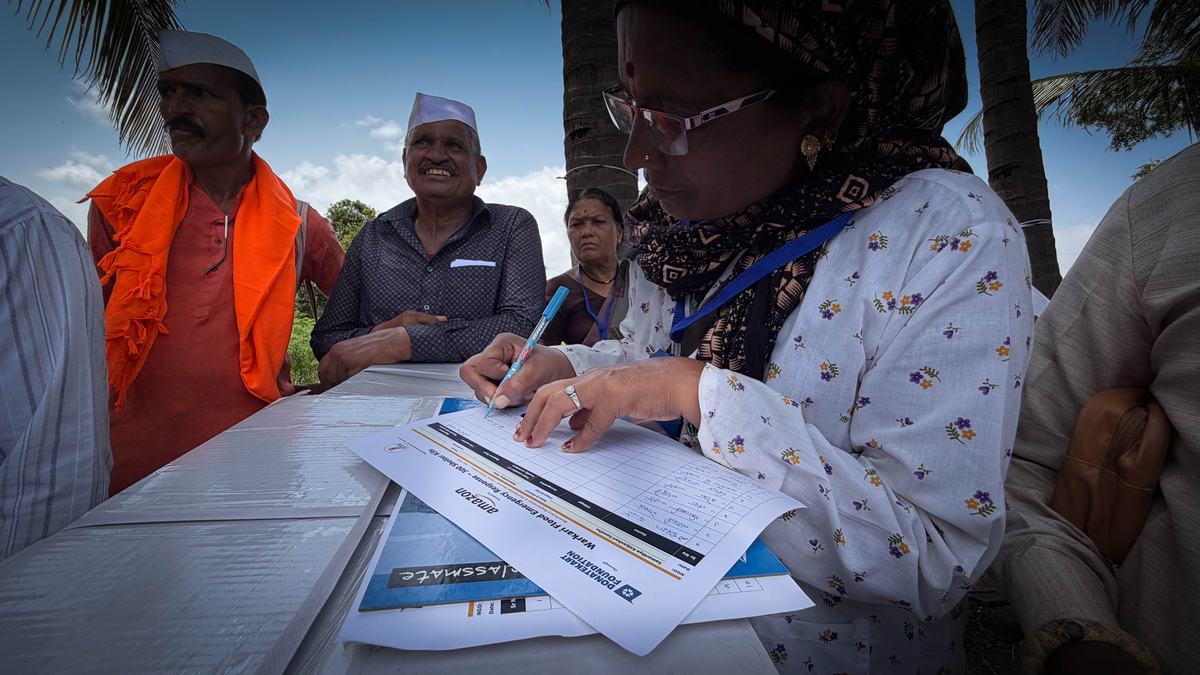
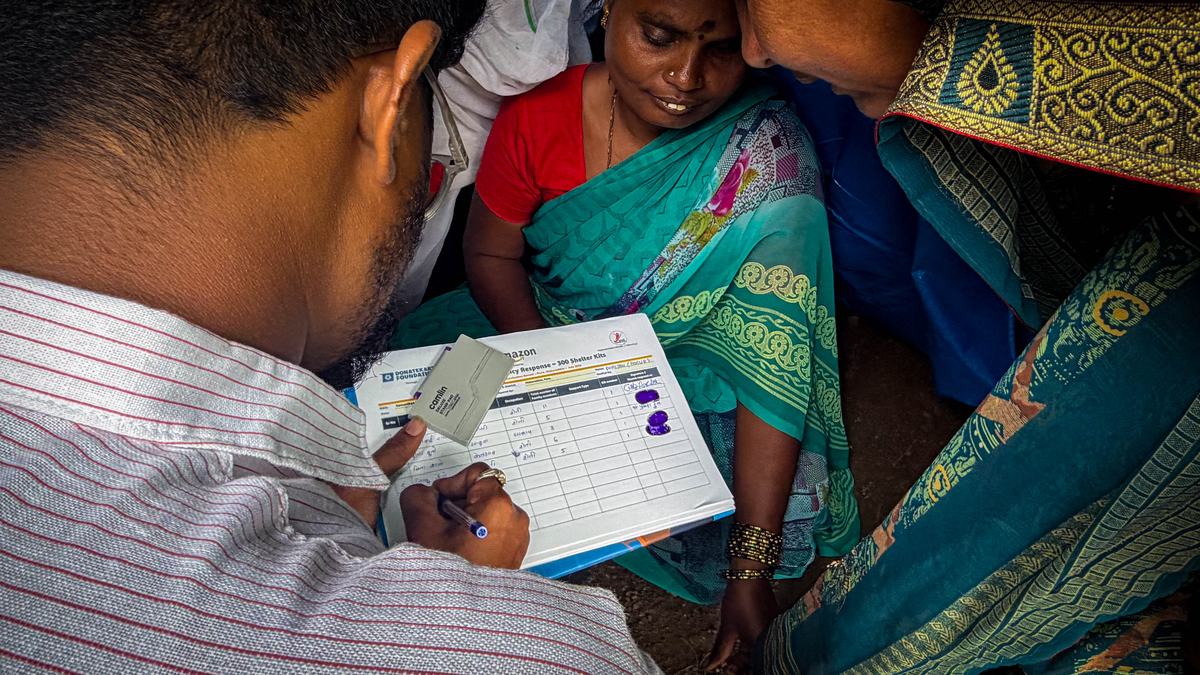
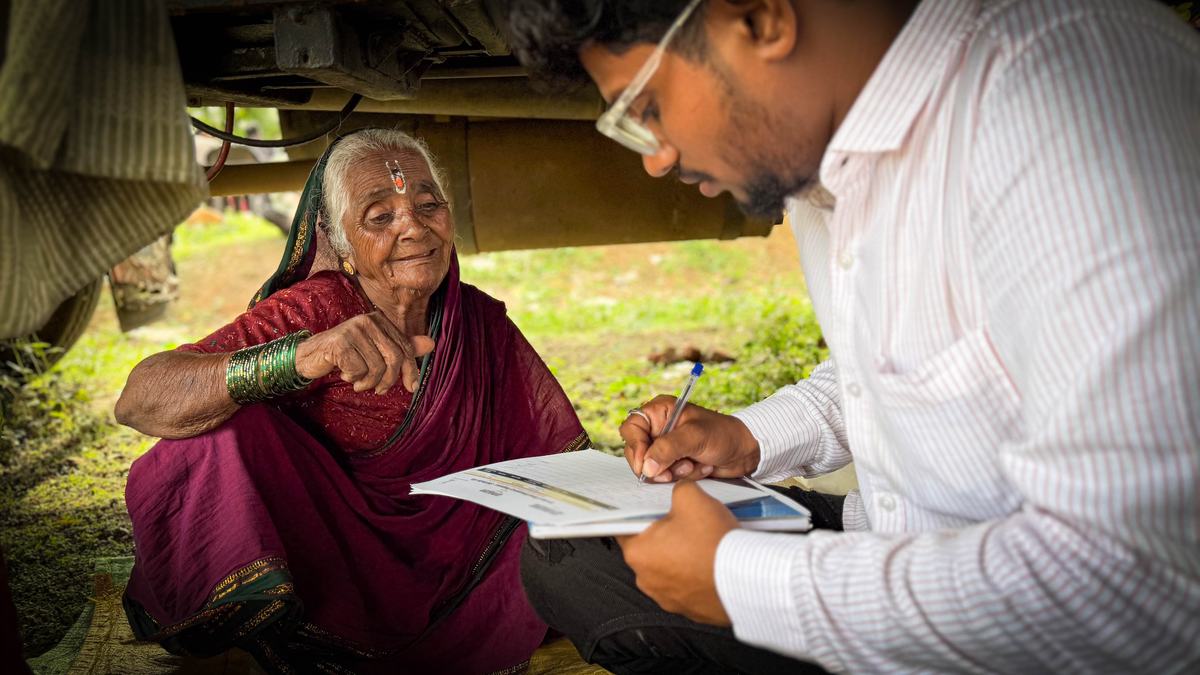
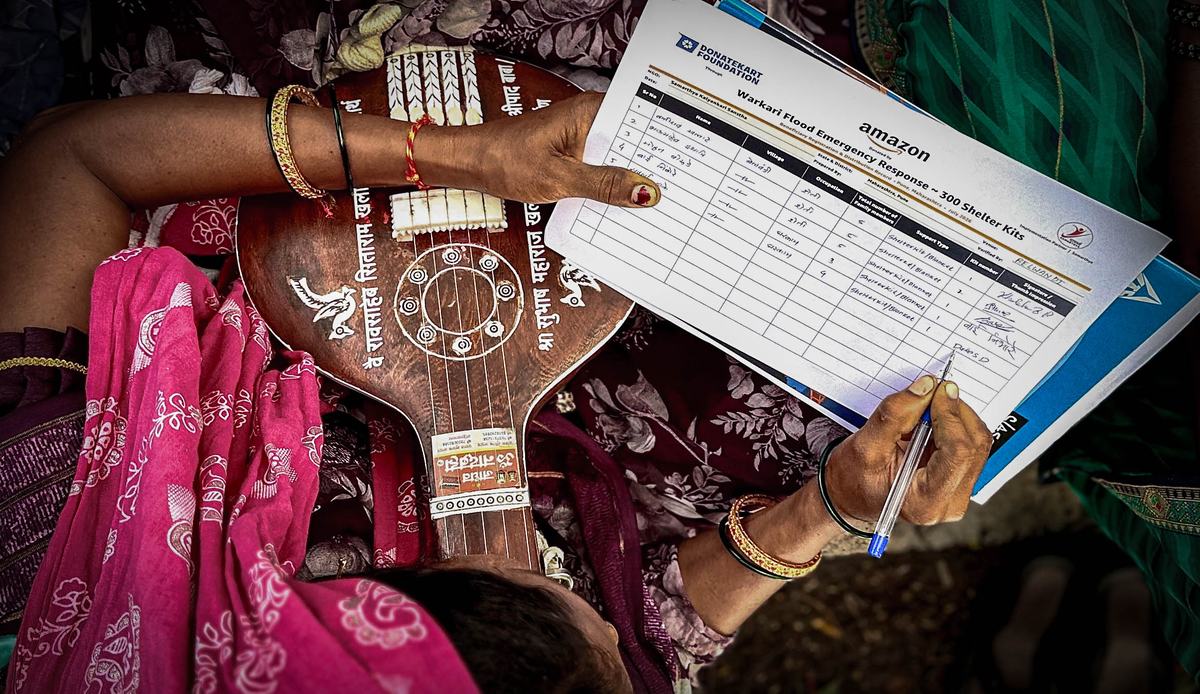
Every kit was entered against a name, village, occupation, family size and kit number on the Warkari Flood Emergency Response distribution record — signed or thumb-marked by the beneficiary at the moment of handover.
A beneficiary signs the distribution record at Belwandi — name, village, occupation, family size and kit number entered against every kitSamarthya's enumerator completing the register at the halt, with Dindi members standing by as the entries are madeThumb impressions taken with a stamp pad for beneficiaries who don't sign — same register, same verification, nobody left off the recordAn elderly Warkari gives her details to be recorded — registration done seated on the ground, at the halt, at her own paceA signature entered beside the pilgrim's own ektara — the register travelled with the Wari, filled in wherever the Dindi stopped
Serialized token distribution on the move
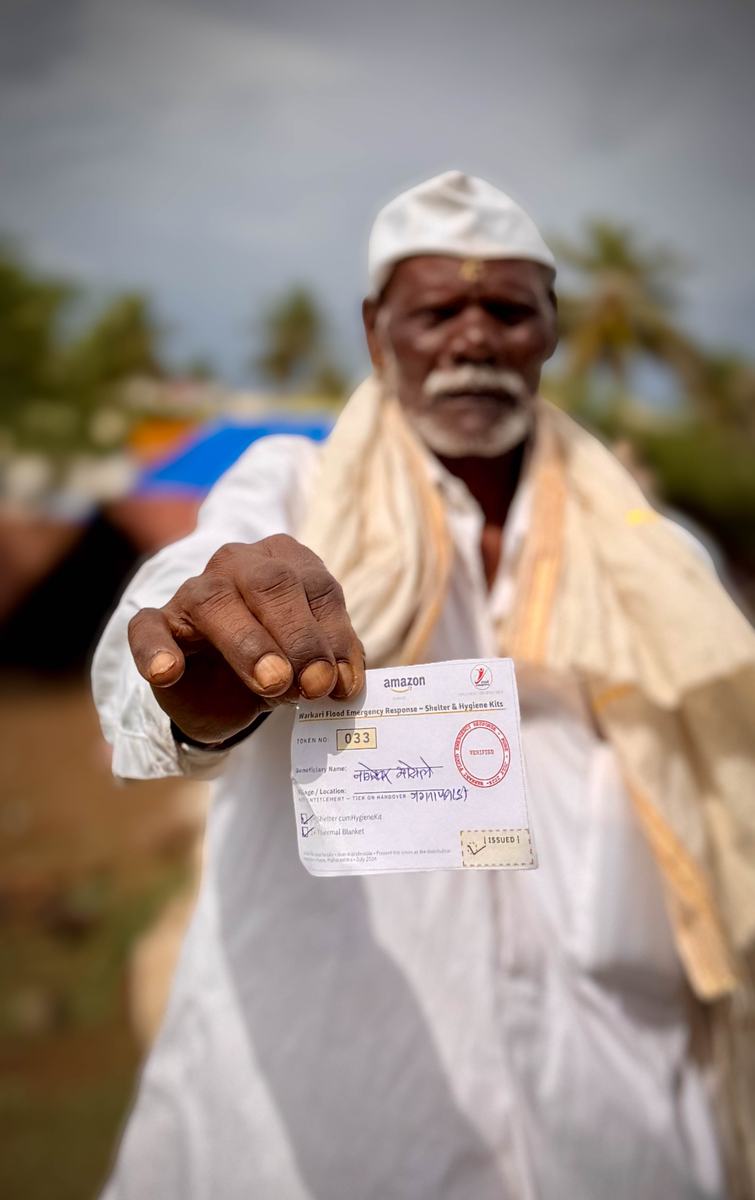
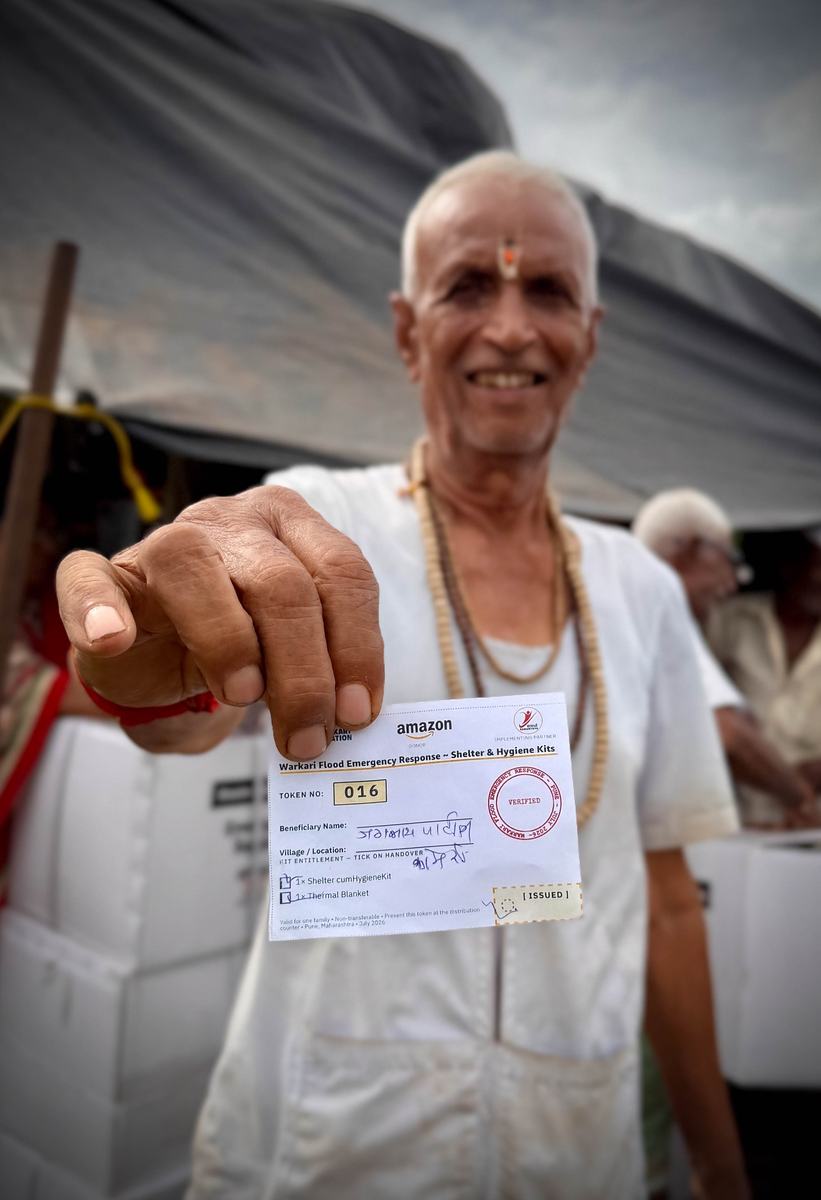
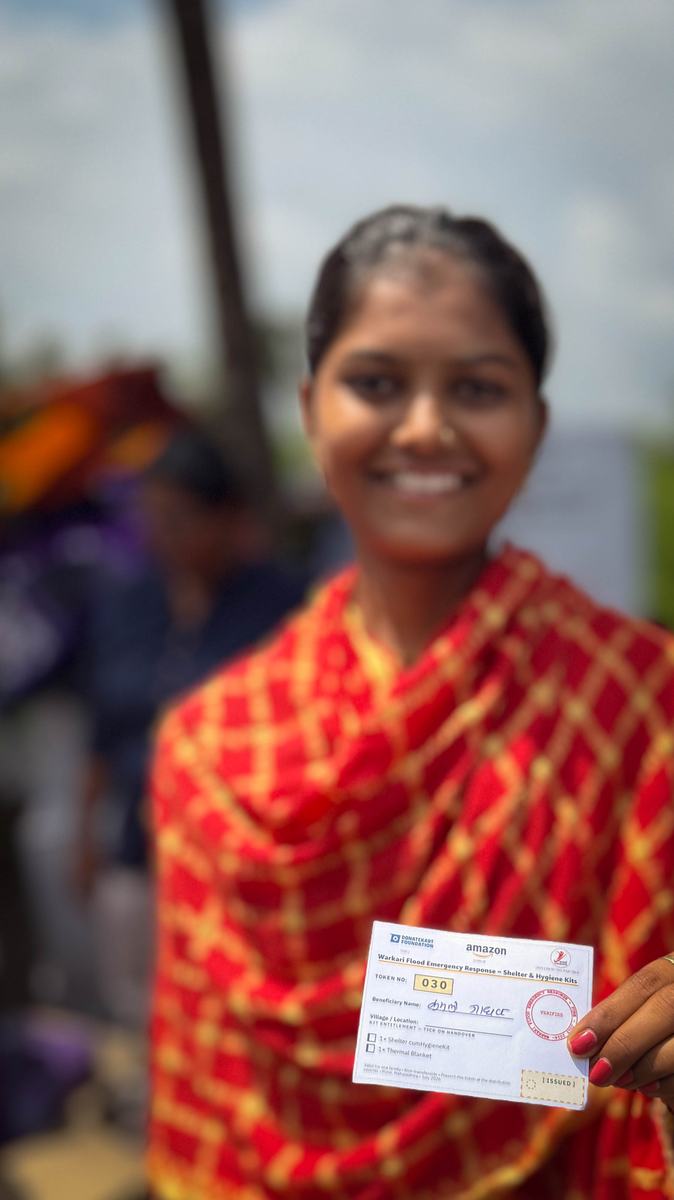
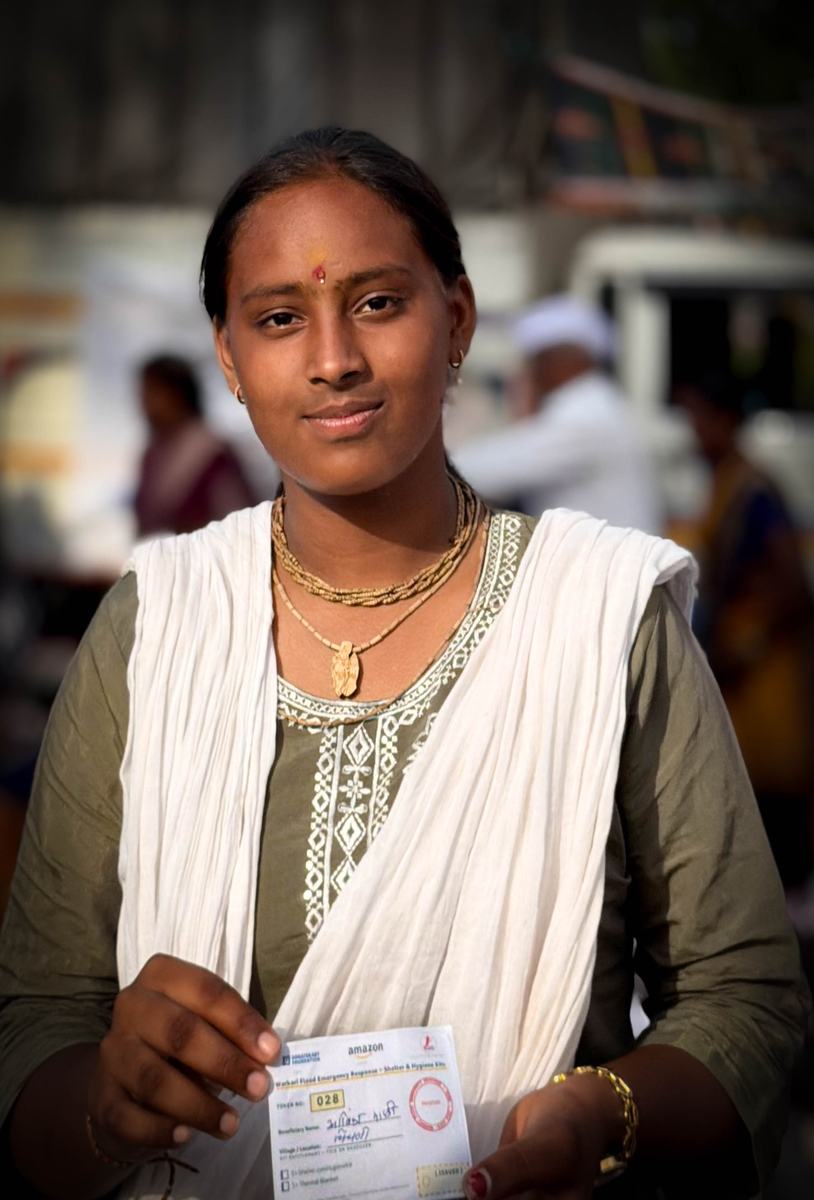
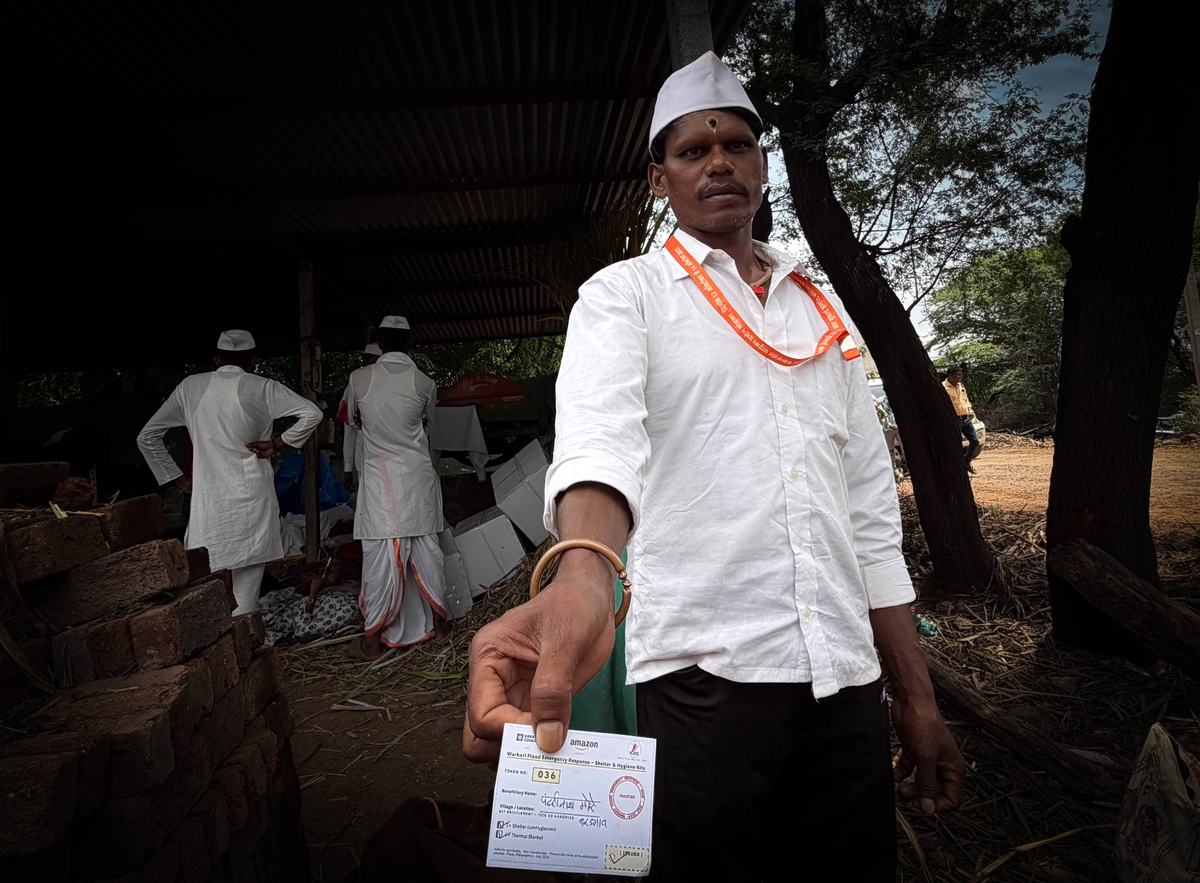
Before any kit changed hands, each family was issued a serialized paper token carrying its own number, the beneficiary's name and village, and a tick-box for the exact entitlement — one Shelter-cum-Hygiene Kit and one Thermal Blanket. Every token was stamped VERIFIED at issue and marked ISSUED at collection, then matched back against the register, so no family could be counted twice and none could be missed. 234 of the 300 kits were released against a token held directly by the family; the remaining 66 went through the Dindi Pramukh, where rain made one-by-one matching impractical in the queue.
Token 033 held up at the halt — stamped VERIFIED, with both entitlements ticked off at handover: one Shelter-cum-Hygiene Kit, one Thermal BlanketToken 016 — each slip carried its own terms printed at the foot: valid for one family, non-transferable, to be presented at the distribution counterToken 030, carrying the Amazon, DonateKart Foundation and Samarthya marks alongside the beneficiary's own name and the VERIFIED stampToken 028 in hand as the distribution vehicles stand by — tokens were issued ahead of collection so families knew their place in the queueToken 036 presented in front of the stacked kit boxes — every token was checked against the register before a single box was released
Field photographs · July 2026
Field gallery
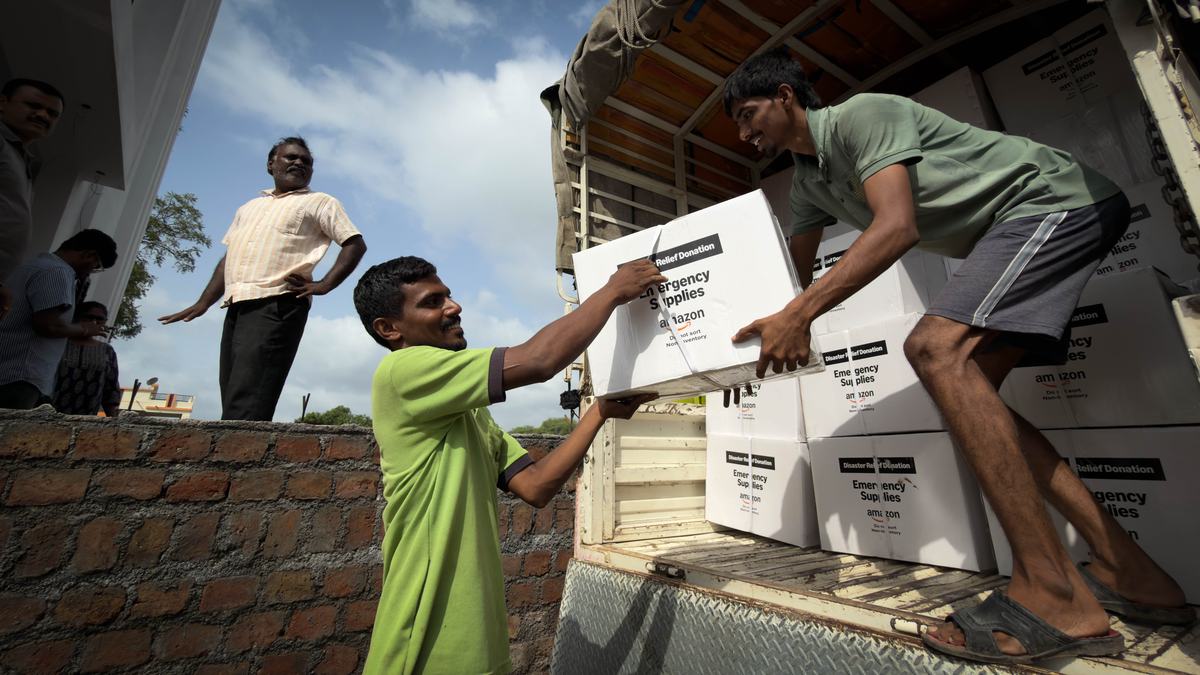
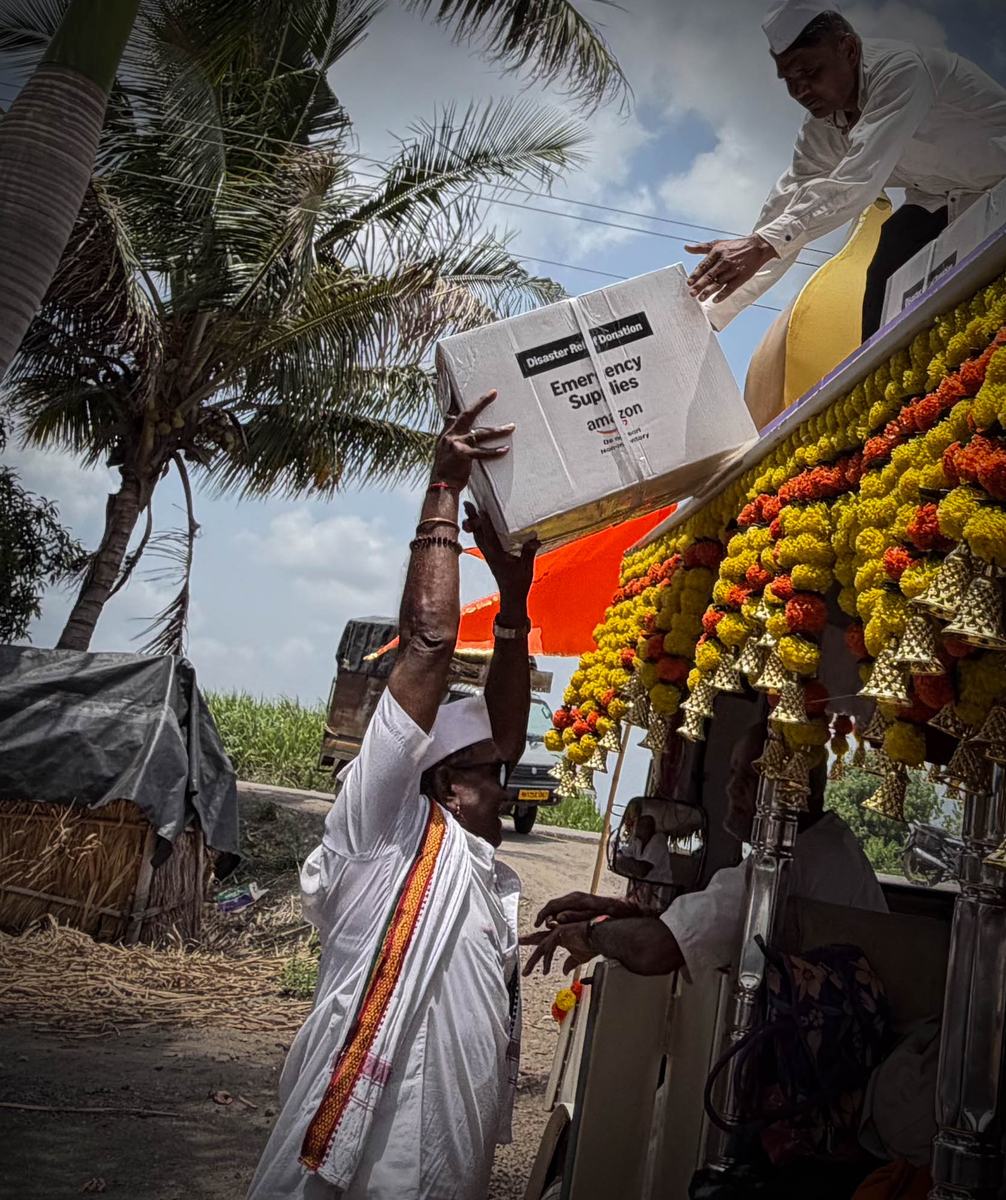
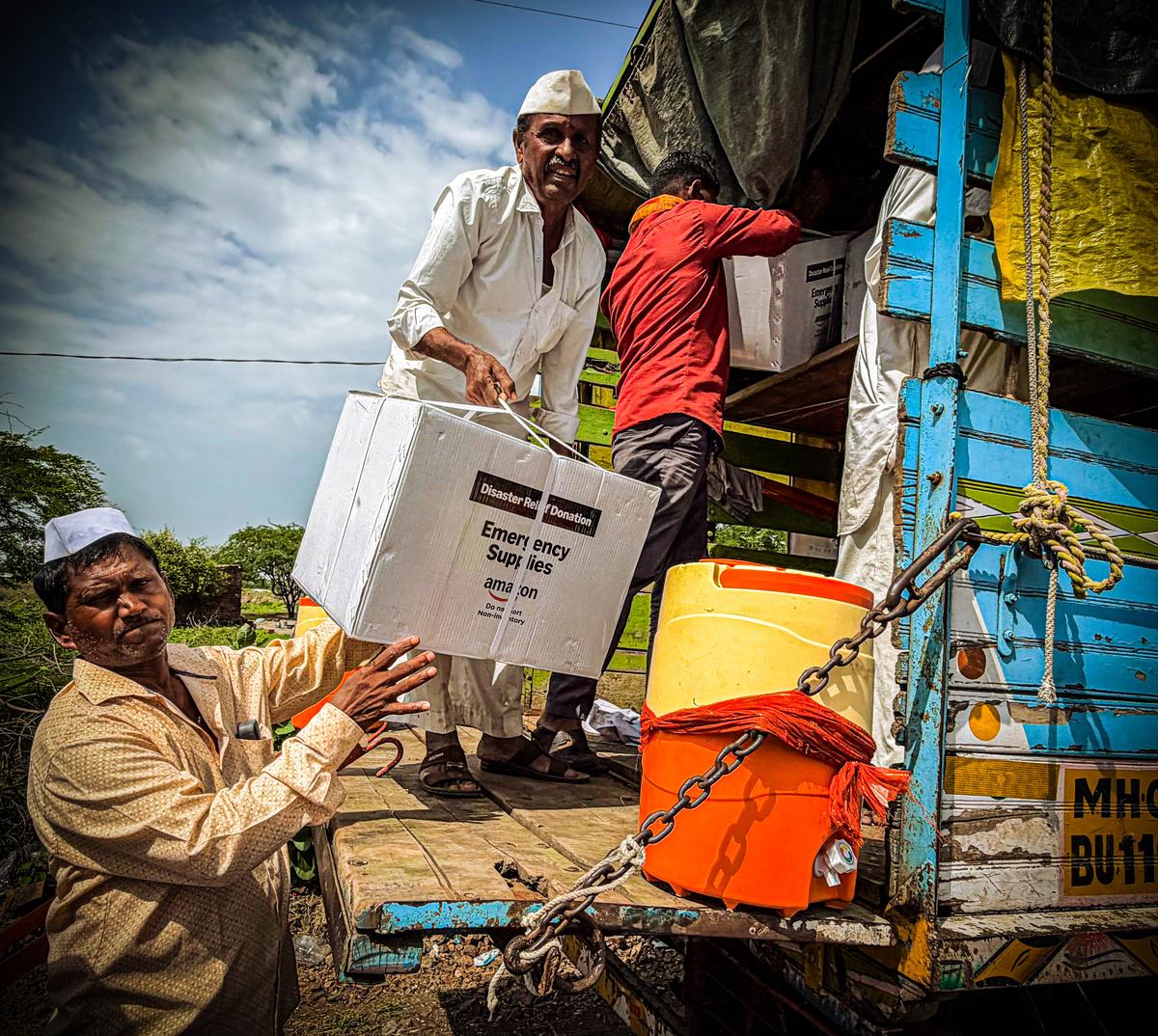
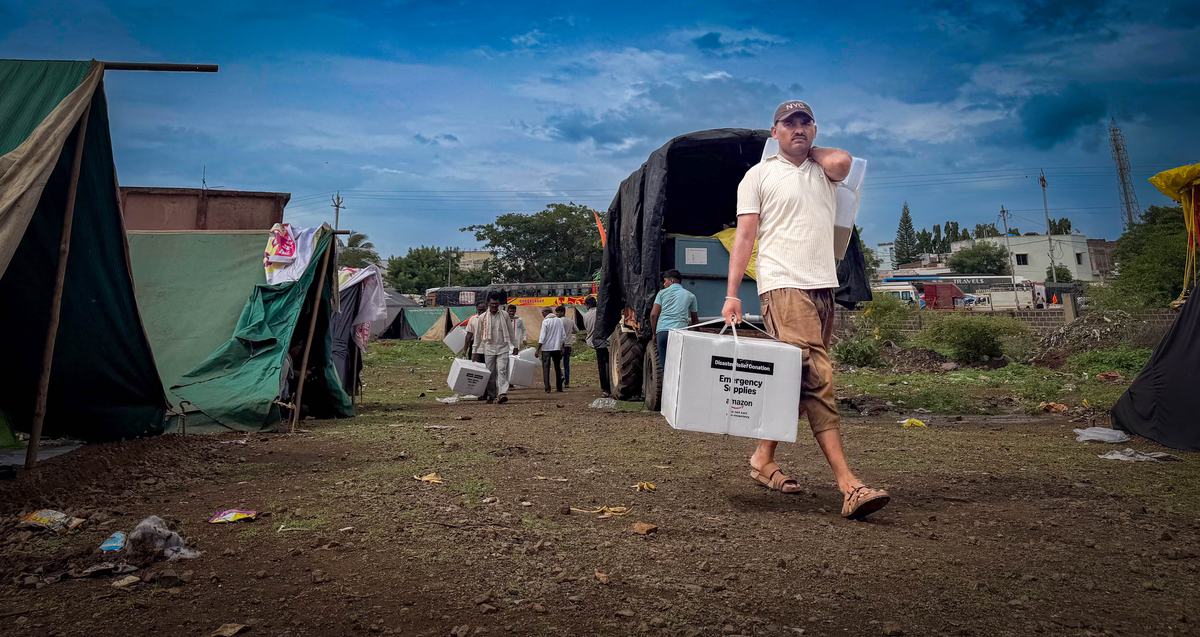
Kits in motion: volunteers and Warkaris carrying the load
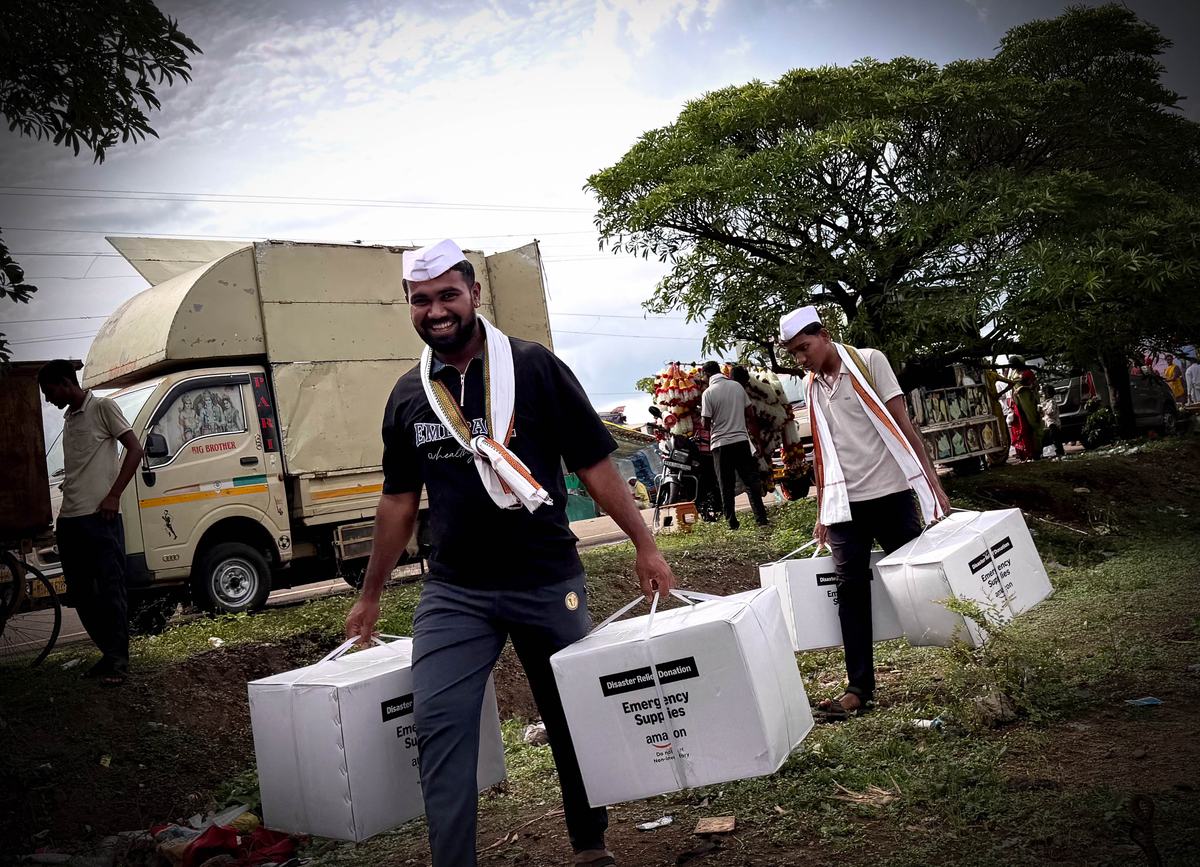
Every one of the 300 kits was moved by hand. With no loading bay or trolley at a roadside halt, Samarthya's team and the Warkaris themselves formed the chain together — off the truck bed, down the line, and then on foot into the tented camps or straight up onto the Dindis' own garlanded vehicles.
Hand to hand off the tailgate — the unloading chain that moved every kit from the container truck to the distribution pointA Warkari reaches up to take a kit down onto the marigold-and-bells Palkhi vehicle — kits loaded directly onto the Dindi's own transportWarkaris and volunteers working the truck bed together, the Dindi's water drums lashed alongside — relief kits and the group's own supplies travelling as one loadThe last stretch on foot — one kit by the handle, one on the shoulder, carried from the truck into the tented halt as others follow behindTwo kits to a person, walked in from the roadside past the flower-decked Palkhi vehicle
Community briefings and kit demonstration
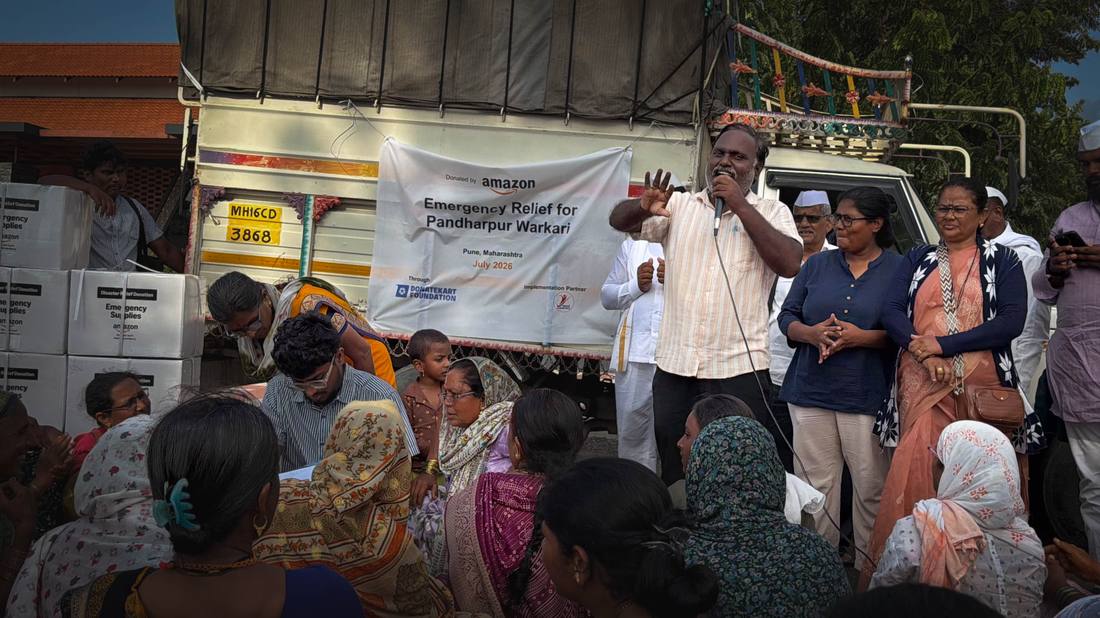
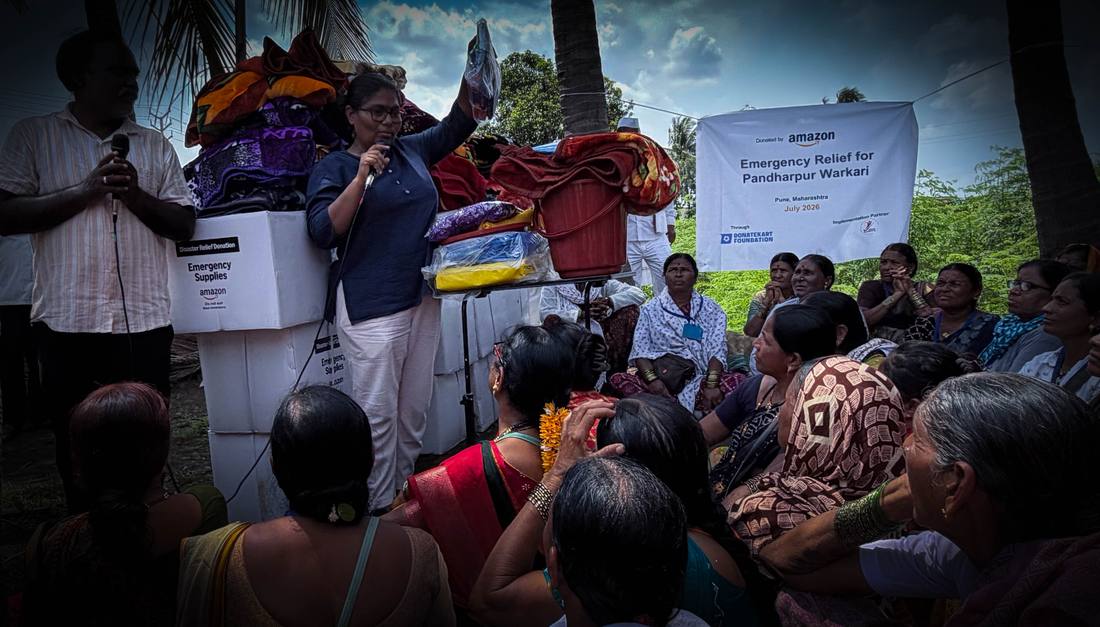
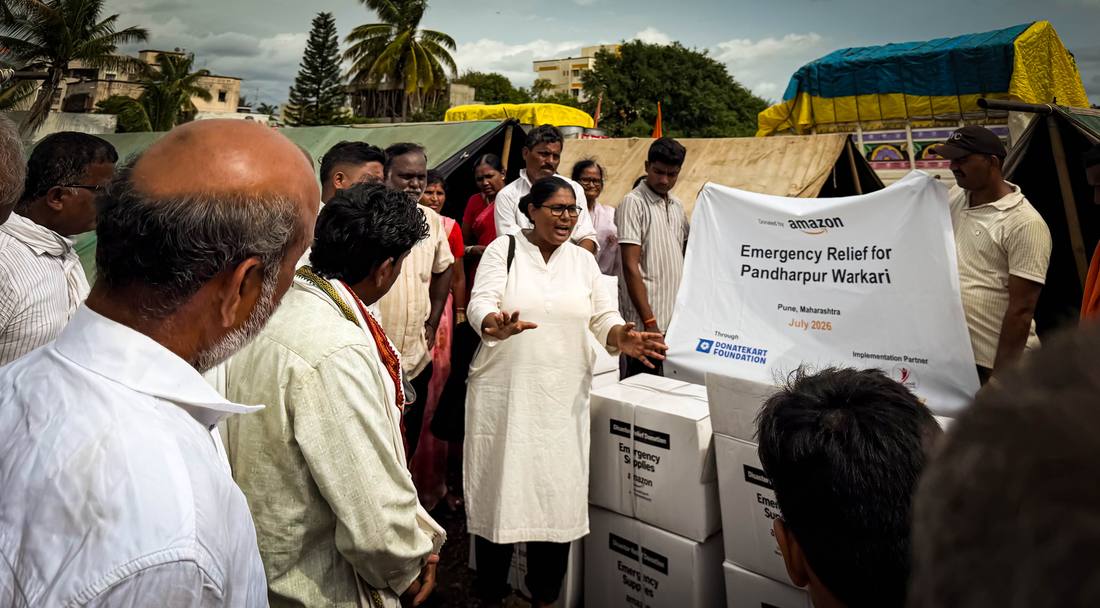
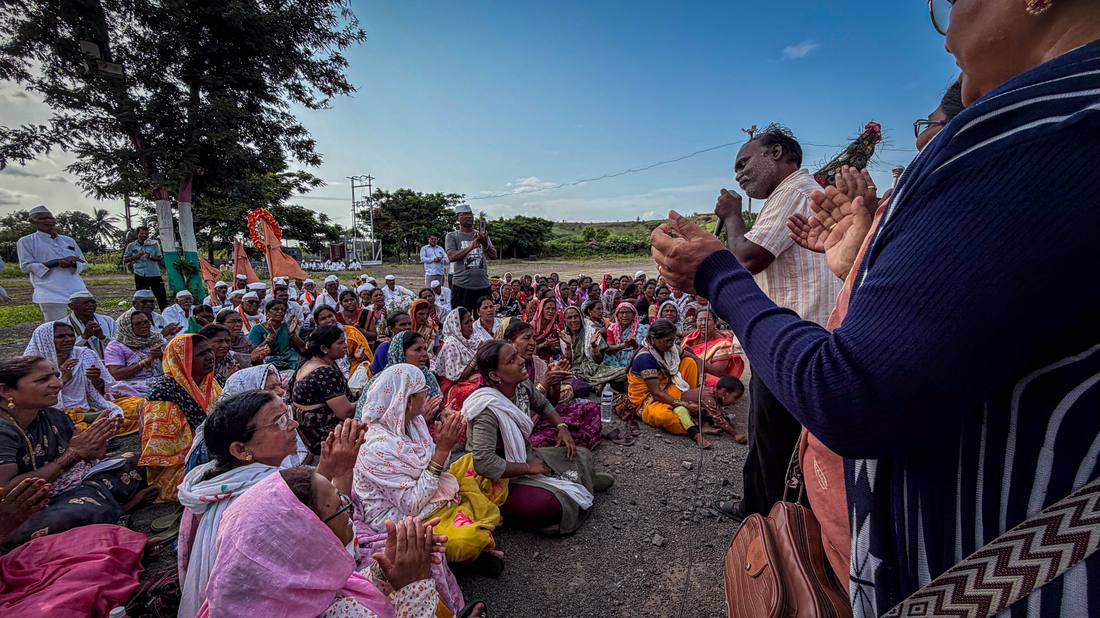
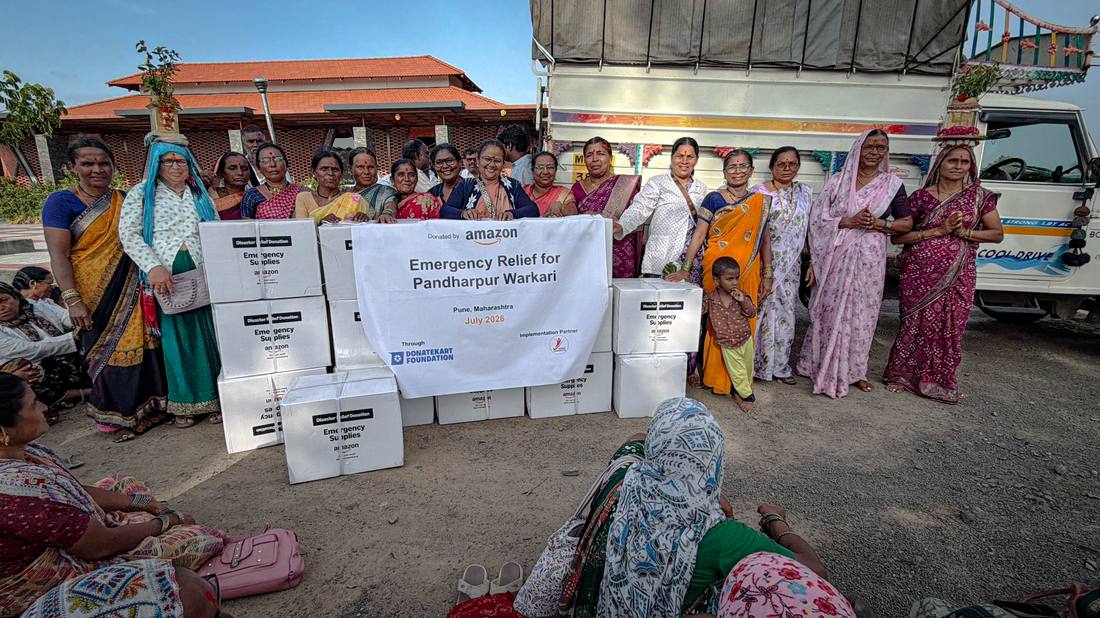
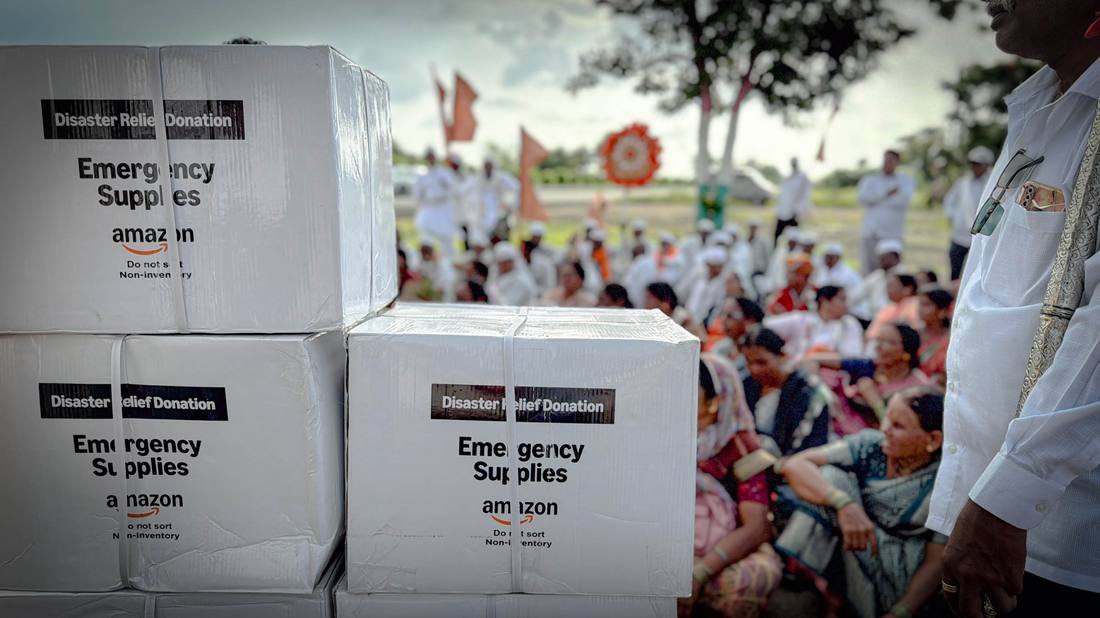
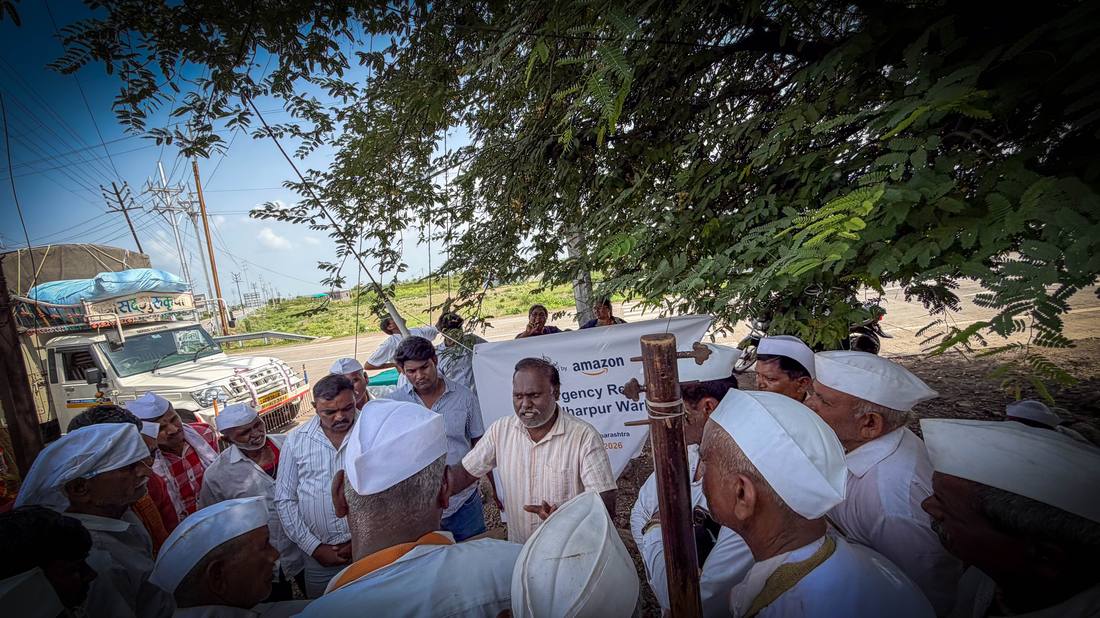
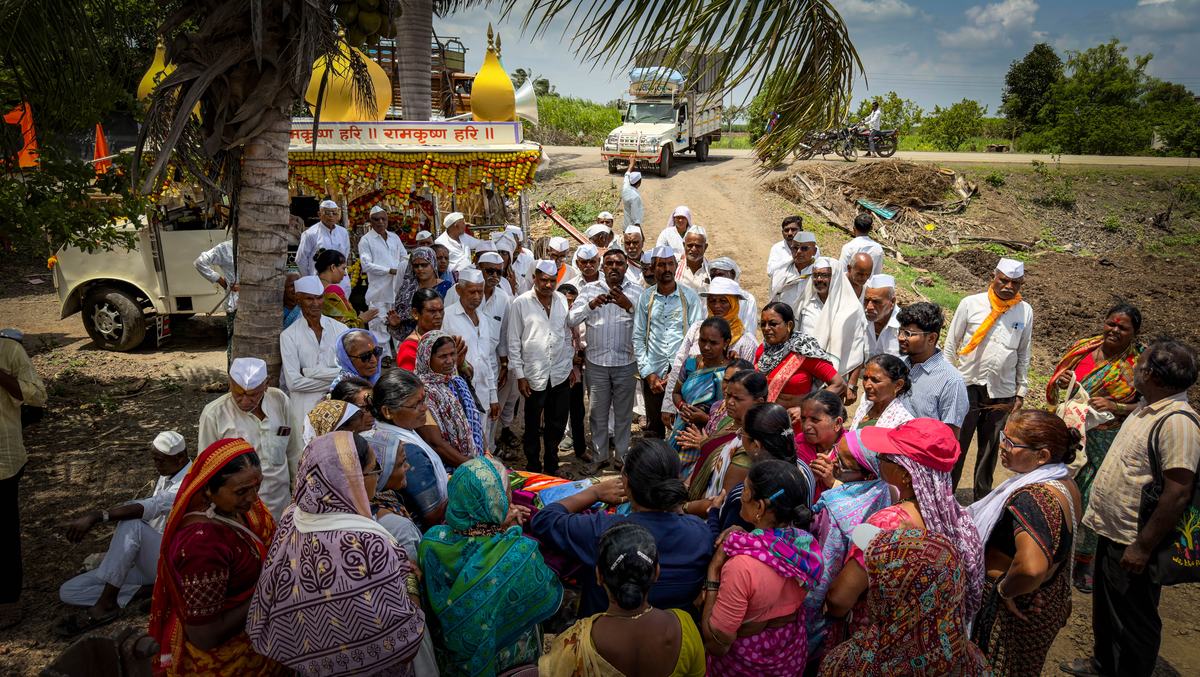
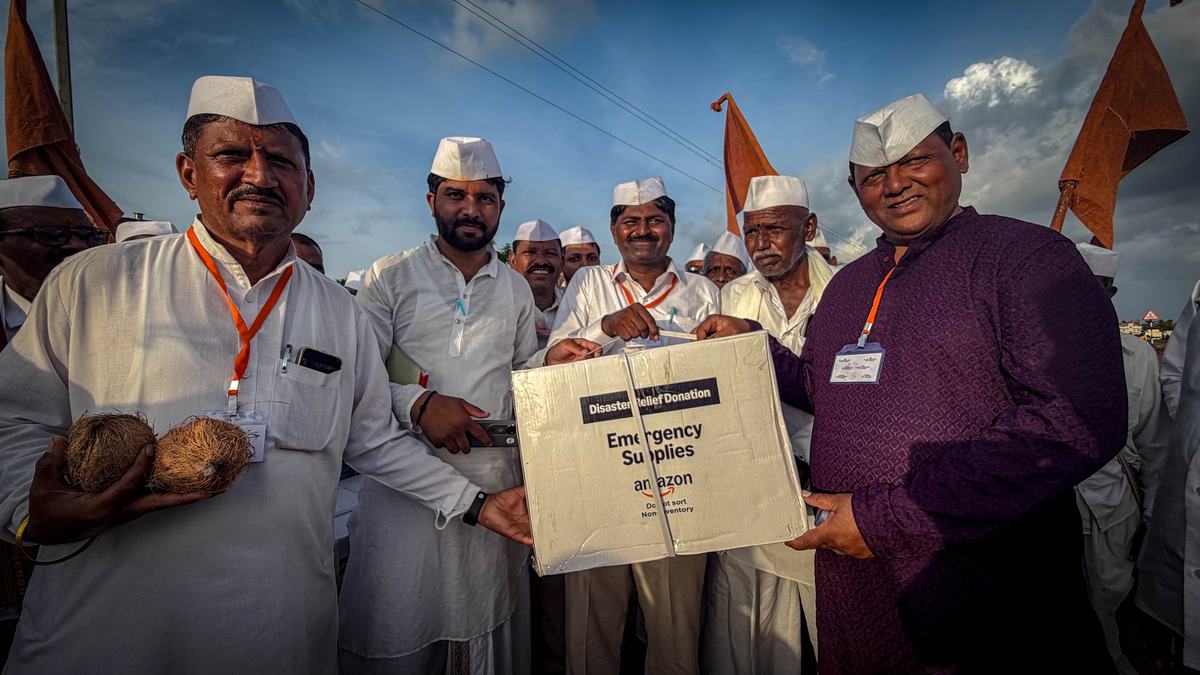
At every halt the team addressed the Dindi before distribution began — explaining the process, opening a kit and holding up each item so families knew exactly what they were receiving, and naming Amazon and DonateKart Foundation as the source of the support. The donor banner was displayed at each of these gatherings, and most closed with the Dindi Pramukh's own coconut felicitation.
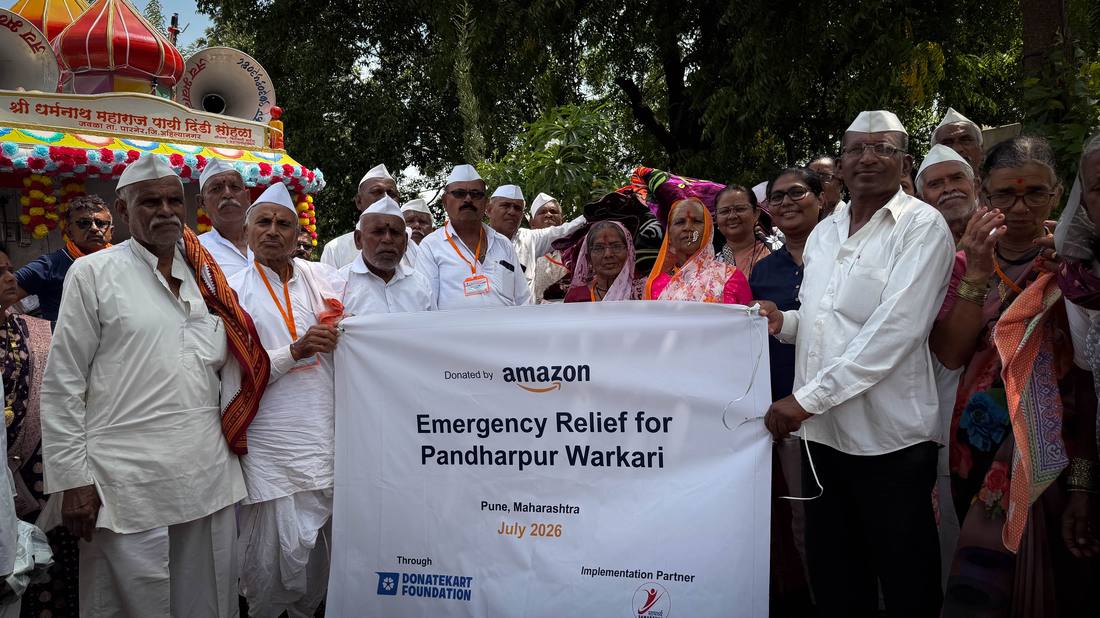
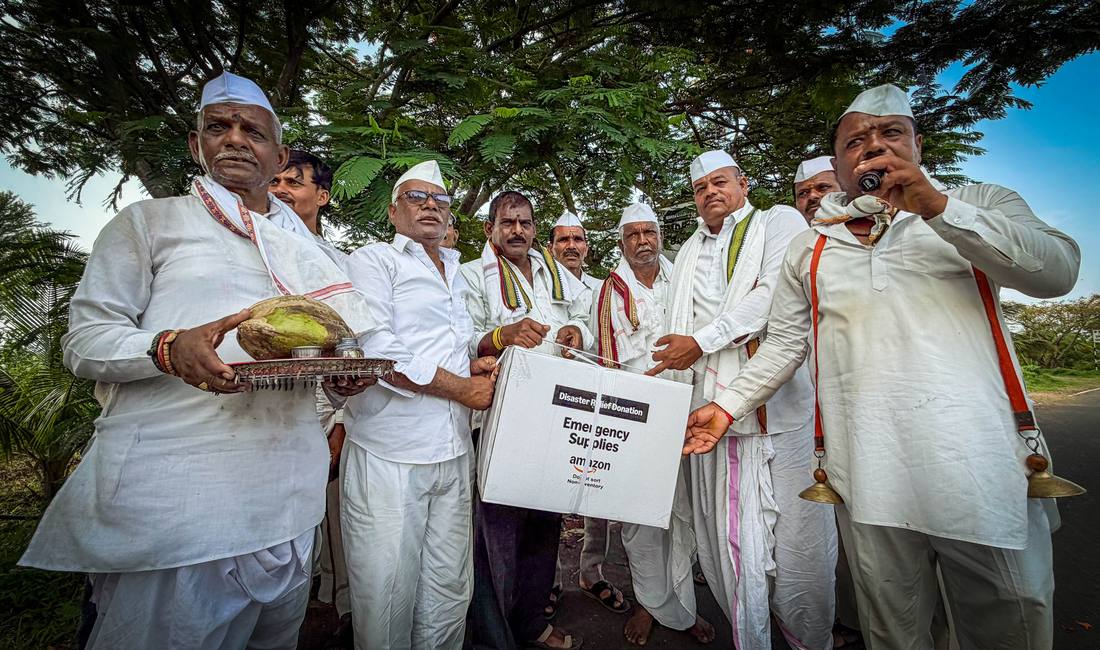
The programme opens with an address to the assembled Dindi — donor banner tied to the container truck, kits stacked and counted behindKit contents shown item by item — blankets, bucket, tarpaulin and hygiene packets laid out on the boxes so every family saw exactly what they would receiveSamarthya's coordinator walking Dindi members through the distribution process before the queue formedHundreds seated in the open at a single halt, hands folded, as the relief operation and Amazon's support were explainedWarkari women hold the donor banner behind the stacked kits at the close of a distributionKits stacked at the halt with the waiting Dindi behind — every box carrying the Amazon Disaster Relief Donation markA roadside briefing with Dindi Pramukhs and senior Warkaris, the banner strung up between the trees behindShri Dharmanath Maharaj Payi Dindi of Jawala, Tal. Parner — the group holds the donor banner, blankets raised behind themA coconut and thali offered in felicitation as a kit is formally handed to the Dindi's leadershipA roadside gathering beside the Dindi's decorated Palkhi vehicle — Samarthya's team briefing Pramukhs and Warkaris together before distribution
Kits in hand: the families who received them
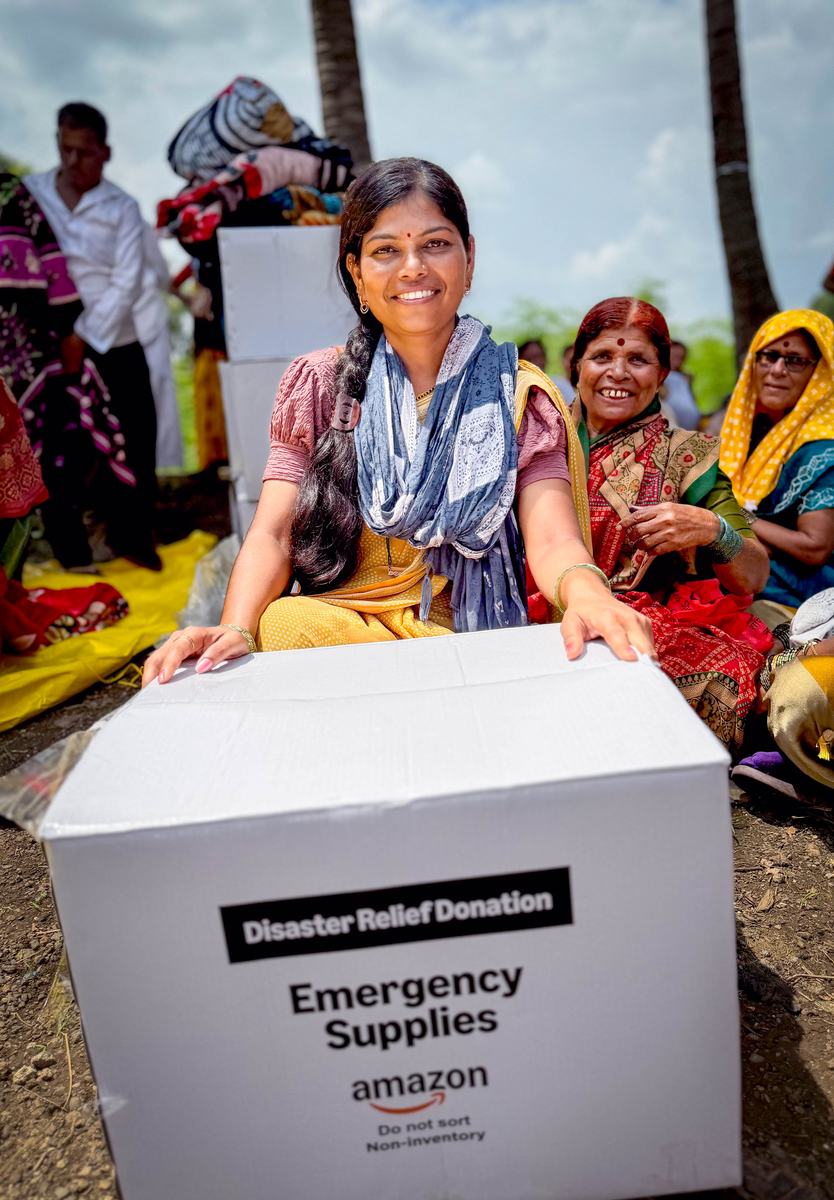
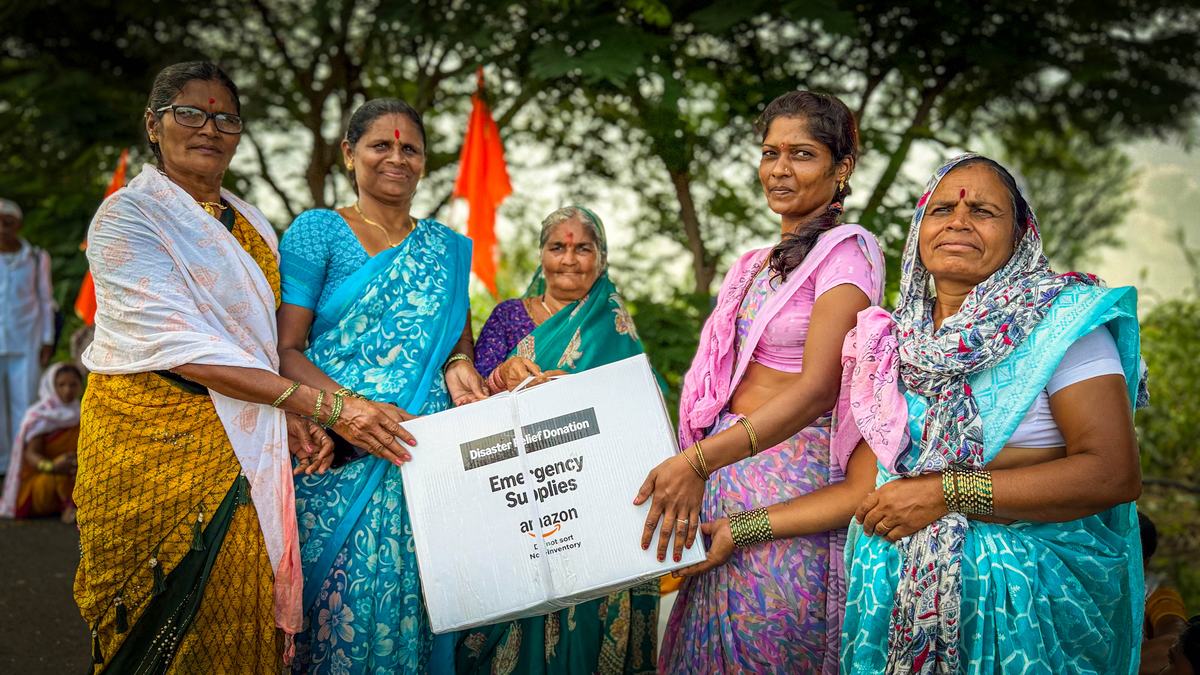
Three hundred families walked on with a dry shelter sheet, a hygiene kit and a warm blanket they did not have that morning. These are some of them at the moment of receiving — at the distribution counter, and back at the tarpaulin shelters where the kits were opened and put straight to use.
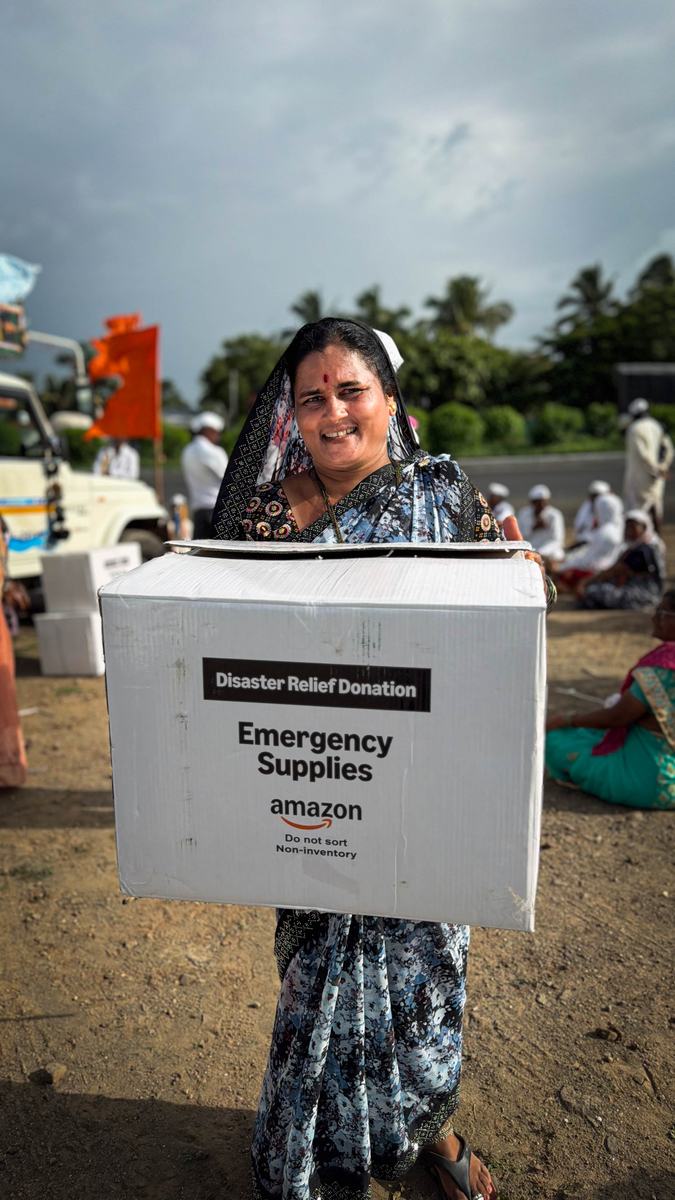
A young woman and two elders beside her, hands resting on a kit just signed for — spare blankets stacked behind for the families still in the queueOutside her tarpaulin shelter, a blanket from the kit already folded and ready for the nightA turquoise blanket unpacked at the tent door, her child sheltering just behind herKit received at her own shelter — water can, firewood and now a dry blanket, all in one placeDusk at the halt: the kit set down at the tent opening, the blanket that would take the chill out of the night resting on topCoconuts in hand for the felicitation as a kit is formally received by the Dindi's leadershipCarrying her family's kit away from the counter, the day's thali balanced on top of the boxFive women of one Dindi with the kit held between them, saffron flags behindSeated together around a kit received on the group's behalf, on the road where the Dindi had haltedKit collected without once letting go of the Dindi's flag
Human smiles
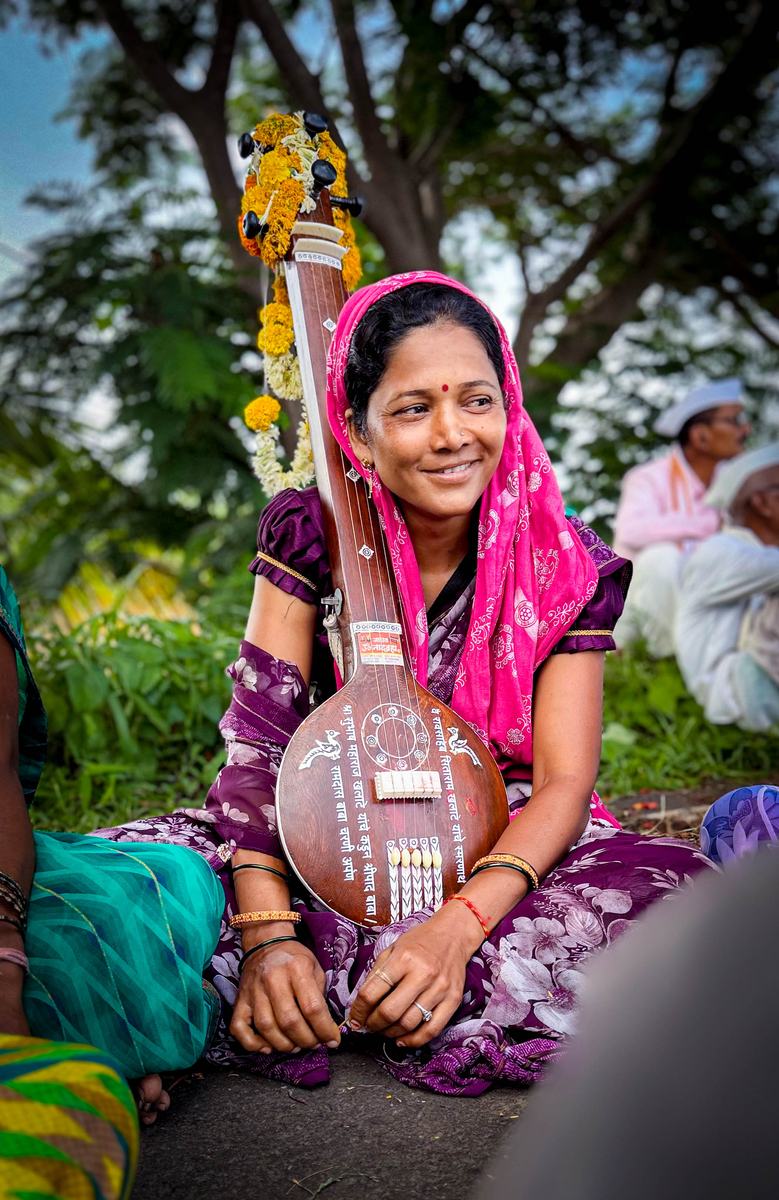
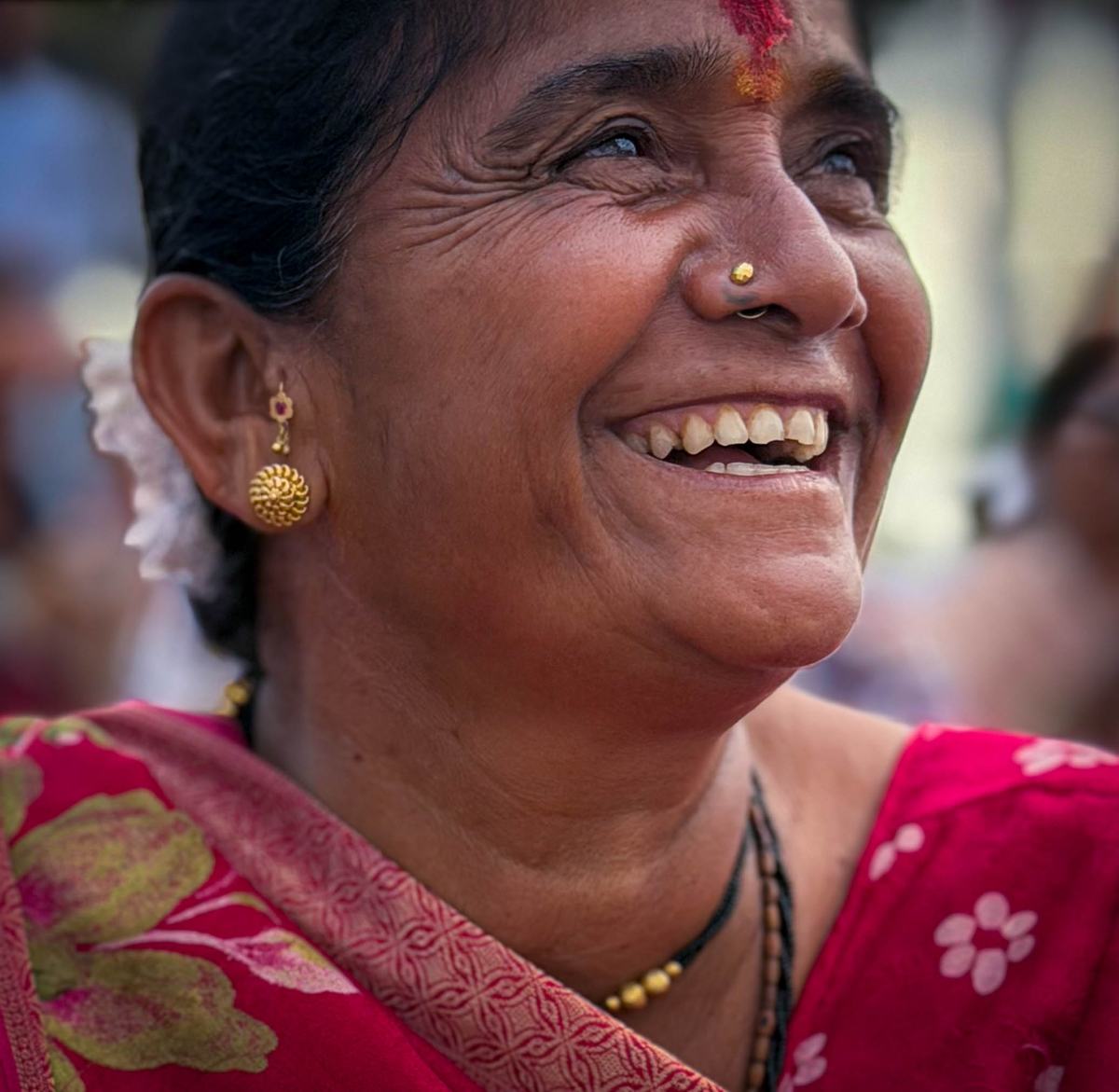
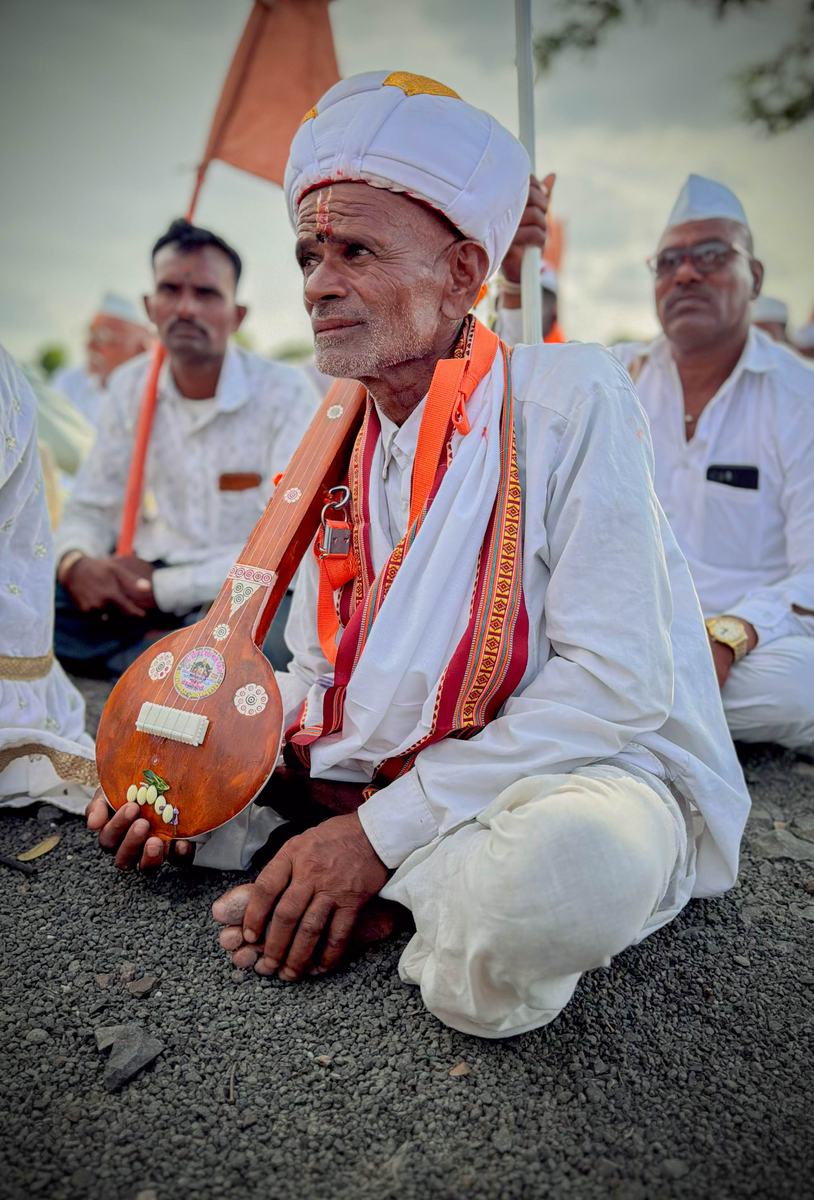
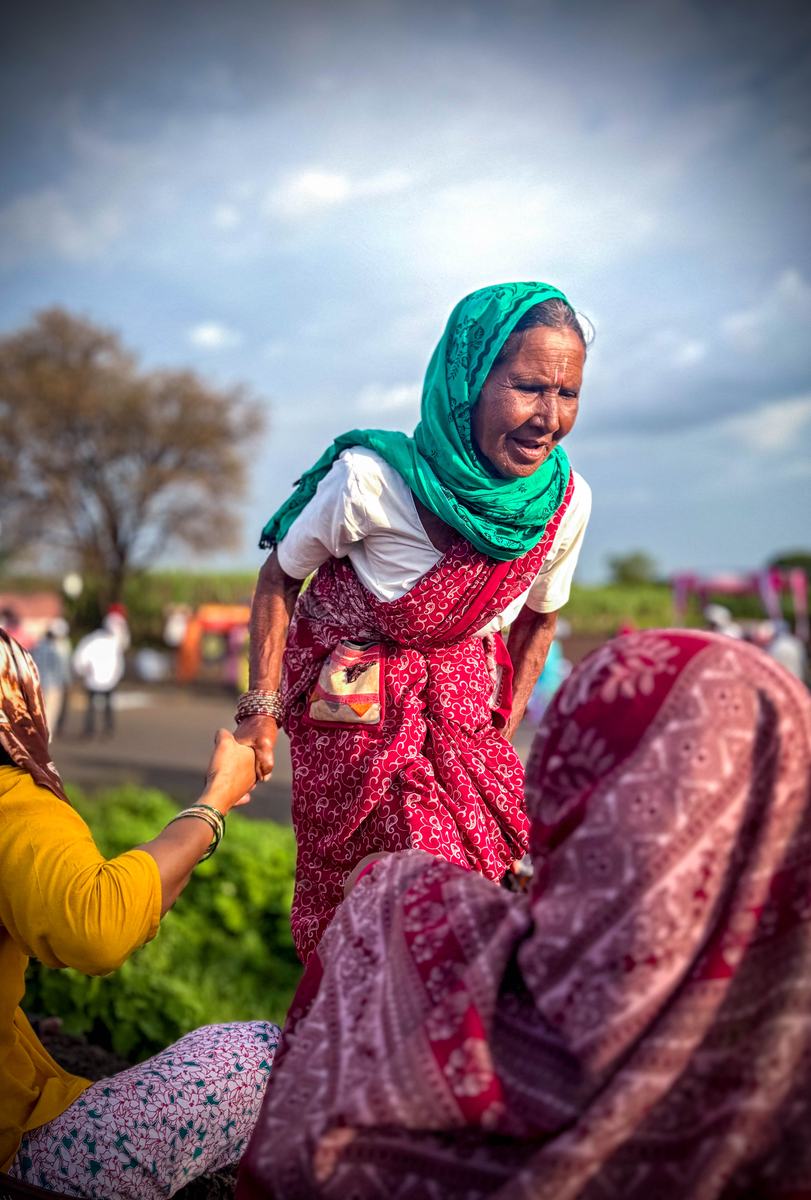
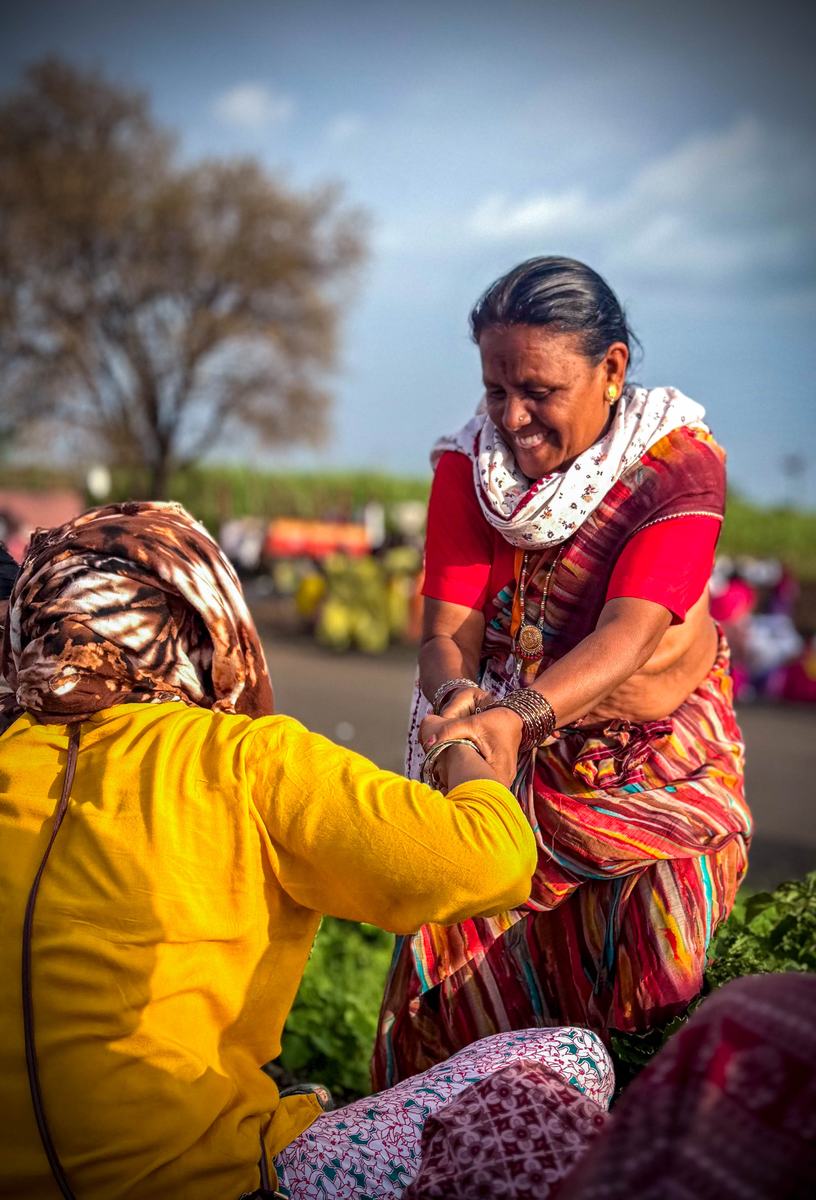
Between the counting, the queueing and the paperwork, this is what the three days actually felt like — the Wari's own warmth, on faces rather than in numbers. Musicians tuning a tanpura in the shade, water shared hand to hand at a roadside halt, an elder helped up onto a trailer, a woman laughing outright at something just out of frame.
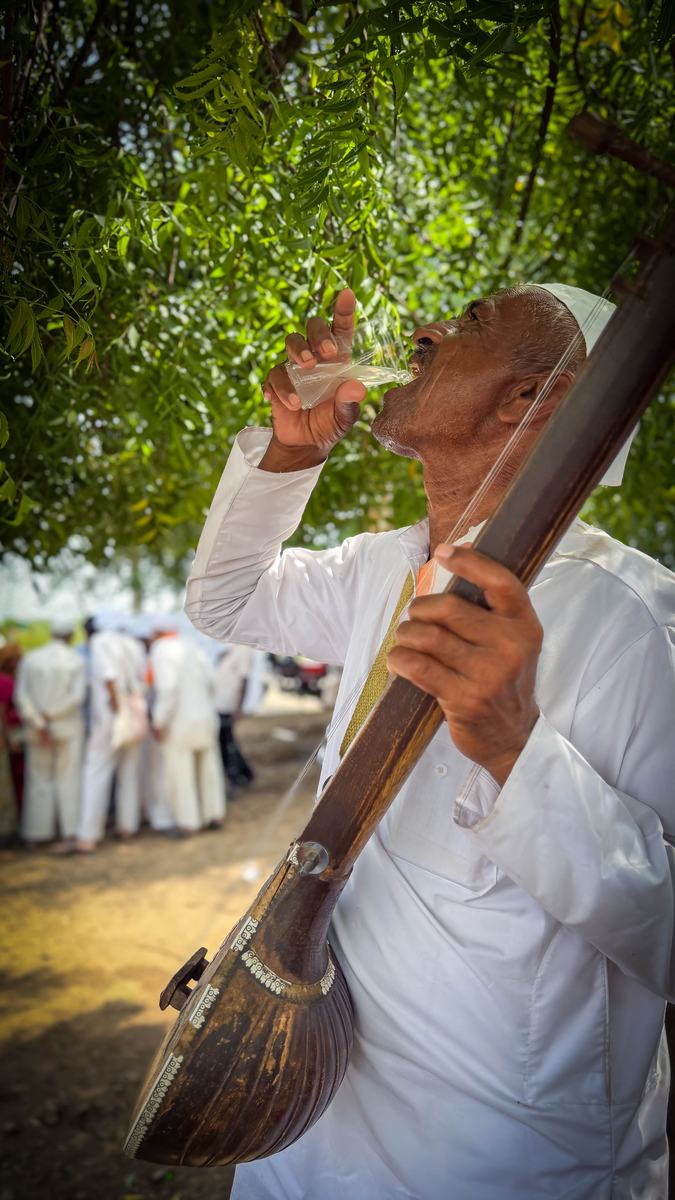
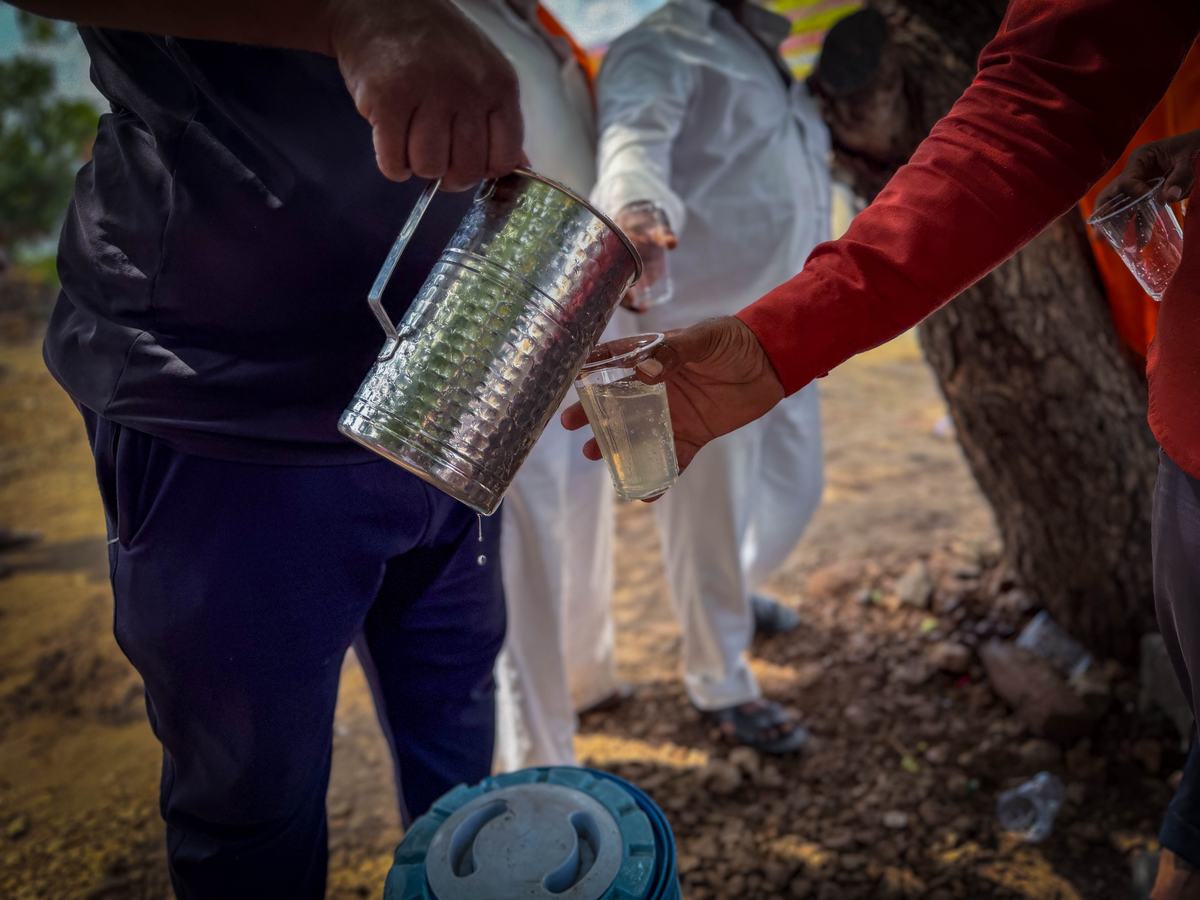
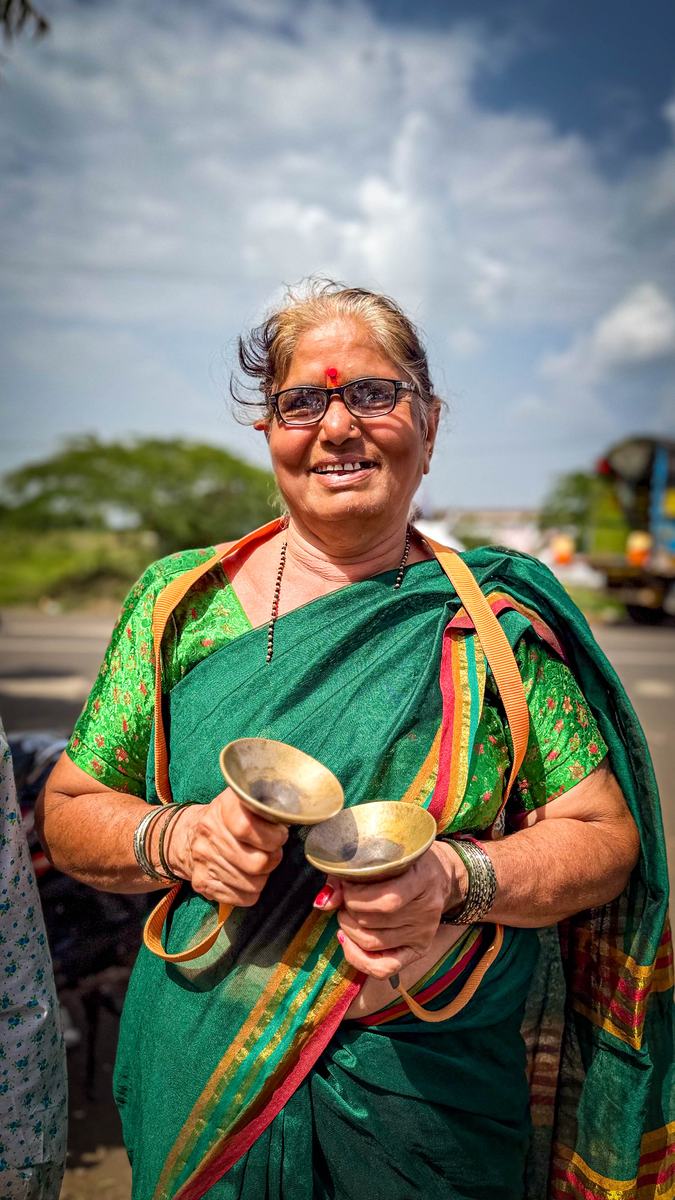
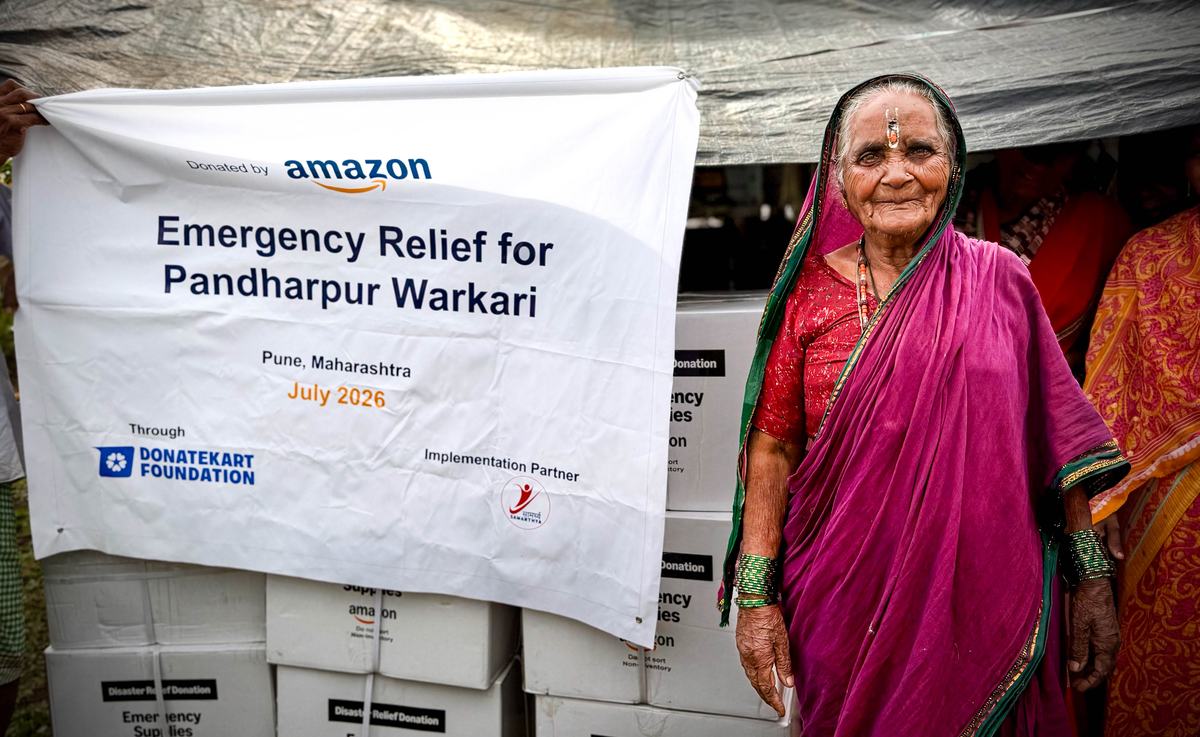
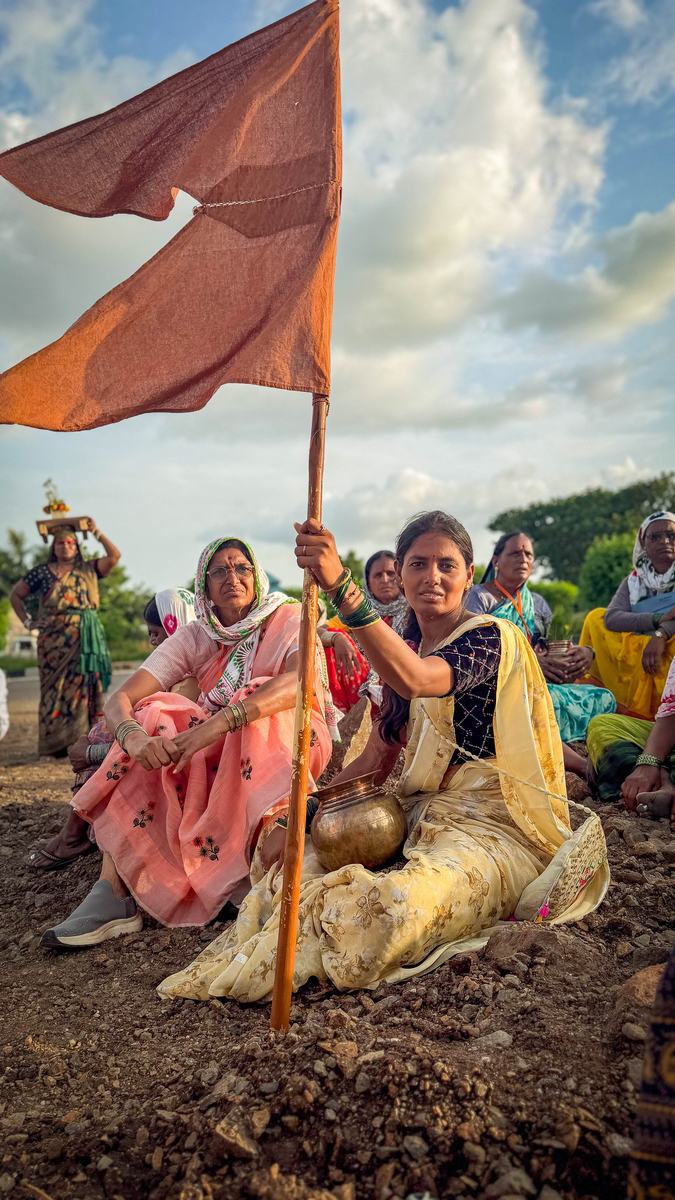
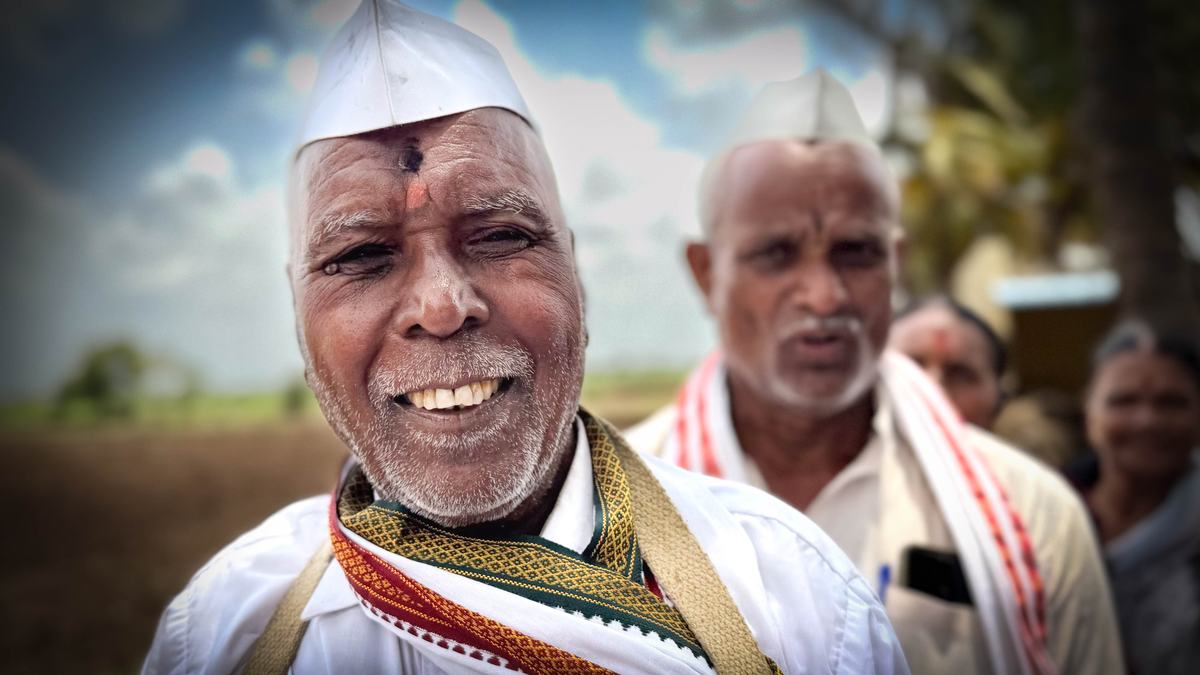
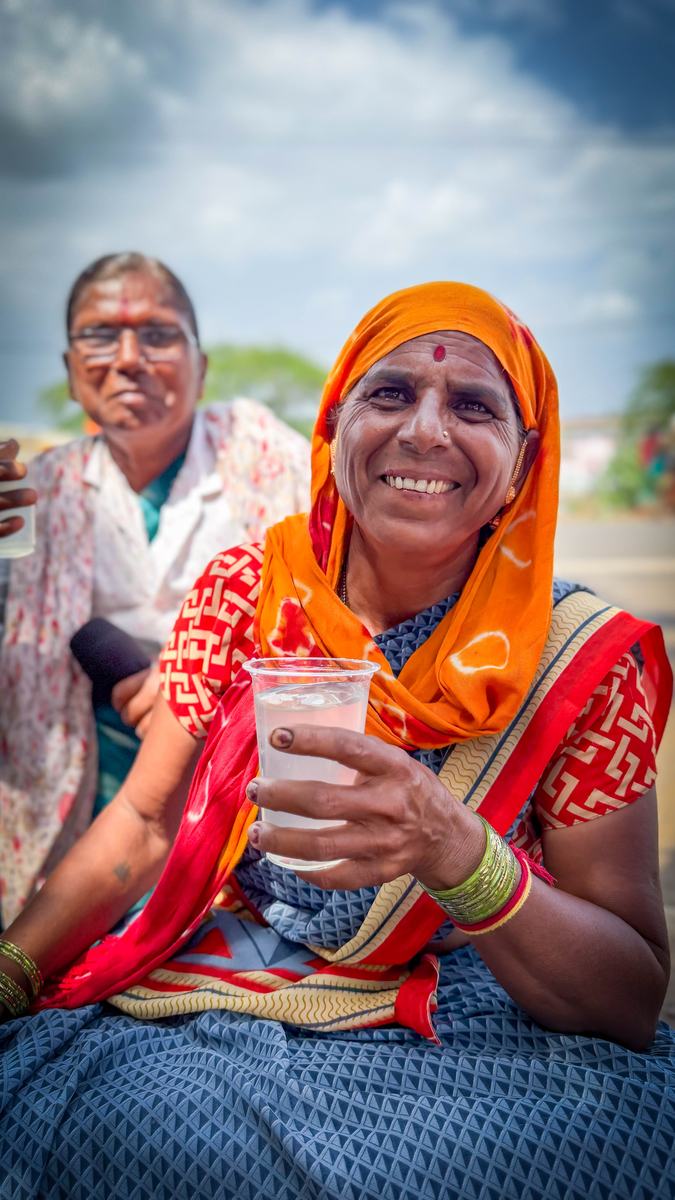
A cool drink under the neem shade, tanpura balanced against his shoulder — a moment's rest before the next kirtanWater poured hand to hand at the roadside — the same steel kettle and cooler that keep a whole Dindi going between haltsTalwaar cymbals raised and ready, a warm laugh breaking through before the bhajan startsFeet bare, flag close at hand, an easy smile from a stop along the roadA short rest in the shade of the flags, the group settling in together before moving onWomen of the Dindi pausing under the trees, one flag still catching the wind above themA tanpura dressed in marigold and jasmine, its owner glancing back mid-smileCaught mid-laugh — the kind of unguarded warmth that ran through every halt on the routeA veena player watching the road ahead, waiting his turn to walk onAn elder steadied by a hand as she's helped up, one Warkari to anotherHands clasped in greeting, a smile breaking out on both sidesAn elderly beneficiary beside the Emergency Relief for Pandharpur Warkari banner, kits stacked behind her at the haltTwo women helping each other along a rocky patch of ground, flags planted upright beside themA broad smile under the white Gandhi cap — one face among the hundreds who made the walkA quiet toast with a cup of water, shared and smiling at a roadside stop
The people behind the work
Team & partners
Ranjita Pawar
Team Leader
Prem Rathod
Field Organiser
Rohit Chavan
Enumerator — registering beneficiary names
Shatrughan Pawar
Logistics Arrangement
Rajendra Jadhav
Photographer & Documentation
Made possible by
Donated by
Through
Implementation Partner
Who we are
Samarthya Kalyankari Sanstha is a youth-founded, women-led grassroots organisation rooted in Dharashiv (Osmanabad), Maharashtra, with work extending to Pune and Raigad districts. We stand alongside De-notified and Nomadic Tribes (DNT) and Particularly Vulnerable Tribal Groups (PVTG) — communities that have carried the weight of historical stigma and systemic exclusion for generations, yet continue to organise, lead, and claim what is rightfully theirs.
Since 2008, our work has grown from a small group of young people challenging alcoholism and violence in their own tanda, into an organisation reaching 36,960+ women and 49,280+ children across 140+ villages.
2008
Working since
36,960+
Women reached
49,280+
Children reached
140+
Villages
Our work is organised across five pillars:
Bharari भरारी
Gender Justice
Saksham Shikshan सक्षम शिक्षण
Quality Education
Umed उमेद
Youth Leadership
Swayampurn स्वयंपूर्ण
Community Development
Madat मदत
Disaster Emergency Response and Relief
This programme
Together, these pillars build a community's capacity to lead its own transformation — at the individual, community, and systemic level.
We invite you to learn more about our work, visit our communities, and walk with us. For more details, visit mahasamarthya.org.